Why Does the Same Fragrance Smell Different in Your Car vs. At Home?
September 10, 2026
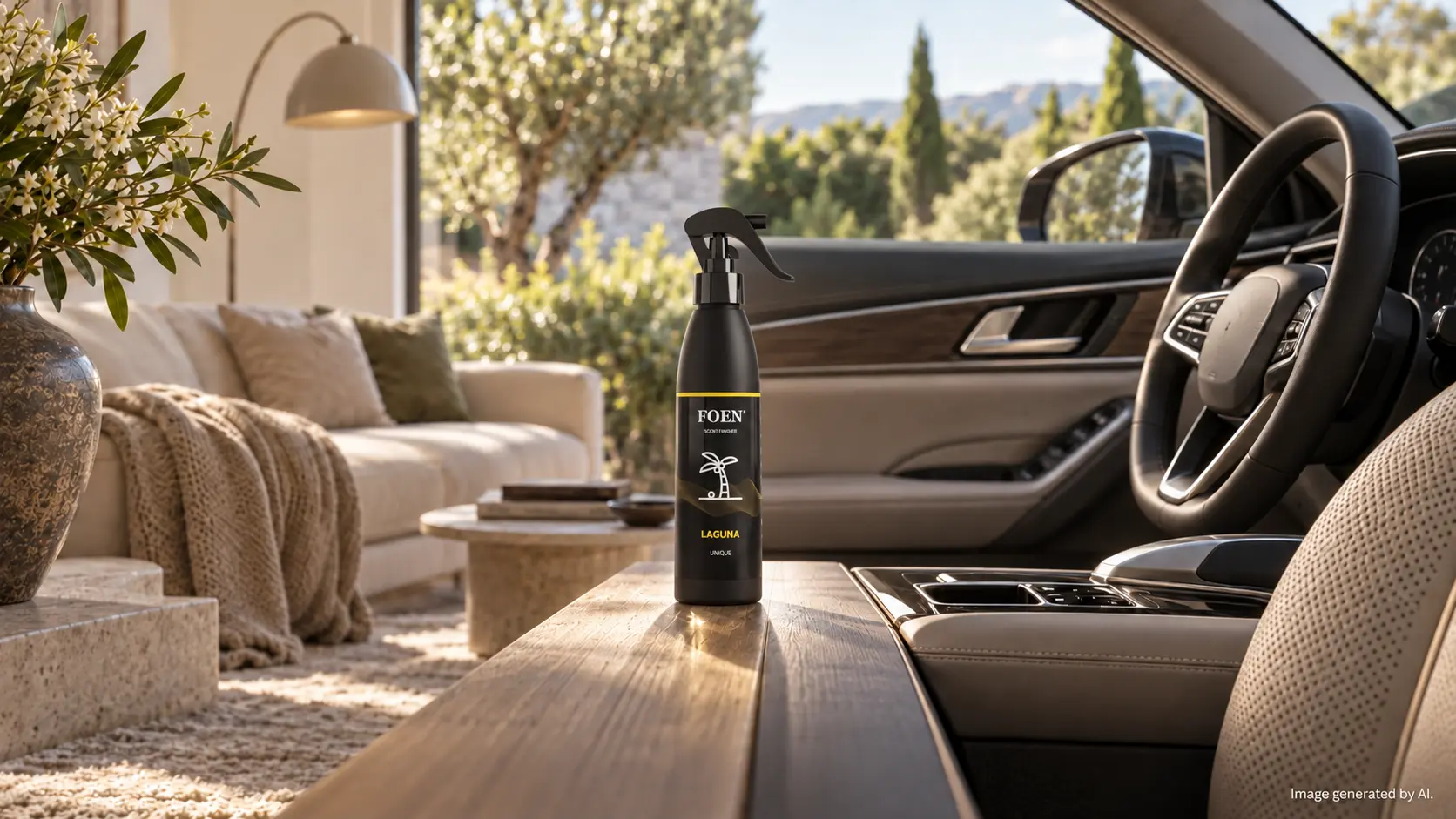
You spray a fragrance at home and it feels smooth and balanced. Then you use the exact same scent in your car and suddenly it’s louder, sweeter, sharper, or it disappears after a short drive. It can be frustrating, especially if you keep your interior clean and you’re trying to avoid that “gas station freshener” vibe.
Most of the time, the fragrance hasn’t “gone bad” and the quality hasn’t changed. What changes is the environment around it, and how your nose interprets it in that environment.
Why cars and homes make scents smell different
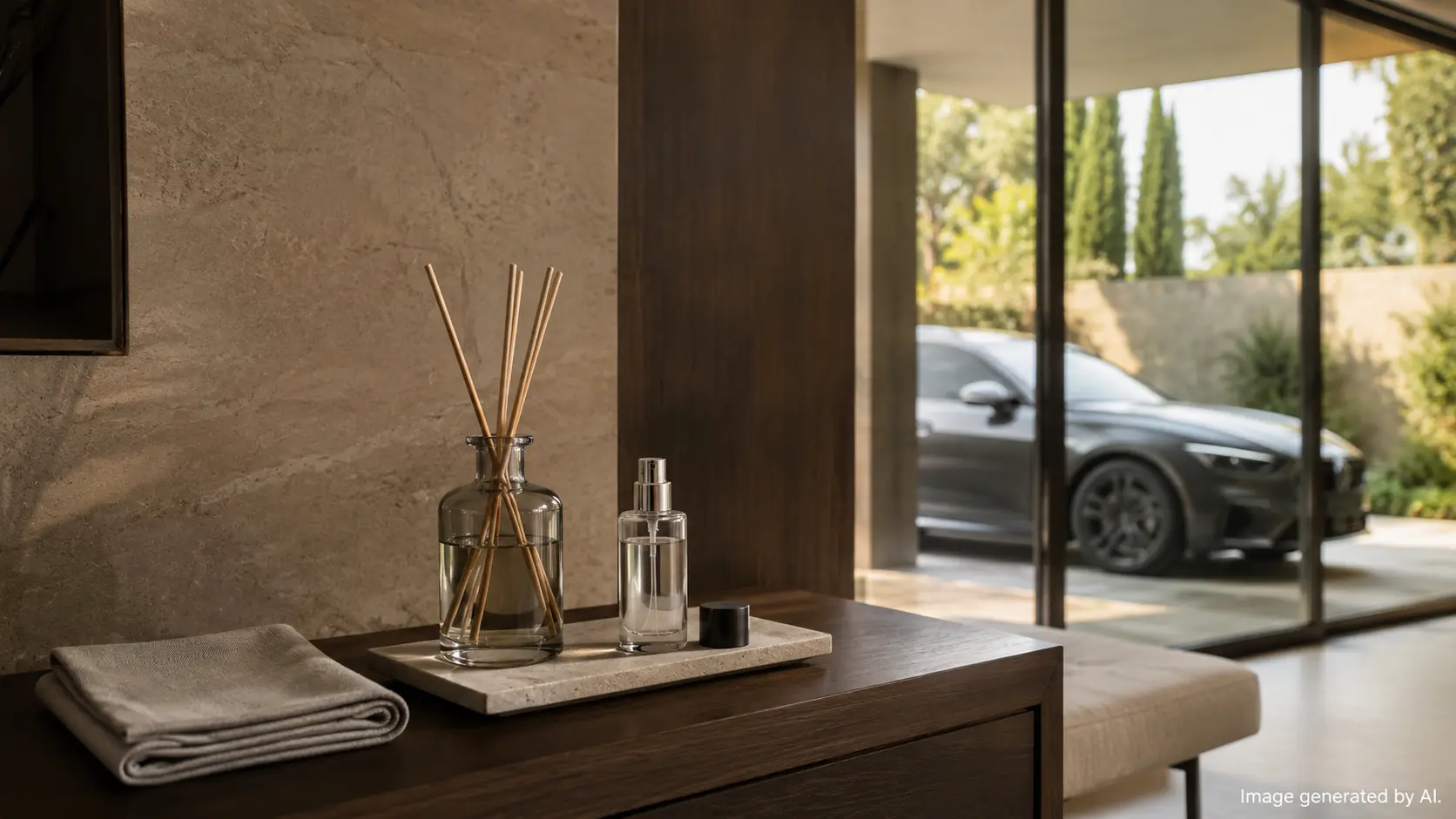
A home and a car are basically two different “diffusion labs.” A living room is larger, usually more stable in temperature, and has slower, softer air movement. A car interior is compact, heats and cools fast, and has a ventilation system designed to move air efficiently.
Here’s the quick comparison you feel in real life when you use the same fragrance in both places:
| Factor | Typical at home | Typical in a car |
|---|---|---|
| Temperature swings | Relatively stable | Extreme (sun-baked cabin, A/C blasts) |
| Airflow | Gentler, more diffuse | Strong directional airflow from vents |
| Space/volume | Larger air volume dilutes scent | Small cabin concentrates scent quickly |
| Surfaces | More textiles (curtains, rugs), porous walls | Plastics, leather/vinyl, mixed fabrics, rubber mats |
| Background odors | More consistent | More variables (food, gym bag, wet coat, off-gassing) |
| Perception | Longer exposure, slower adaptation | Fast adaptation during short drives; scent comes in waves |
Personal insight: If a fragrance feels “too intense” in a car, I don’t assume it’s the scent itself. I first check the conditions: was the car sitting in the sun, did I just turn on full A/C, and did I apply it too close to a vent? Those three things can make any fragrance seem aggressive.
Temperature, humidity, and sunlight
Heat is the biggest reason the same scent can smell different in a car vs. at home. Fragrance materials are made of molecules that evaporate into the air. Higher temperature means faster evaporation, which changes what reaches your nose and when.
Heat makes fragrances “flash”
In a hot cabin, more volatile components evaporate quickly. That can create an initial burst that feels stronger than it ever does at home, followed by a quicker drop-off. It’s not that the fragrance vanished instantly, it’s that a lot of it evaporated early.
Humidity changes diffusion and “roundness”
Humidity influences how scent molecules travel. In drier air (common with A/C running), some scents can feel sharper and thinner. In more humid air, certain notes can feel fuller or heavier. This is one reason a fragrance might read “cozy” at home but “crisp” in the car, or vice versa.
Sunlight and hot surfaces add their own effects
A dashboard that’s been in direct sun isn’t just warm, it’s radiating heat. That localized heat can increase evaporation near the surface, so you may get scent in strong waves depending on where you applied it and where the sun hits.
Personal insight: If you want a fair test of how a fragrance really smells in your car, don’t judge it the moment you open the door after it’s been parked outside. Let the cabin vent for a minute, then evaluate once the temperature normalizes.
Airflow, ventilation, and distance from the source
At home, scent usually spreads slowly through natural convection and mild airflow. In a car, the HVAC system can push scent directly to your face, especially if the source is near a vent.
- Directional airflow can make a scent feel stronger on the driver side than the passenger side.
- Recirculation mode can concentrate scent faster, because you’re reusing cabin air instead of bringing in fresh air.
- Fan speed changes the “dose.” Higher fan speed can spike perception even if the amount of fragrance is the same.
Distance matters too. A fragrance applied to floor mats behaves differently than fragrance sitting right in a vent clip. Near-source exposure can make top notes feel louder and more volatile, while farther away you get a more blended impression.
Cabin size and scent concentration
Your car’s interior is a small, sealed volume compared to most rooms at home. That means a few sprays that feel subtle in a bedroom can be overpowering in a compact cabin.
Also, the surfaces are closer to you. In a car, you’re almost always within arm’s length of the fragrance source, and you’re often seated in a consistent position, so the scent hits your nose in a more concentrated way.
Materials and surfaces: fabric, leather, plastics
What you spray onto (and what surrounds it) can change both the intensity and the character of the scent. Interiors are full of materials that absorb, release, and sometimes “compete” with fragrance.
Fabric vs. leather (and why it matters)
- Fabric upholstery and carpets are more porous. They can hold fragrance and release it more gradually, which often feels smoother and more consistent over time.
- Leather and vinyl are less absorbent. Fragrance can sit on the surface and evaporate faster, creating stronger initial impact with less long tail.
Plastics and “new car” background odor
Many modern interiors have a baseline scent from plastics, adhesives, and coatings (often discussed under “VOCs” in a general sense). That background can interact with fragrance in your brain: it can make some notes read more synthetic, or push a fragrance toward “clean” or “sharp.”
Personal insight: If your goal is a premium, subtle cabin scent, treat it like detailing: remove the source of unwanted odor first (food, smoke residue, damp mats). Otherwise you’re not evaluating the fragrance, you’re evaluating a mix.
The scent pyramid and why notes shift
Perfumers often describe a fragrance as a pyramid:
- Top notes (first impression) - often citrus, airy, fresh notes. These are the most volatile.
- Heart notes (main character) - florals, aromatics, spices.
- Base notes (dry down) - woods, resins, musks, amber-like accords. These last longer and feel deeper.
In a warm car, top notes can evaporate quickly (rapid loss of the opening), so you might feel like you “skipped” straight to the base. At home, with steadier temperature and softer airflow, you often experience a more gradual progression.
This is why a fragrance that feels bright and fresh in your living room can smell darker or heavier in a car. It’s the same formula, but the environment changes which notes dominate your perception at any moment.
Your nose: olfactory fatigue and context
There’s another variable that has nothing to do with the fragrance itself: you.
Your olfactory system adapts quickly. If you’re around a scent for a while, your brain filters it out (often called olfactory fatigue or adaptation). That’s why you might stop noticing a car fragrance during a drive, then smell it again when you re-enter later.
Context also matters:
- A scent can feel “cleaner” after you wash the car and vacuum, because your brain associates the environment with freshness.
- A scent can feel “off” when mixed with the smell of fast food, damp sports gear, or cigarette residue.
How to evaluate a fragrance in different spaces
If you want to understand how a fragrance truly behaves (and avoid false negatives), test it in a controlled way.
A quick, fair testing routine
- Start neutral: air out the car for a minute if it’s been sitting hot, and remove obvious odor sources (trash, damp items).
- Use the same dose: don’t match “number of sprays” between home and car. Match the perceived intensity. A car usually needs less.
- Wait 10-15 minutes: don’t judge straight away. Let the cabin settle and let the harshest volatility pass.
- Re-check after a drive: HVAC airflow can change everything. Smell again after you’ve driven with normal fan speed.
- Check the next day: the “true character” often shows up once the fragrance has had time to bind lightly to textiles and the opening has faded.
Standard home diffusers vs. car conditions
Reed diffusers and many home room sprays aren’t designed for a bouncing, heat-cycling environment. They can:
- release too quickly when the cabin heats up,
- feel inconsistent because airflow is aggressive and directional,
- perform poorly if applied to non-porous surfaces.
That’s why many enthusiasts prefer car-specific delivery formats (like vent-mounted options) or applying fragrance to textiles that release scent more gradually.
Practical application tips for cars (without overdoing it)
If you care about a clean look and a premium vibe, subtlety is the goal. You want the cabin to smell intentionally good, not “freshener-first.”
Where to put fragrance for the most natural result
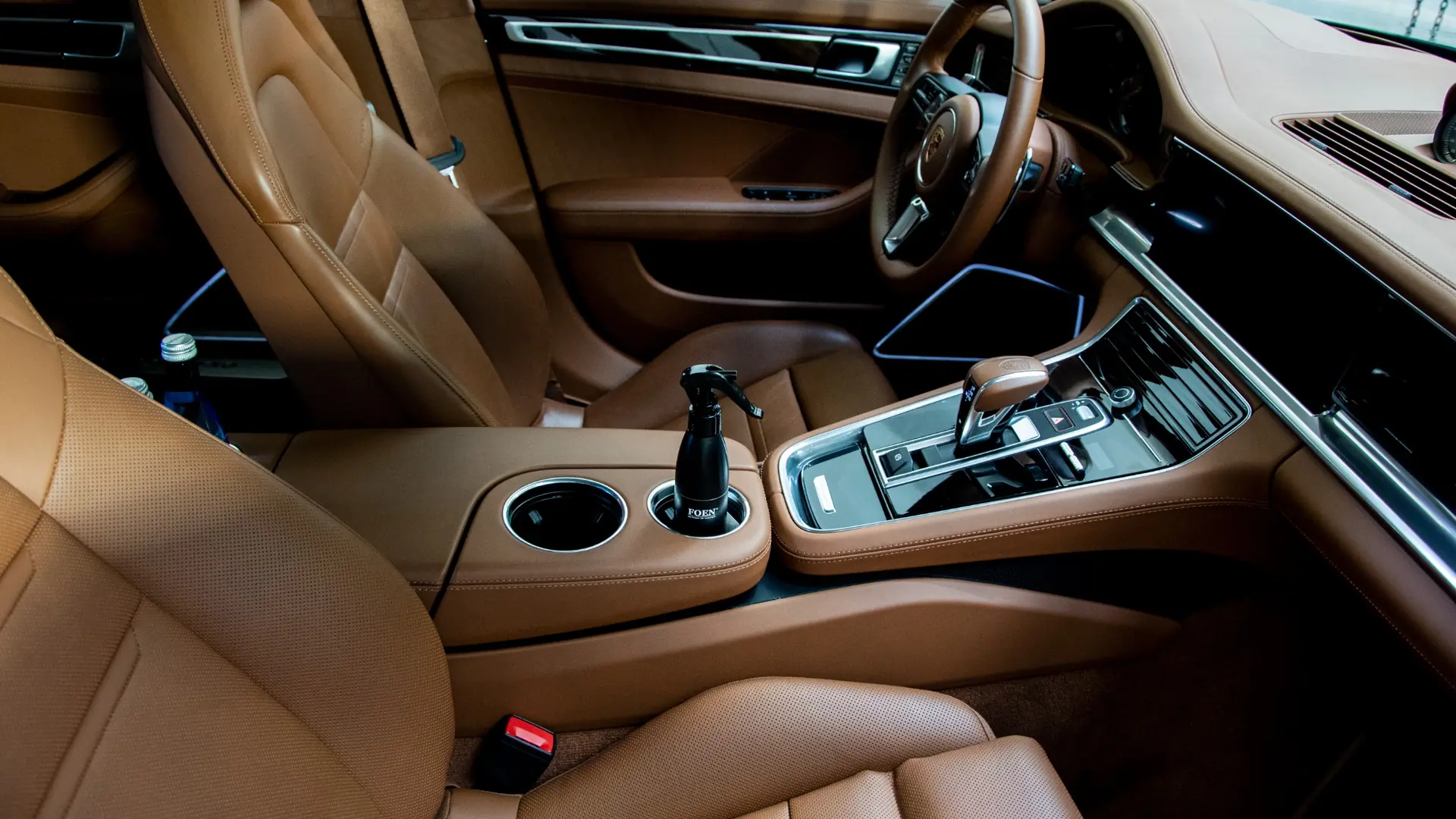
- Floor mats and carpets: great for gradual release, because airflow moves across them without blasting the scent into your face.
- Fabric seats (light application): can hold scent well, but always spot test first.
- Avoid hot, hard surfaces: dashboards and plastic trim can make scent flash fast and feel harsh.
The FOEN 7 x 7 application technique (what it is and how to do it)
FOEN recommends a method designed for consistency rather than a one-time blast: 7 applications per mat for 7 consecutive days. The idea is to build a light, even “scent base” in the textiles, then let normal cabin airflow do the work.
- Day 0 prep: vacuum the mats and carpets. If mats are wet or dirty, clean and fully dry them first.
- Choose the target: focus on textile mats or carpeted areas (not plastic or the dashboard).
- Apply lightly: do 7 sprays per mat, holding the bottle at a short distance so the mist spreads rather than soaking one spot.
- Let it settle: close the car and let it sit for a bit, or drive normally. Avoid blasting the fan on max immediately after application.
- Repeat for 7 days: keep the dose consistent. The goal is controlled layering, not intensity.
With FOEN interior perfumes (available as FOEN Small 185 ml and FOEN Large 450 ml), this technique is meant to create a noticeable but comfortable scent for roughly a month, depending on conditions like temperature, cleaning frequency, and how often you drive.
A note on vent-mounted options
If you prefer a clean, discreet setup with scent that spreads with airflow, vent-mounted formats can be a good match for a daily driver. FOEN offers vent solutions like Foen Wood Stick (natural wood housing with an infused polymer inside) and Foen Pulse (a more budget-friendly vent option). These formats lean into what a car already does well: controlled airflow through the cabin.
If you’re trying to avoid the “strong for two days, gone on day three” pattern, the key is an even release and an application spot that doesn’t overheat.
If you want to explore FOEN’s car and interior fragrance options, you can browse them on the official site: FOEN premium car and home fragrances.
Frequently asked questions
Why does fragrance smell stronger in my car than in my house?
A car has a smaller air volume, faster temperature changes, and stronger directional airflow (HVAC). That combination concentrates scent and can push it directly toward your nose.
Why do car air fresheners smell very strong at first and then fade quickly?
Heat and airflow can cause a quick release of more volatile fragrance components, creating an initial burst. After that, the remaining composition can feel quieter because the “flashy” top notes are gone and your nose adapts.
Can I use home room sprays in my car?
You can, but many home products aren’t designed for a hot, compact, high-airflow environment. If you do, use fewer sprays, avoid hard hot surfaces, and test on a small textile area first.
What is the best place to apply fragrance in a car?
For a more natural, steady effect, textiles like floor mats and carpets work well because they release scent gradually as air moves through the cabin.
How long should a premium car fragrance last?
It depends on temperature, sunlight exposure, ventilation settings, and how often you clean the interior. In general, premium formats aim for a consistent, comfortable presence rather than a short, intense hit.