How to Get Rid of Food Smells in Your Car and at Home (Practical Guide)
September 16, 2026
You grabbed takeout on Friday, enjoyed it in the parking lot, and thought nothing of it. By Monday morning, your commute smells like old fries.
Food odors are stubborn because they don’t just float in the air - they cling to textiles, seams, and hidden corners. The good news: you can usually fix it without “odor bombs” or overpowering hanging fresheners.
This guide focuses on removing the source first, then using fragrance as the finishing touch.
Why food smells linger (car vs home)
Most “food smell” problems are really a mix of two things:
- Residue (grease, sauces, crumbs, spills) that stays in place and keeps off-gassing.
- Absorption into porous materials like carpet, cloth seats, headliners, and even paper or fabric bags left behind.
In cars, the issue is amplified because the cabin is small, heats up quickly in the sun, and has lots of textile surface area. Greasy fast food is especially persistent because oily particles bind to fabric and plastics, then release odor again when the interior warms up.
At home, cooking smells often hang around because they spread through soft furnishings (curtains, rugs, couch fabric) and collect in “odor hubs” like trash bins, sink drains, and food storage areas.
Personal insight: If the smell comes back strongest on a warm day or when you turn on the HVAC, that’s a clue the odor is sitting in textiles or in the ventilation system - not “in the air” alone.
How to get rid of food smell in a car: 5-step process
If you care about your interior, treat food odor like detailing: find it, remove it, clean it, dry it, then refresh it.
Step 1: Remove the source (yes, check the weird places)
Start with a fast sweep, then a slow one. Food smells often come from something tiny.
- Remove all wrappers, bags, napkins, cups, and bottle caps.
- Check under seat rails (a single french fry can ruin the cabin).
- Look between the seat and center console.
- Empty door pockets and the trunk (especially grocery spill areas).
- Take out the trash and wipe the inside of any in-car trash container.
Step 2: Vacuum like you mean it (seats, seams, and trunk)
Vacuuming isn’t cosmetic here - it’s odor removal. Use a crevice tool and work methodically.
- Remove floor mats and vacuum both sides.
- Vacuum carpet, focusing on under-seat areas and the edges near plastic trim.
- Vacuum cloth seats, paying attention to seams and stitching lines.
- Don’t skip the trunk carpet if you’ve transported groceries or takeout.
Personal insight: Most people vacuum the “flat” areas and stop. The smell usually lives in the edges: seat tracks, carpet seams, and the lip where carpet meets trim.
Step 3: Clean the surfaces that hold grease
Grease film on hard surfaces can keep a smell alive. Clean gently and avoid over-wetting.
- Wipe cup holders, center console, door handles, steering wheel, and armrests with an interior-safe cleaner.
- Clean any sticky spots on plastics where sauces or drinks may have splashed.
- If you have a fabric headliner, treat it carefully: blot and wipe lightly rather than soaking.
Step 4: Treat textiles (spot clean, then dry fully)
If there was a spill (coffee, sauce, soup, greasy bag leak), you need more than fragrance.
- Spot-clean with an upholstery-safe cleaner. Follow the product directions.
- Blot, don’t rub aggressively (rubbing can spread residue deeper).
- Make sure everything dries completely. Moisture can create its own odor problem.
Step 5: Don’t ignore the cabin air filter and HVAC
Turning on the fan and getting a blast of “old lunch” is common. That’s often the HVAC system holding onto odor.
- Check the cabin air filter (especially if it’s overdue). A loaded filter can trap odor and recirculate it.
- Run the fan with fresh air (not recirculation) for a few minutes after cleaning.
- If odor persists strongly from vents, consider a dedicated HVAC cleaning approach or professional help.
Personal insight: If you’re short on time, do Steps 1, 2, and 5 first. You’ll often get the biggest “odor drop” from removing hidden food and addressing the cabin air filter.
Why cheap air fresheners and odor bombs fail
There’s a reason the classic cardboard hanging freshener rarely solves anything: it mainly adds a new scent on top of the old one.
| Approach | What it does | Typical result with food odors | Best use |
|---|---|---|---|
| Source removal + cleaning | Eliminates residue and trapped particles in textiles and surfaces | Odor actually reduces over time | Always the first step |
| “Odor bomb” foggers | Fills cabin with strong fragrance; may not reach embedded residue | Smell often returns; fragrance can feel overwhelming | Rarely, and only after cleaning |
| Cardboard hanging fresheners | Adds fragrance near the mirror area | Mixes pine/perfume with stale food smell | Light refresh when the car is already clean |
| Vent clips | Disperses scent through airflow | More even distribution, still not a substitute for cleaning | Finishing touch after odor source is handled |
The goal is not to “fight smell with smell.” It’s to get your interior back to neutral, then choose a fragrance you actually want to live with.
Refresh after cleaning: FOEN and the 7x7 method
Once the source is removed and the cabin is clean and dry, fragrance makes sense - as a premium finishing step that complements your interior, not something that’s trying to cover up yesterday’s lunch.
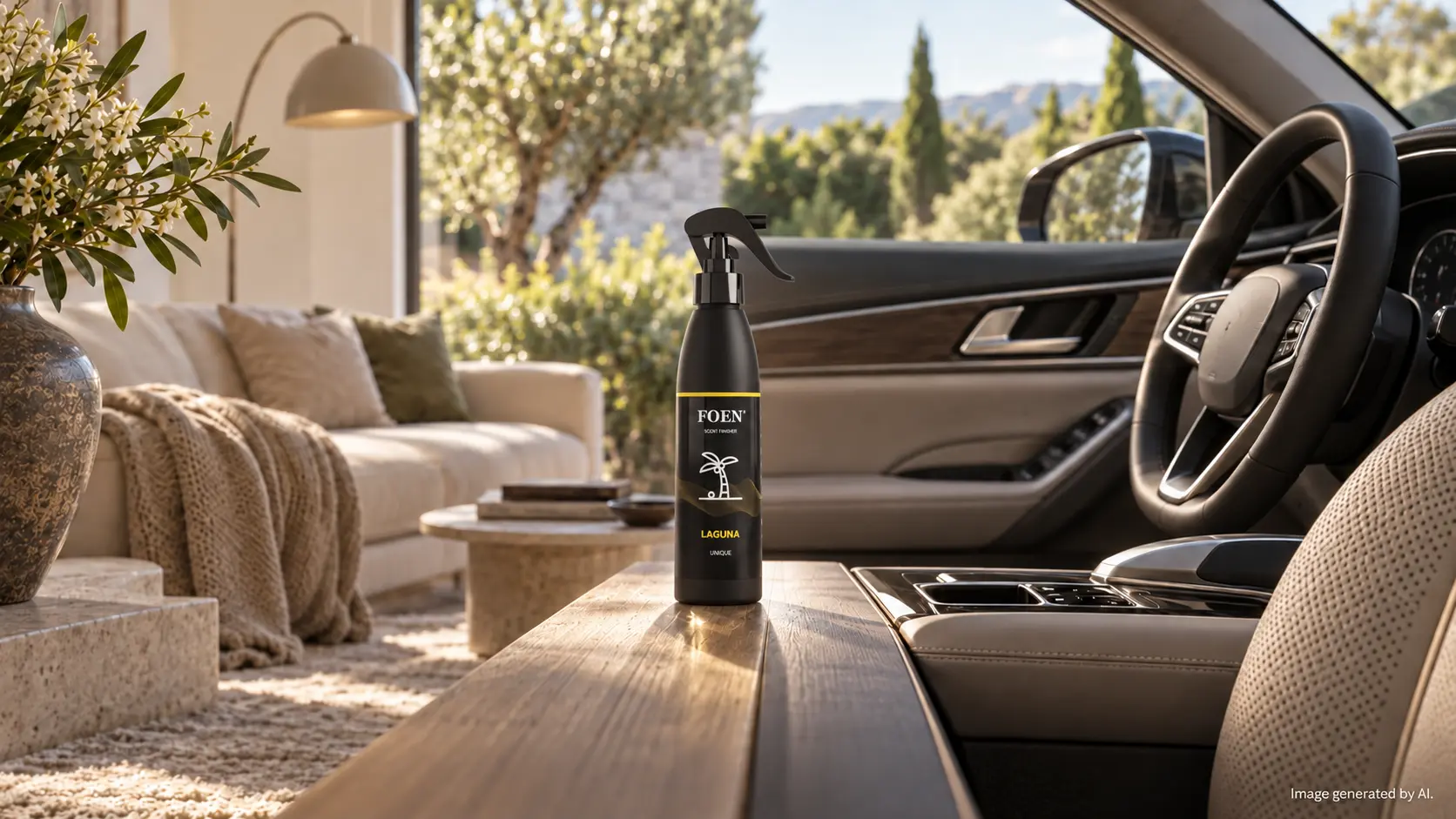
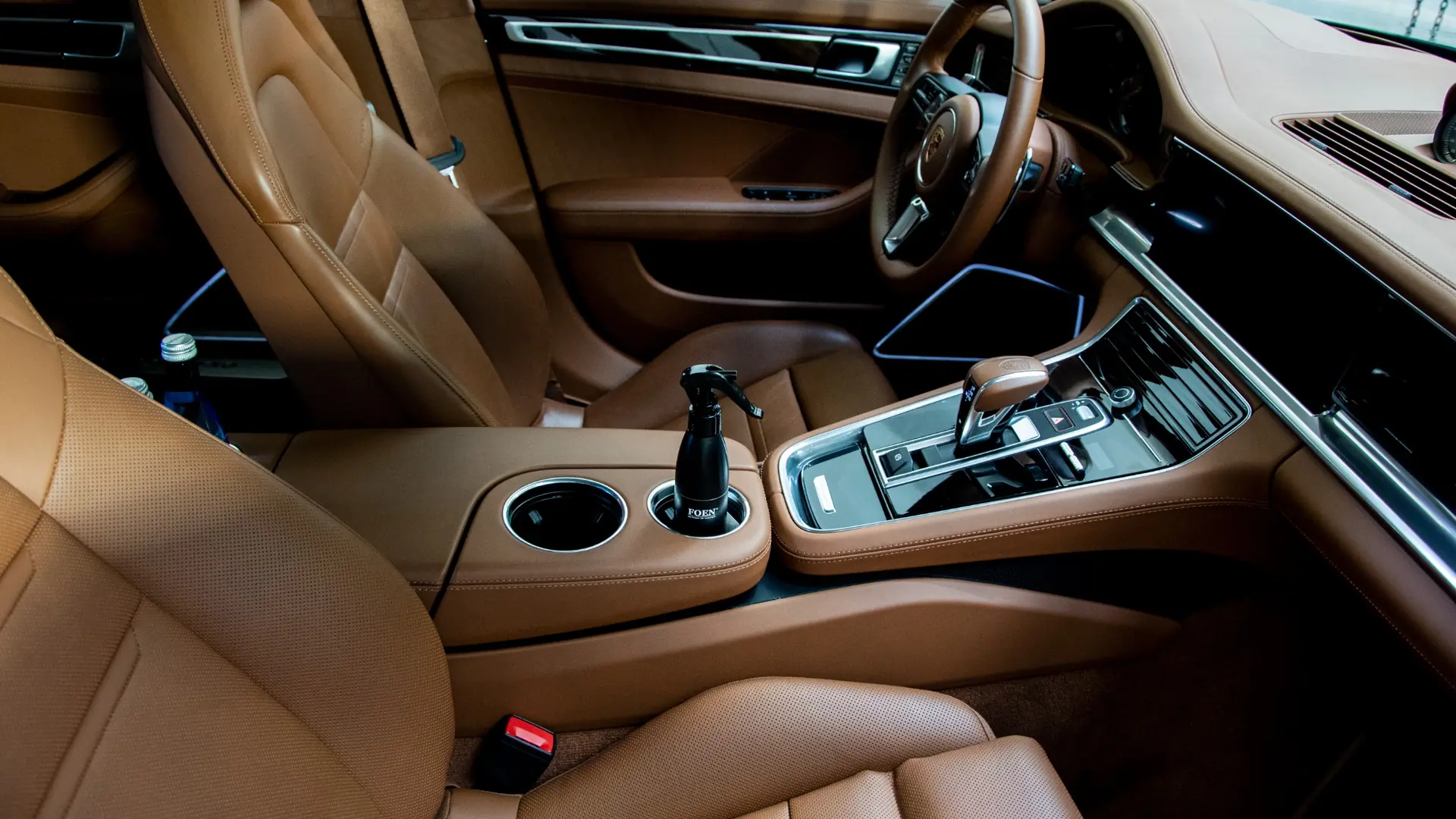
FOEN is a Polish producer of premium interior and car perfumes designed for comfortable, everyday use with an elegant character. The lineup includes car and interior spray perfumes (FOEN Small 185 ml and FOEN Large 450 ml), plus vent-mounted options like Foen Wood Stick (natural wood) and Foen Pulse (minimalist, more budget-friendly).
The FOEN Spray “7x7” application method (clear steps)
This method is about building a consistent scent base in the textiles that hold fragrance well (especially mats), after your car is already clean.
- Clean first: vacuum the interior and wash the floor mats if needed. Let them dry.
- Target the right surface: focus on textiles like floor mats and fabric upholstery (not glass or screens).
- Apply: spray FOEN 7 times on each floor mat.
- Repeat: do this for 7 consecutive days.
- Maintain: after the initial week, use light, occasional refresh sprays as needed (avoid over-applying).
FOEN notes that this approach can keep the scent noticeable for around 30 days, and with gradual use of the whole bottle the effect may last longer - but as with any fragrance, results depend on cabin size, ventilation habits, and how often you drive with windows down.
Wood Stick vs Pulse: which fits your interior style?
- Foen Wood Stick: a vent-mounted fragrance in a natural wooden housing with gradual, even release (up to eight weeks). It’s a clean upgrade if you dislike anything dangling from the mirror.
- Foen Pulse: also mounts on the vent and spreads fragrance with airflow, using a minimalist plastic housing as a more accessible alternative.
If you’re picky about “artificial” cabin scents, start with a lighter profile (FOEN has scent families like FRESH, SWEET, UNIQUE, and INTENSIVE) and apply less than you think you need. You can always add more later.
How to get rid of cooking smells at home
The home playbook is similar: remove the odor source, clean where it settled, then refresh.
1) Remove the source and stop the spread
- Put leftovers into sealed containers quickly.
- Take out the trash (especially food packaging) and wipe the bin lid and rim.
- Run the range hood during cooking and for 10-15 minutes afterward.
- Open windows for cross-ventilation if weather allows.
2) Clean the “odor holders”
- Wipe stovetop, backsplash, cabinet pulls, and nearby counters (grease mist travels).
- Wash dish towels, oven mitts, and any textiles used during cooking.
- For soft furnishings that absorbed odor (curtains, couch throws), launder or air them out.
3) Simple DIY options (after cleaning)
- Simmer citrus peels in water for a gentle kitchen reset.
- Simmer cinnamon sticks or cloves for a warm, cozy scent (keep it supervised).
- Use baking soda in a bowl in the fridge or near trash areas to help with mild lingering odors.
4) Add fragrance as the finishing touch (textiles work best)
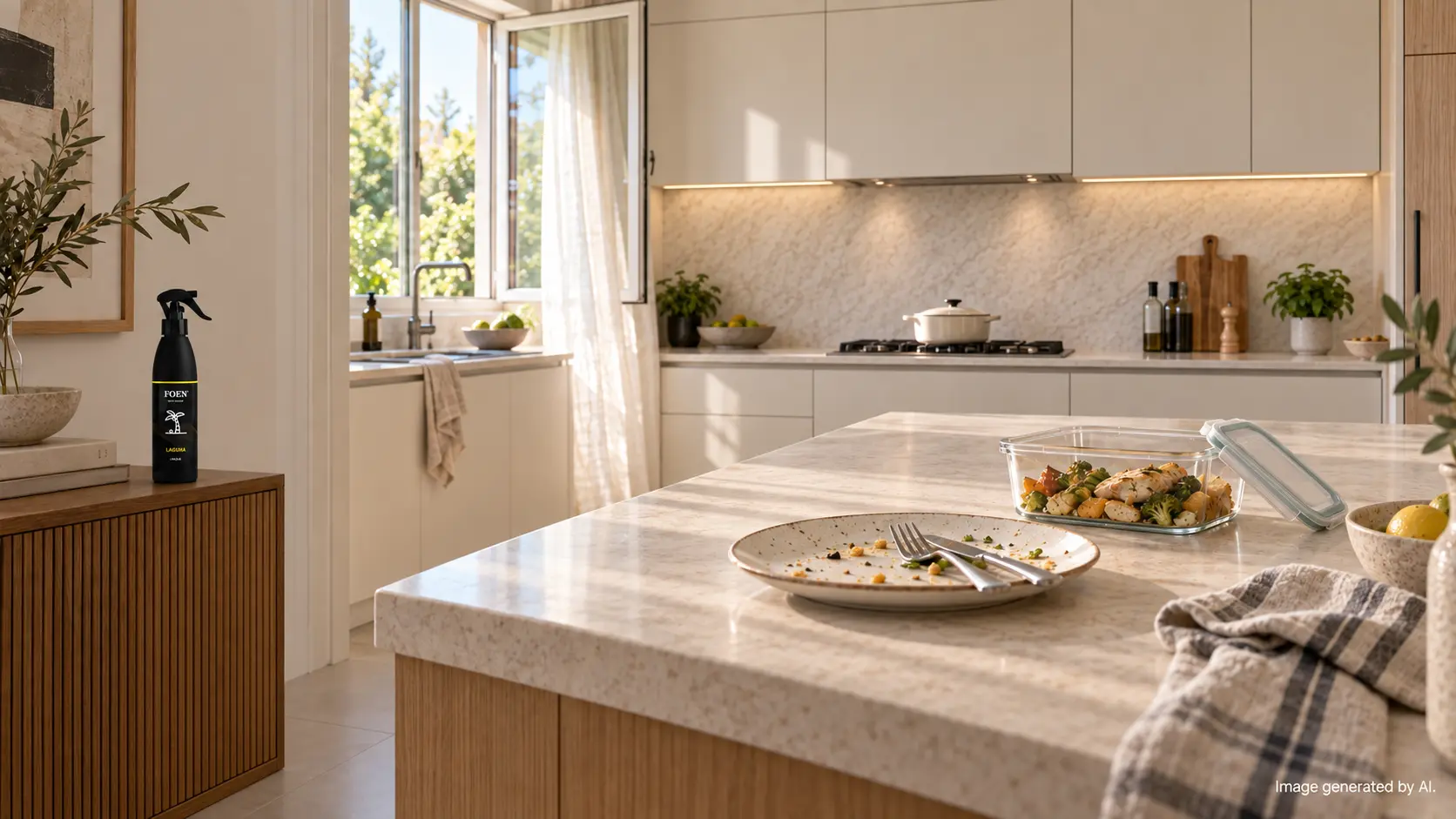
Once your kitchen and living area are back to neutral, a textile-friendly interior perfume can help your home feel “done” - like the final detail after a deep clean.
FOEN spray perfumes can be applied to selected home textiles such as rugs, curtains, and other fabrics (always test a small hidden area first and follow the manufacturer’s guidance). The goal isn’t to claim a fragrance “neutralizes everything,” but to create a pleasant, intentional atmosphere after the real odor source is handled.
If you like having the same “signature scent” in your life, pairing a clean car interior with a similarly refreshed home space is a surprisingly satisfying upgrade.
FAQ
How long does fast food smell last in a car?
If residue is still present (crumbs, grease film, spills), the smell can linger for days or even weeks and often gets worse when the cabin heats up. After proper cleaning and drying, it typically fades much faster.
Can baking soda remove food odor from car seats?
Baking soda can help with mild odors on textiles, but it won’t fix a spill or grease soaked into foam. It’s best used as a light deodorizing step after you’ve removed food residue and cleaned the area.
Does changing the cabin air filter help with interior car smells?
Yes. A dirty cabin air filter can hold odors and push them back into the cabin when the fan runs. If the smell seems to come from the vents, checking the filter is a smart move.
Do ozone generators remove food odors?
Ozone treatments can reduce stubborn odors, but they should be used carefully and typically by professionals due to safety and material considerations. They also work best after the source of the odor has been removed and the interior is clean.
What is the FOEN 7x7 method?
It’s FOEN’s recommended way to build a longer-lasting fragrance foundation in your car: 7 sprays on each floor mat, repeated for 7 consecutive days, after the interior is cleaned and dry.
If you want a more refined alternative to hanging fresheners after you’ve handled the actual odor source, explore FOEN car and interior fragrances here: FOEN premium fragrances for cars and interiors.