How to Curate the Perfect Fragrance Ritual for Your Home and Car
August 31, 2026
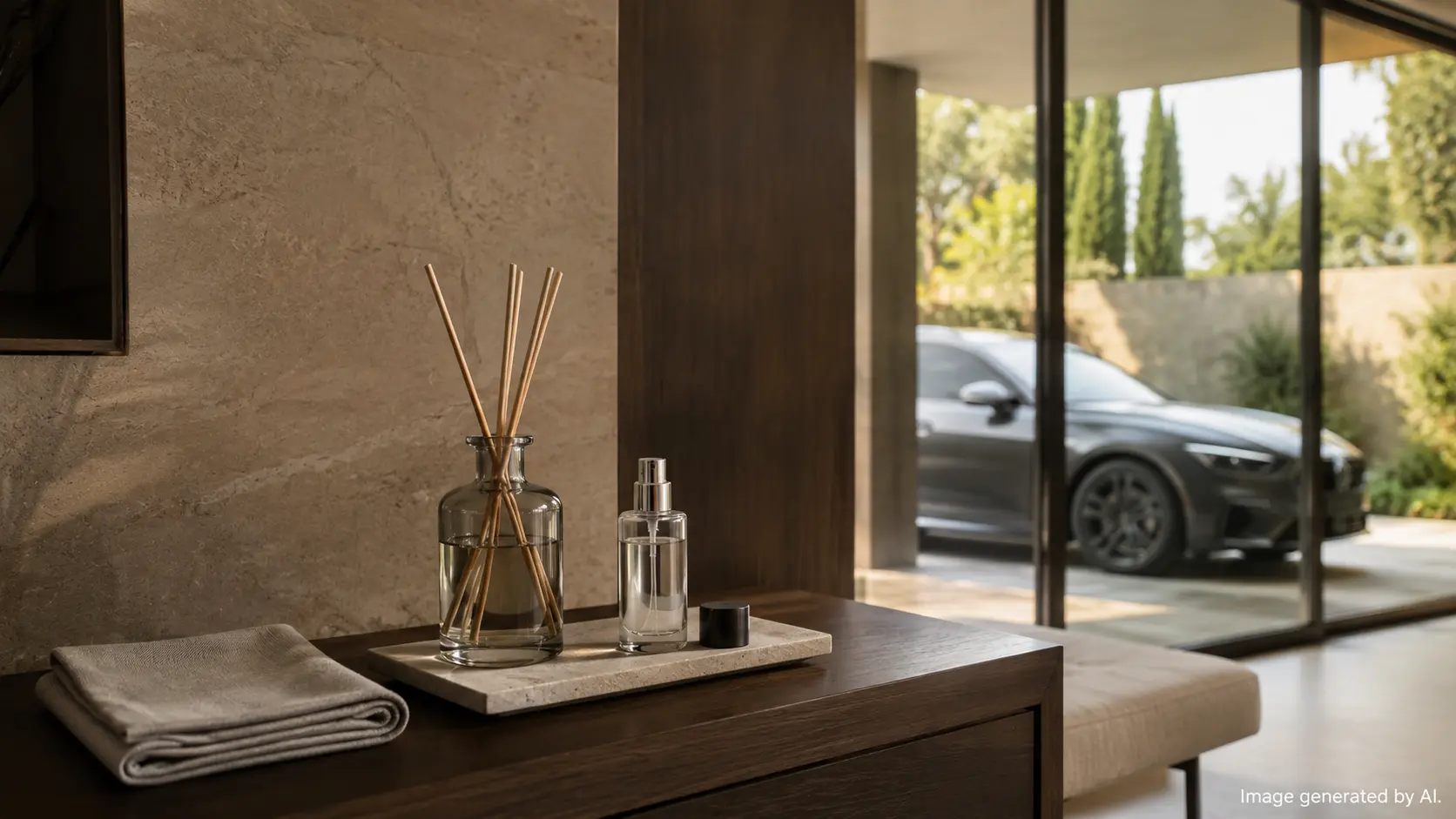
A good scent is quiet design. It sits in the background like soft lighting: it can make a hallway feel welcoming, an open-plan kitchen feel calmer after cooking, and a car commute feel more "yours".
But choosing fragrance is also surprisingly technical. The same perfume can feel airy in a large living room and too intense in a small car cabin. Longevity depends on materials, airflow, and how you apply it - not just the label.
This guide is written for a wellness-conscious UK buyer who loves an inviting home, cares about ingredients and intensity, and wants clear, responsible usage advice (especially with children, pets, or scent-sensitive family members).
How to choose a scent for home and car (quick framework)
If you want a reliable way to choose the right fragrance without falling into trial-and-error, start here. This is the same decision path I recommend when you want your spaces to feel consistent, but not "perfumed".
- Define the job: mood-setting (living room), freshness (kitchen), wind-down (bedroom), or odour-neutralising (after smoke, gym kit, wet dog, or takeaway).
- Choose a fragrance family: citrus/herbal (fresh), floral (soft), woody/resinous (grounding), sweet/amber (cosy), leather/oud (luxury, intense).
- Control intensity: smaller spaces need lower dose and steadier diffusion. Cars amplify scent quickly.
- Decide on delivery: sprays are flexible and great for textiles; vent diffusers are steady and hands-off in a car.
- Plan for longevity: base notes and textile application last longer; airflow and heat can shorten perceived life.
- Use responsibly: ventilation, distance, and moderation matter more than any "clean" buzzword.
Personal insight: If you live in an open-plan space, pick one "anchor" scent family (often woody, clean musks, or soft citrus) and let smaller accents change seasonally. It keeps the home feeling curated rather than chaotic.
Understanding fragrance notes and why they matter
Most disappointment with home or car fragrance comes from mismatched expectations. Someone loves how a scent smells in the first 30 seconds, buys it, then wonders why it changes. That change is the structure of perfume.
Top, heart and base notes (in plain English)
- Top notes: what you notice first. They are volatile and lift quickly (think citrus, mint, light herbs). Great for immediate freshness, less reliable for all-day staying power.
- Heart notes: the main character, emerging after a few minutes (florals, green tea, aromatic herbs, gentle spices).
- Base notes: what lingers and "hangs" in textiles and car fabrics (woods, vanilla, amber, leather, oud-style accords). These are your longevity notes.
Why diffusion changes the scent
How you disperse fragrance affects which notes you experience most:
- Textile application (sprays): can emphasise heart and base notes over time, because fabrics hold onto heavier molecules.
- Airflow diffusion (car vents): can amplify top notes and overall intensity, especially with warm air.
Personal insight: If a scent feels "too much" in your car, don’t bin it immediately. Try it with the fan off for the first few minutes, then use low airflow. Many compositions become far more elegant once you stop blasting them through the vents at full power.
Room-by-room scent mapping (home)
Choosing a home fragrance is less about one perfect bottle and more about placement and purpose. A thoughtful map makes fragrance feel intentional, not random.
What tends to work well in each space
- Entryway/hall: clean citrus, airy woods, soft florals. This is where you want "welcome" rather than intensity.
- Living room: woody, musky, subtle sweet notes (vanilla done lightly, amber, sandalwood-style accords). These read as warm and designed.
- Kitchen: crisp top notes (citrus, herbal, green). They cut through cooking odours quickly. Avoid heavy sweet notes that can clash with food smells.
- Bedroom: gentle, low-throw scents. If you share the room with someone scent-sensitive, keep it minimal and ventilate before sleep.
- Bathroom: fresh, clean notes with a short, bright profile. You want "just showered", not a dense cloud.
- Home office: green tea, forest-style freshness, or restrained citrus. The goal is clarity, not distraction.
Quick comparison: fragrance type by space and intensity
| Space | Best fragrance direction | Recommended intensity | Why it works |
|---|---|---|---|
| Entryway | Citrus, clean woods, airy florals | Low to medium | Creates a welcoming first impression without building up. |
| Living room | Woody, musky, gentle sweet | Medium | Feels cosy and designed; base notes last longer on textiles. |
| Kitchen | Citrus, herbal, green | Low | Top notes refresh quickly and won’t fight with food aromas. |
| Bedroom | Soft florals, light aromatics | Very low | Comforting, less likely to overwhelm at night. |
| Bathroom | Fresh, clean, aquatic-style | Low | Short and bright suits a smaller, humid space. |
| Car | Clean, woody, or balanced sweet | Low to medium | Small cabin amplifies scent fast; even diffusion matters. |
Layering in open-plan spaces (without chaos)
Layering is simply using a consistent base profile and changing only one accent. For example:
- Base: a clean woody or gentle musky direction in the living zone.
- Accent: a citrus/herbal freshness nearer the kitchen zone.
- Rule: avoid running two heavy base-note scents at once (e.g., vanilla plus leather) in the same air volume.
Best car scents: what works in a small cabin
The car is the hardest place to get right. It’s a tiny space with upholstery and plastics that hold odours, plus dramatic changes in temperature. The best car scents feel clean, consistent, and never distracting.
What makes a car fragrance feel "premium" (rather than loud)
- Even release: steady diffusion beats big spikes of scent.
- Controlled intensity: you should notice it when you get in, then it should settle.
- Good pairing with materials: leather-style, woody, and clean fresh profiles often suit car interiors naturally.
If you prefer a discreet option that doesn’t hang from the mirror, vent-mounted solutions are popular because airflow distributes scent evenly. FOEN offers two vent formats: Foen Wood Stick (natural wood housing with refill options) and Foen Pulse (a minimalist, more budget-friendly vent clip).
How long do car fragrances last?
Longevity varies with heat, ventilation use, and personal sensitivity. As a general principle: vent diffusion can feel consistent day-to-day, while textile-applied sprays can give longer tail notes on fabrics, especially when applied in a controlled routine.
Intensity, longevity and delivery methods (sprays vs vent diffusers)
Most people choose by scent alone. A better approach is to choose by tool + routine, then pick the scent family that fits your space.
Sprays (home and car): flexible and textile-friendly
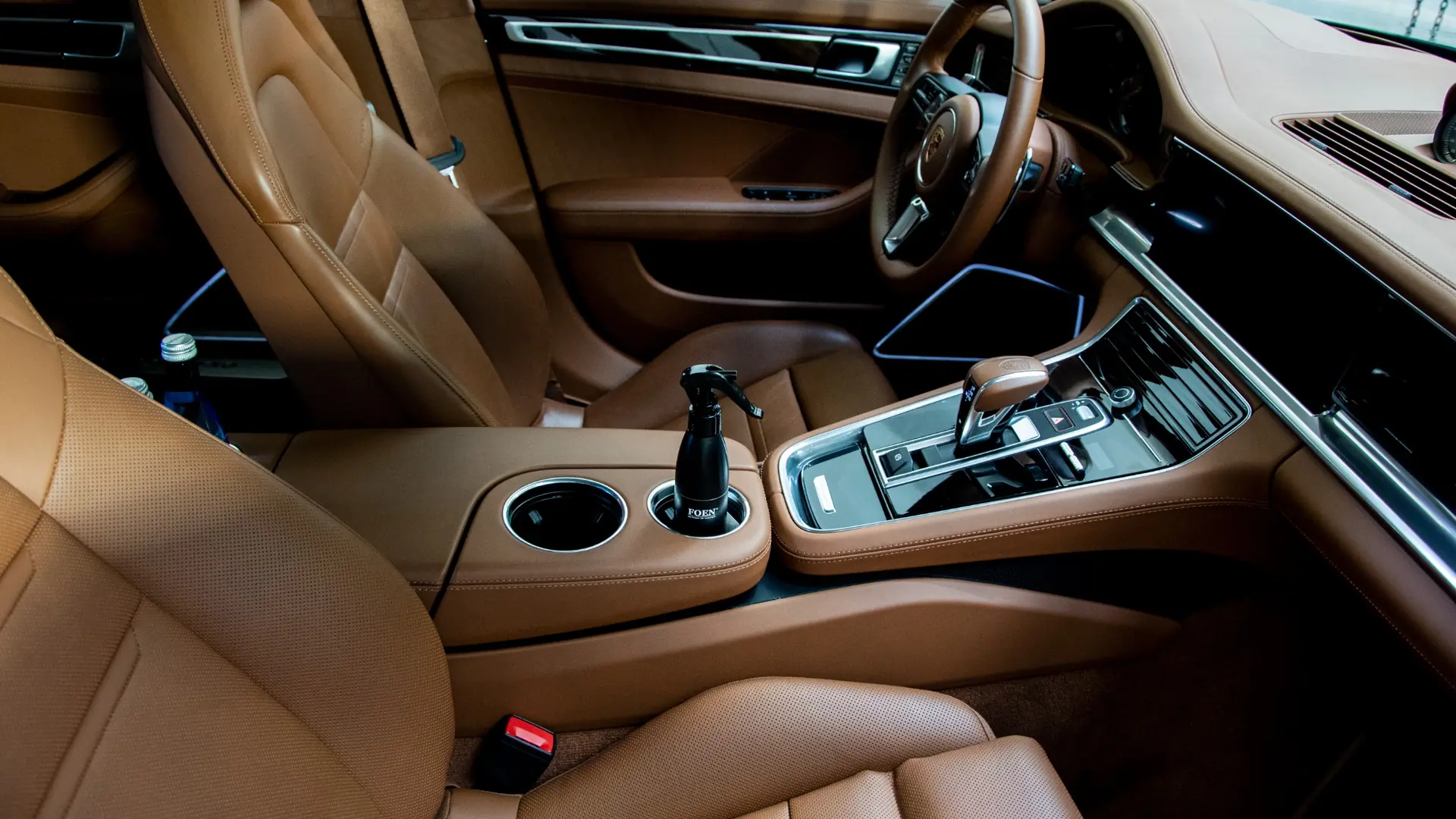
Textiles are your friend for longevity. Sprays can be applied to items like rugs, curtains, and (in cars) mats or fabric upholstery. FOEN’s core product in this category is FOEN Perfume Sprays in two sizes (FOEN Small 185 ml and FOEN Large 450 ml), designed for use in cars and interiors.
Vent-mounted diffusers (car): steady and discreet
Vent-mounted fragrance works best when you want consistency with minimal effort. You can also modulate intensity by adjusting fan speed and temperature.
The FOEN 7 x 7 method (step-by-step)
FOEN popularised a structured application routine for car textiles designed to create a consistent scent baseline rather than occasional spikes. Here is how to use the 7 x 7 approach in a practical way:
- Choose your textile target: car mats are often easiest and most consistent.
- Day 1 to Day 7: apply seven light sprays to each mat once per day.
- After Day 7: pause and assess. For many users, the scent remains noticeable for around a month, depending on ventilation, heat, and cleaning routine.
- Maintenance: if you want a longer, steadier ritual, re-dose lightly on a schedule that matches your sensitivity (often weekly, but there’s no need to overdo it).
Two important details: start light (you can always add), and avoid spraying hard surfaces where slip risk matters.
Personal insight: If you share a car with someone scent-sensitive, use the first week as a calibration week: half the dose for three days, then adjust. It’s the quickest way to land on a level that feels refined, not overpowering.
Responsible fragrance use around pets, children and sensitivities
This section is intentionally factual. Fragrance is a personal product, and sensitivity varies widely. No home or car scent can be responsibly described as universally "safe" for every person, child, or pet.
Practical guidelines that reduce risk
- Ventilation first: after spraying, allow air exchange. In cars, crack windows briefly; at home, ventilate the room.
- Use distance: apply to textiles away from direct contact (not on pet bedding, baby blankets, or children’s soft toys).
- Start low and build slowly: more product does not equal better experience, especially in small spaces.
- Avoid direct inhalation: don’t spray into the air near faces (human or animal) and don’t spray while someone is seated in the car.
- Watch heat and airflow: warm air and high fan speed can intensify perceived strength quickly.
- Respect symptoms: headaches, nausea, coughing, or watery eyes are signals to stop using that product or reduce exposure. When in doubt, consult a qualified healthcare professional.
Odour-neutralising vs masking
For persistent odours (smoke, damp fabrics, sports kit), fragrance works best when paired with cleaning and removal of the source. Some compositions are designed to feel "clean" and better at handling stubborn smells. Within FOEN’s range, scents like No smoking and New Car Leather are often chosen specifically for this purpose, but results will still depend on the underlying cause and cleaning routine.
Common mistakes (and how to avoid them)
- Buying by first spray only: test over time. What you love in the top note may not be what stays on your textiles.
- Over-scenting a small space: cars and bathrooms magnify intensity. Use fewer sprays than you think, then wait.
- Mixing too many fragrance families at once: keep one anchor family and one accent. More than that usually reads as clutter.
- Spraying the wrong surfaces: avoid steering wheels, pedals, hard floors, and any surface where slickness matters.
- Ignoring airflow: vents can turn a subtle scent into an intense one in minutes. Adjust fan speed before you blame the perfume.
From driveway to hallway: building a unified ritual with FOEN
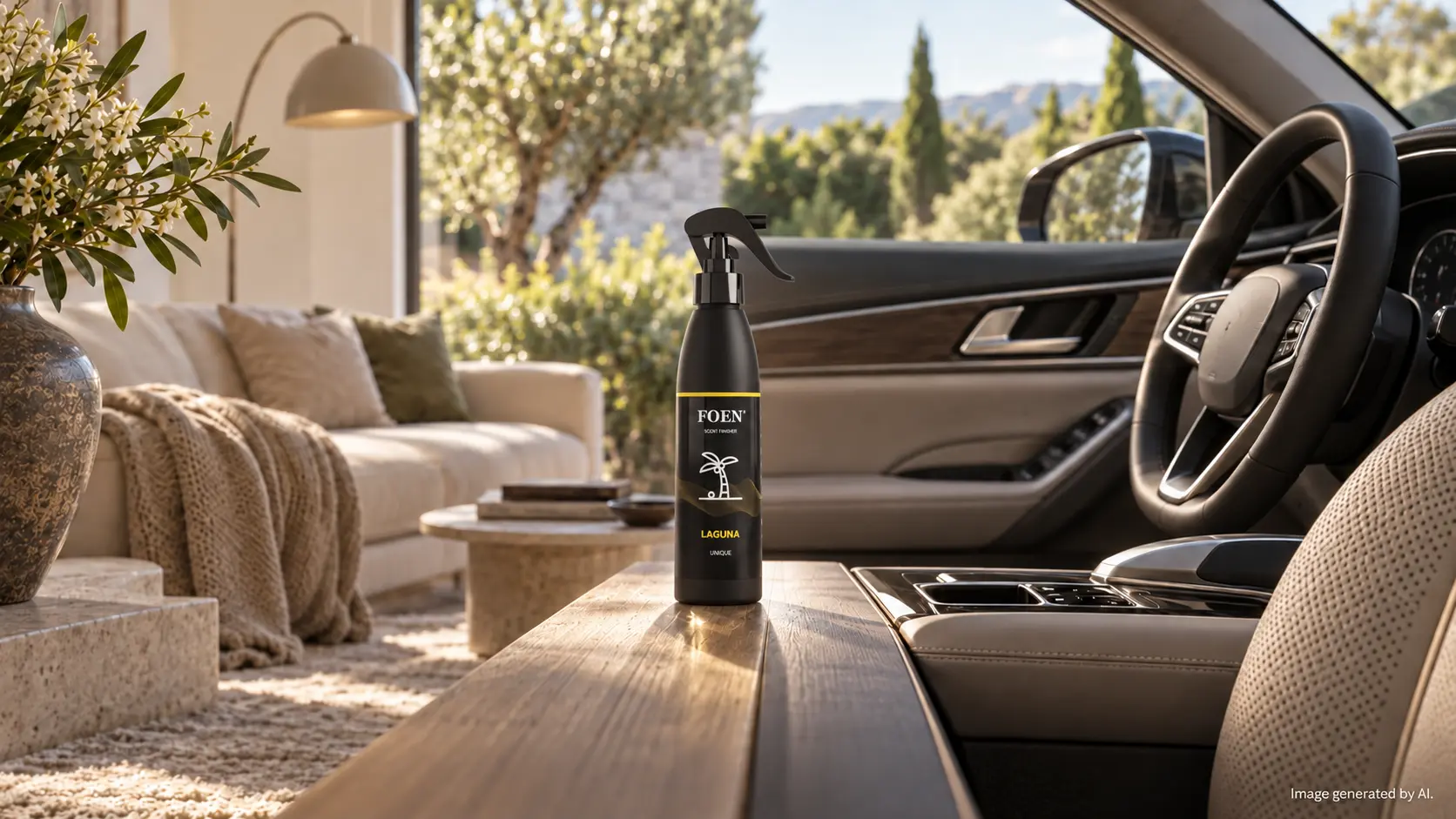
Many people want their spaces to feel connected: the car, the hallway, the living room. FOEN is a Polish brand that built its reputation in premium automotive fragrance and has expanded naturally into scenting interiors with the same idea: a controlled, elegant presence rather than a loud freshener effect.
A simple way to create continuity is to choose one fragrance direction across products:
- For a clean, everyday profile: explore lighter families (FOEN lists these under FRESH).
- For cosy evenings and soft warmth: sweeter profiles (the SWEET line) can work best in living areas rather than cars.
- For statement scents: bolder compositions (the UNIQUE or INTENSIVE lines) are easier to enjoy when you keep dosage low and placement deliberate.
If you want to browse the full range and choose a scent family that fits your routine, visit FOEN’s official website.
FAQ
How can I layer fragrances in an open-plan living space?
Pick one anchor scent family (often woody/clean) for the main area, then add a lighter accent (citrus/herbal) nearer the kitchen. Avoid running two heavy base-note scents at the same time.
What is the safest way to use home fragrances around dogs and cats?
Ventilate well, use low intensity, and apply to textiles away from direct pet contact (never on pet bedding). Avoid spraying near animals, and stop use if any signs of irritation appear.
How long do premium car fragrances typically last?
It depends on heat, airflow and the product format. Vent clips tend to provide steady day-to-day scent, while textile application can extend the "tail" of a fragrance if used in a controlled routine.
What is the FOEN 7 x 7 Application Method?
It’s a routine for car textiles: seven light sprays on each mat for seven consecutive days to build a consistent scent baseline, then reassess and maintain with lighter top-ups as needed.