Room Spray vs Reed Diffuser: When Is a Spray the Better Choice?
October 6, 2026
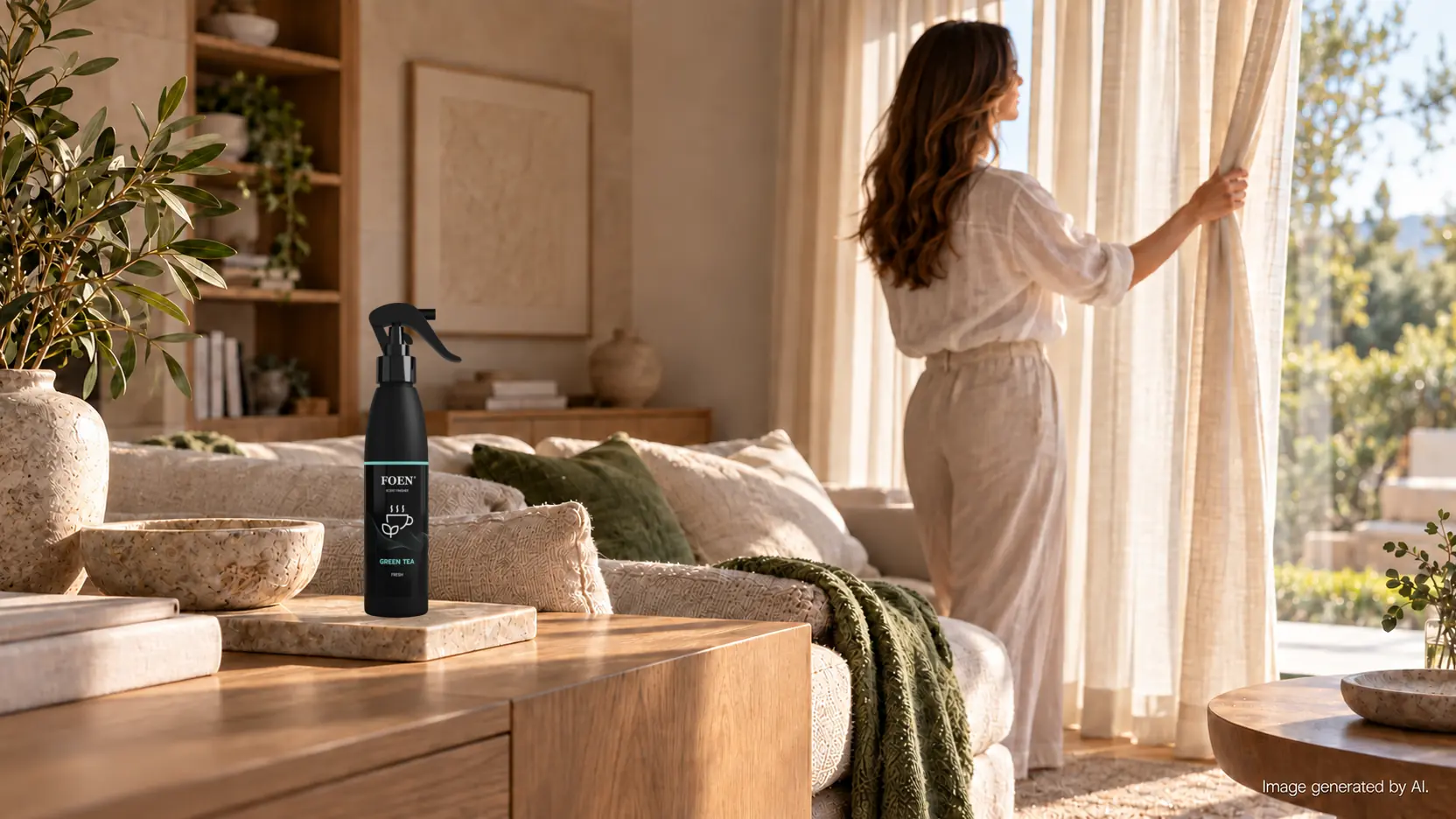
You know the moment: you open the front door and instantly decide whether a home feels calm, clean and welcoming. The big choice is how you get there: a room spray you use only when you want it, or a reed diffuser that scents the space all day.
For many, the decision is less about what smells "best" and more about control: intensity, where the fragrance sits, how it behaves around fabrics, and what feels responsible if you live with children, pets, or someone who is scent-sensitive.
Room spray vs reed diffuser at a glance
If you want the short version, this table covers the differences most people feel day-to-day: control, maintenance and what it’s like to walk into the room.
| Factor | Room spray | Reed diffuser |
|---|---|---|
| Scent control | You decide when and how much. Easy to keep subtle. | Continuous release. Control comes from placement, number of reeds and turning reeds. |
| Intensity | Fast, noticeable burst that fades over time. | Gentle background scent that builds gradually. |
| Experience on entry | Best right after use. Otherwise may be neutral until you refresh. | Often gives that "already scented" feeling when you walk in. |
| Placement | Flexible: you can treat a specific area or (manufacturer-approved) textiles. | Needs a stable surface, away from direct sun/heat and out of reach of children/pets. |
| Room size | Scales easily: more sprays for larger rooms, less for small rooms. | Can struggle in very large/open-plan areas unless you use multiple diffusers. |
| Maintenance | Little ongoing maintenance beyond occasional use. | Ongoing: reeds may need flipping, oil level monitored, bottle replaced. |
| Textiles | Some sprays are designed to be used on certain textiles (always follow brand directions and patch test). | Not designed for textiles. |
The science of scent: why sprays and diffusers aren't interchangeable
Room sprays and reed diffusers may both contain fragrance, but they work in different ways, so the liquids are formulated differently.
Why room sprays feel instant
Sprays are designed to disperse fragrance quickly into the air in fine droplets. They typically rely on fast-evaporating carriers so you get an immediate lift, which is why sprays are a favourite for last-minute freshness (think: guests on the way, or after cooking).
Why reed diffusers feel steady
Reed diffusers use capillary action: the oil travels up the reeds and evaporates slowly from the reed tips. That requires a slower-evaporating base with the right viscosity. Too thin and it can evaporate too quickly; too thick and it may not travel up the reeds properly.
Practical insight: This is the real reason you should never pour a room spray into a diffuser bottle. Even if it smells the same, the liquid may not wick correctly, may evaporate unpredictably, and can create a mess around the neck of the bottle.
When a room spray is the better choice
A room spray is the more practical choice when you want control. You can choose the moment, the intensity, and the area - without committing to fragrance all day.
1) You want to control intensity (especially in smaller homes)
In a small apartment or a house with an open kitchen-living space, continuous fragrance can quickly feel like "too much". A spray lets you keep things light: one or two spritzes, then stop.
Practical insight: If you’re testing a new scent, start with the minimum dose in the most-used room. Live with it for a day before you add more. Many complaints about "headachey" fragrance come from over-application rather than the scent itself.
2) You need targeted odour neutralisation
Some odours don’t need a permanent fragrance solution - they need a quick reset. A room spray is ideal after:
- frying or cooking with spices
- a bin change day
- bathroom use
- a rainy walk with a "wet dog" smell lingering in the hallway
FOEN started in automotive fragrance, where odour control matters, and brings that same focus on lasting, elegant scent into home use through its spray perfumes for interiors.
3) You prefer fragrancing textiles (when the manufacturer allows it)
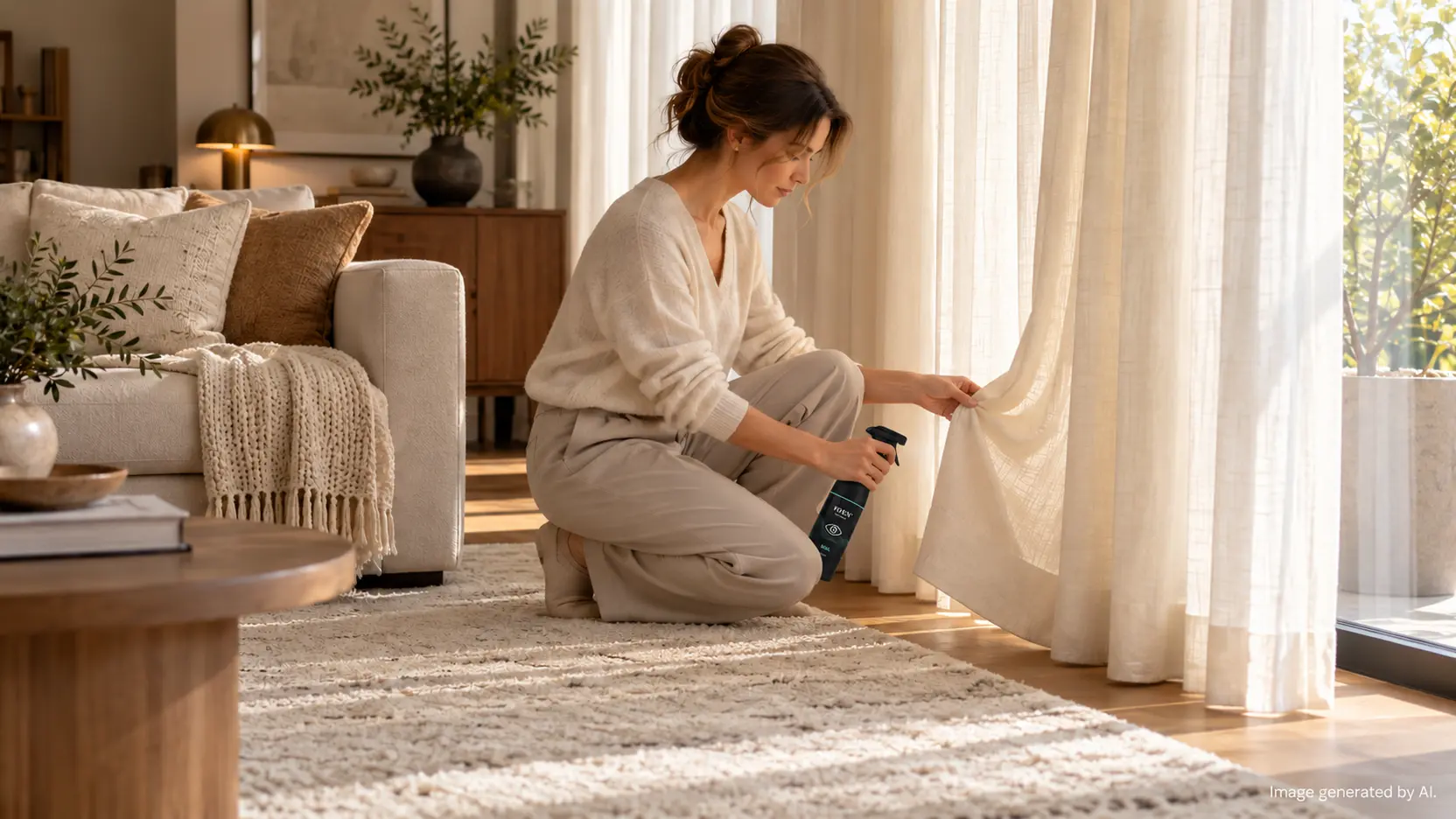
One key difference: sprays can be used on certain textiles if the brand permits it. According to current FOEN product guidance, FOEN spray perfumes can be applied to textiles such as rugs, curtains and other home fabrics, and to car textiles like mats, fabric upholstery and seat belts.
Always follow the label directions, avoid delicate fabrics unless the manufacturer explicitly approves them, and patch test in an inconspicuous spot first.
Practical insight: Textile application is one of the easiest ways to keep fragrance comfortable rather than overpowering. Fabric holds scent close to the surface, so you often perceive it as "clean" and present when you move around, rather than constantly filling the air.
4) You want a simple routine with predictable upkeep
Diffusers are "set and forget" until they aren’t: the oil level drops, reeds clog with dust, and some people flip reeds too often and accidentally spike the intensity.
With a spray, maintenance is straightforward. FOEN also shares a structured application approach known as the 7 x 7 technique (seven applications on each mat for seven consecutive days) to help build a longer-lasting scent result. For home textiles, the same principle applies: consistency beats over-spraying in one go.
When a reed diffuser may be the better fit
A reed diffuser can genuinely be the better choice when you want a continuous background scent and you don’t want to think about fragrancing at all once it’s set up.
A diffuser may suit you if:
- You love walking into a space that is already subtly scented, even if you haven’t touched a bottle for days.
- You want a steady "baseline" in low-traffic areas (hallways, downstairs WC, landing) where you might not remember to spray.
- You don’t want to spray into the air at all, for personal preference.
One caution: continuous scent is not automatically "gentler". In a small room or a poorly ventilated space, a diffuser can build up over time and become more noticeable than you expected.
Placement, room size and textiles: what actually matters
Control vs convenience (and where each wins)
- Sprays: work well near the source of the problem (kitchen doorway, near soft furnishings, on manufacturer-approved textiles). You can also use them just before guests arrive, rather than scenting all day.
- Diffusers: work best where the air is gently moving, but not in direct sunlight or near radiators (heat speeds evaporation and can make the scent feel stronger and shorter-lived).
Room size: a realistic way to think about it
In larger rooms, sprays give you flexibility: you can refresh the space when it matters (evenings, weekends, before hosting). Diffusers may need to be larger, stronger, or doubled up - which increases cost and makes intensity harder to fine-tune.
Textiles: treat them as a "fragrance reservoir"
If your chosen spray allows textile use, fabrics can hold scent longer than air does. Curtains, rugs and fabric sofa throws can carry a subtle trace that reads as "fresh" when you walk past, without making the whole room feel perfumed.
With FOEN, stick to the surfaces the manufacturer lists (for example: rugs, curtains and other textiles) and avoid spraying onto delicate materials unless you have explicit confirmation it’s suitable.
Responsible fragrancing around kids, pets and scent-sensitive people
If you share your home with toddlers, cats, dogs, or someone who gets headaches from fragrance, the goal is not "no scent ever" - it’s sensible use.
Use less than you think you need
Start low and build slowly. This matters more with diffusers, which run continuously, but it applies to sprays too.
Ventilation beats masking
Open a window after cooking or after using cleaning products, then add fragrance. Spraying into stale, humid air often creates a heavier effect.
Keep products out of reach and off contact surfaces
- Don’t spray directly onto pet bedding, cat trees, scratching posts, children’s soft toys or baby blankets unless the manufacturer explicitly says it’s safe for those uses.
- With diffusers, place them where they can’t be knocked over or licked. Spilled diffuser liquid can be messy and undesirable for pets.
Avoid direct exposure
Don’t spray into the air right next to pets or children, and don’t spray in a closed room with them inside. Spritz, let it settle, then re-enter with airflow.
Choose fragrance like you choose cleaning products: read the label
If you’re ingredient-conscious, look for clear usage directions and avoid brands that only offer vague "clean" or "non-toxic" promises without details. Follow the manufacturer’s guidance for dose and surfaces, and if someone in the household reacts to fragrance, scale back or stop using it.
This is also where an on-demand room spray can be a smarter choice than a diffuser: you can keep fragrance for specific moments, rather than exposing the household to it continuously.
Can you use both? Scent layering without overdoing it
Yes, as long as you layer with restraint. A simple approach:
- Baseline (optional): a subtle reed diffuser in an entryway or bathroom for that "already welcoming" feel.
- Moment-based boost: a few targeted sprays in living areas when you actually want fragrance.
If you enjoy fresher profiles, FOEN’s FRESH line (for example, Aqua, Forest or Green Tea) can work well for quick resets. If you want a deeper evening mood, a more intense profile (for example, Sandalwood) may suit occasional use rather than constant diffusion.
When mixing methods, try to keep within one scent family (fresh with fresh, warm with warm). Clashing profiles are the fastest way to make a home feel "over-perfumed".
If you want to explore FOEN’s home and car spray perfumes and choose a scent style that fits your space, you can browse the range on FOEN's official website.
FAQ
Can I use room spray liquid to refill my reed diffuser?
No. Room sprays and diffuser liquids are formulated for different evaporation and wicking behaviour. Using spray liquid in a diffuser can wick poorly, evaporate unpredictably, or leak.
Are room sprays safe to use around dogs and cats?
Use fragrance cautiously. Avoid spraying near pets, don’t apply to pet bedding or toys, ventilate the room, and start with a very small amount. If a pet shows signs of irritation, stop using the product and seek advice from a vet.
How long does a few spritzes of room spray last?
It depends on ventilation, room size and what you spray onto. In air, the effect is usually shorter; on manufacturer-approved textiles, scent tends to linger longer. The most reliable approach is light, repeatable application rather than heavy spraying.
What is the best way to neutralise cooking odours quickly?
First ventilate (open windows, use an extractor). Then use a targeted room spray near soft furnishings or in the doorway area, rather than flooding the whole kitchen. This usually feels fresher and less intense.