Can You Add Fragrance to Floor Cleaner? Safety, Surfaces and Product Checks
October 20, 2026
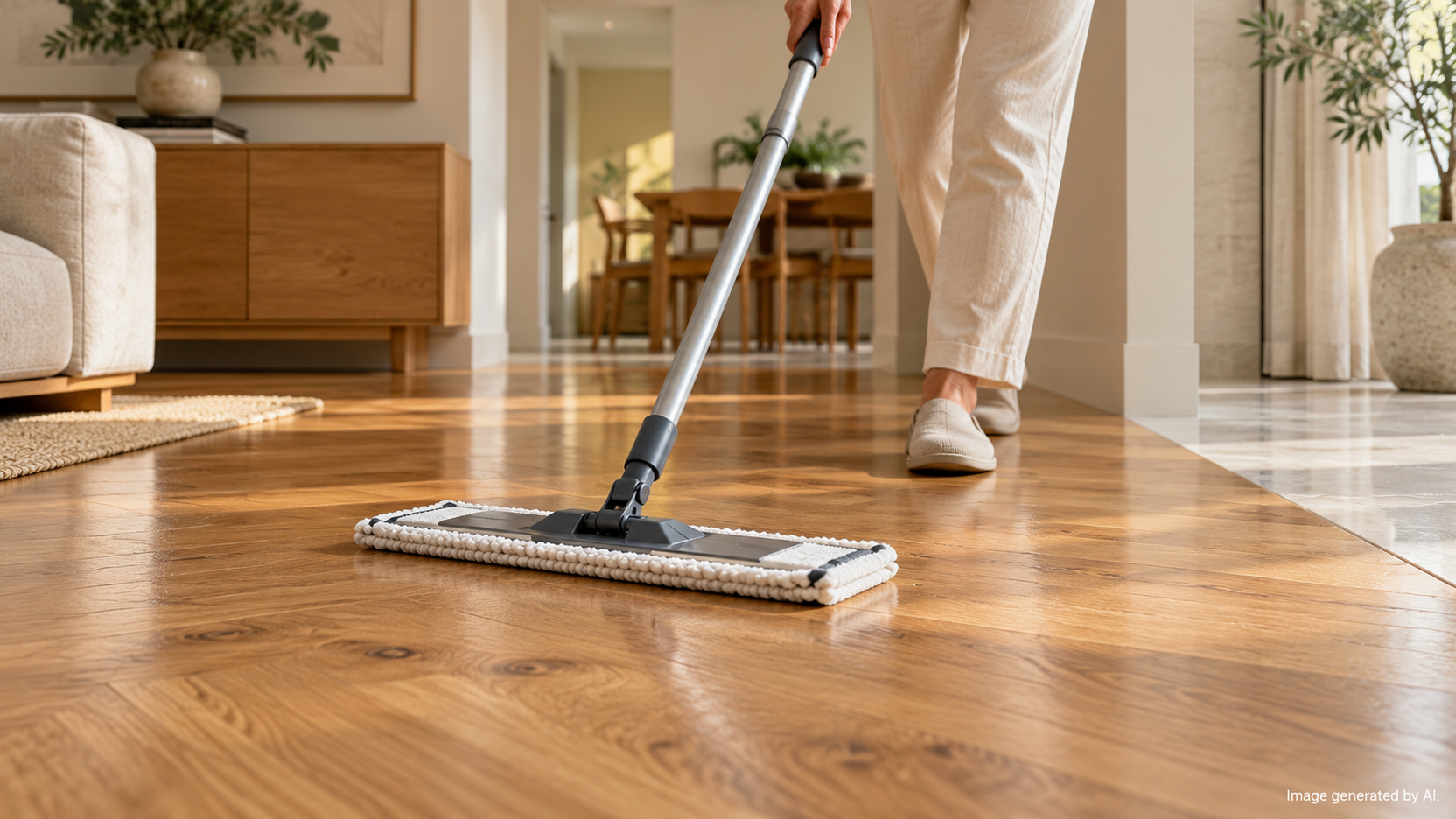
A just-mopped home can feel instantly calmer, but the scent often disappears quickly - or worse, a strong perfume clashes with the “clean” smell you were aiming for. Adding fragrance to floor cleaner can work, but it is only “safe” when three things line up: the cleaning product’s instructions, your floor manufacturer’s requirements, and the fragrance product’s approved use.
There is a big difference between using a manufacturer-approved fragrance product (or a ready-formulated scented floor cleaner) and tipping random perfume or essential oils into a detergent that was never designed for it. The details matter, especially with sealed wood, laminate, LVT/vinyl, and pet households.
Start with three checks (product, floor, fragrance)
Before you add anything scented to mop water, do these checks in order. They prevent the two most common problems: cloudy residue (a film that attracts dirt) and streaking (especially visible on dark tile, polished stone, and glossy LVT).
- Check the floor cleaner label first. Some detergents are formulated to be used “as is” and specifically warn against additives. If the label says “do not mix” or “do not add other products”, treat that as your answer.
- Check your floor manufacturer’s guidance. Many warranty guides for engineered wood, laminate, and LVT specify: pH-neutral cleaner only, minimal water, and no oils/waxes/soap-based products.
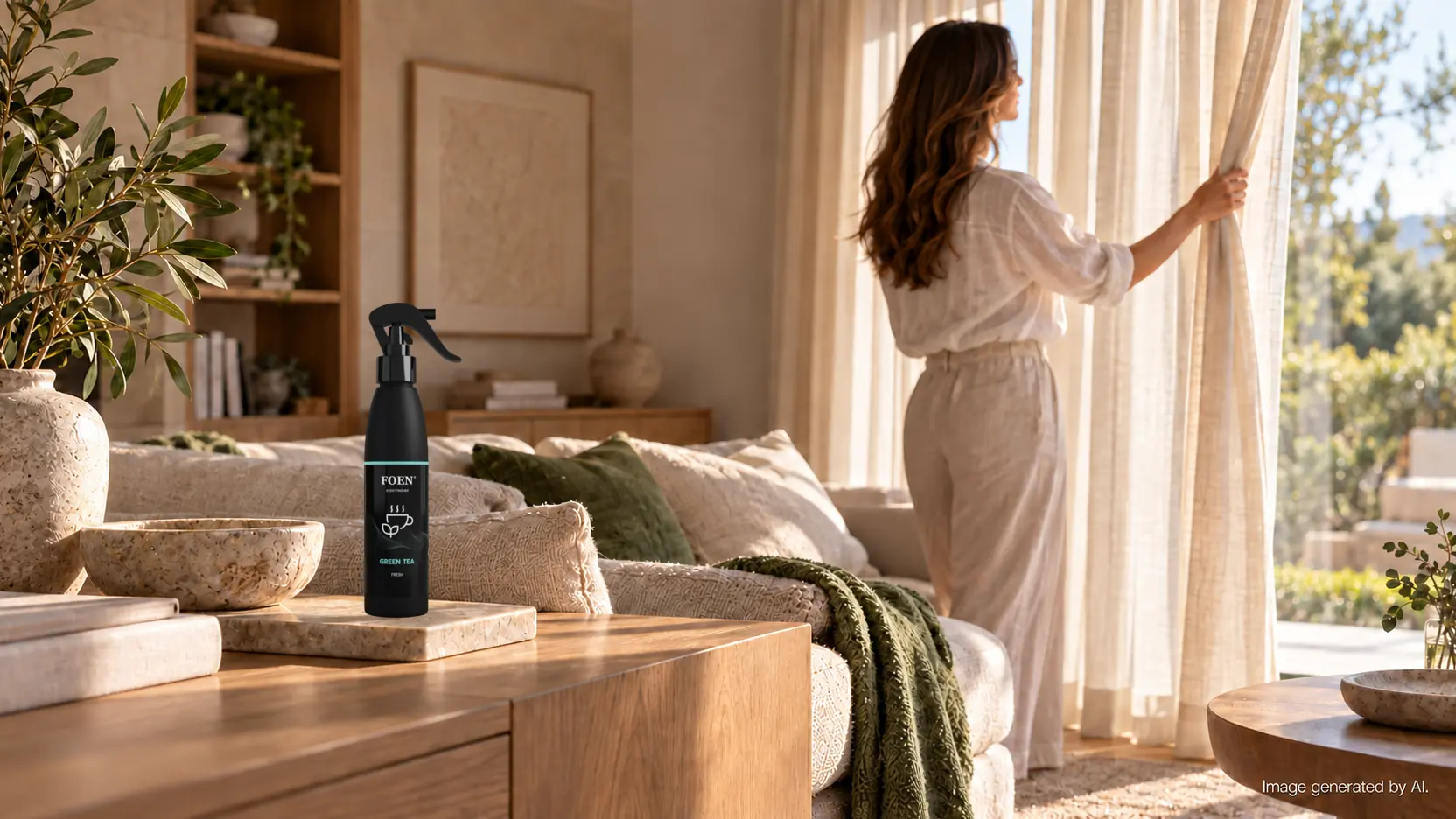
- Check the fragrance product’s directions. Only use a fragrance product as an additive if its manufacturer explicitly allows that use. For example, FOEN spray perfumes are designed for interiors and textiles and may also be used as an additive to surface-washing products in line with manufacturer recommendations and after testing on the material.
If you are unsure which rule wins, follow the strictest one. Floor manufacturers and cleaner labels are usually less forgiving than fragrance products when something goes wrong.
Your options: scented cleaner vs adding fragrance vs scenting textiles
If your goal is a subtle “clean home” scent that lasts, you have three realistic routes. The safest choice depends on your floor finish and how sensitive your household is to fragrance.
- Use a ready-formulated scented floor cleaner (best for most homes). It is designed for dilution, stability, and low residue.
- Add fragrance to an unscented or lightly scented cleaner (works when approved by product directions and used conservatively).
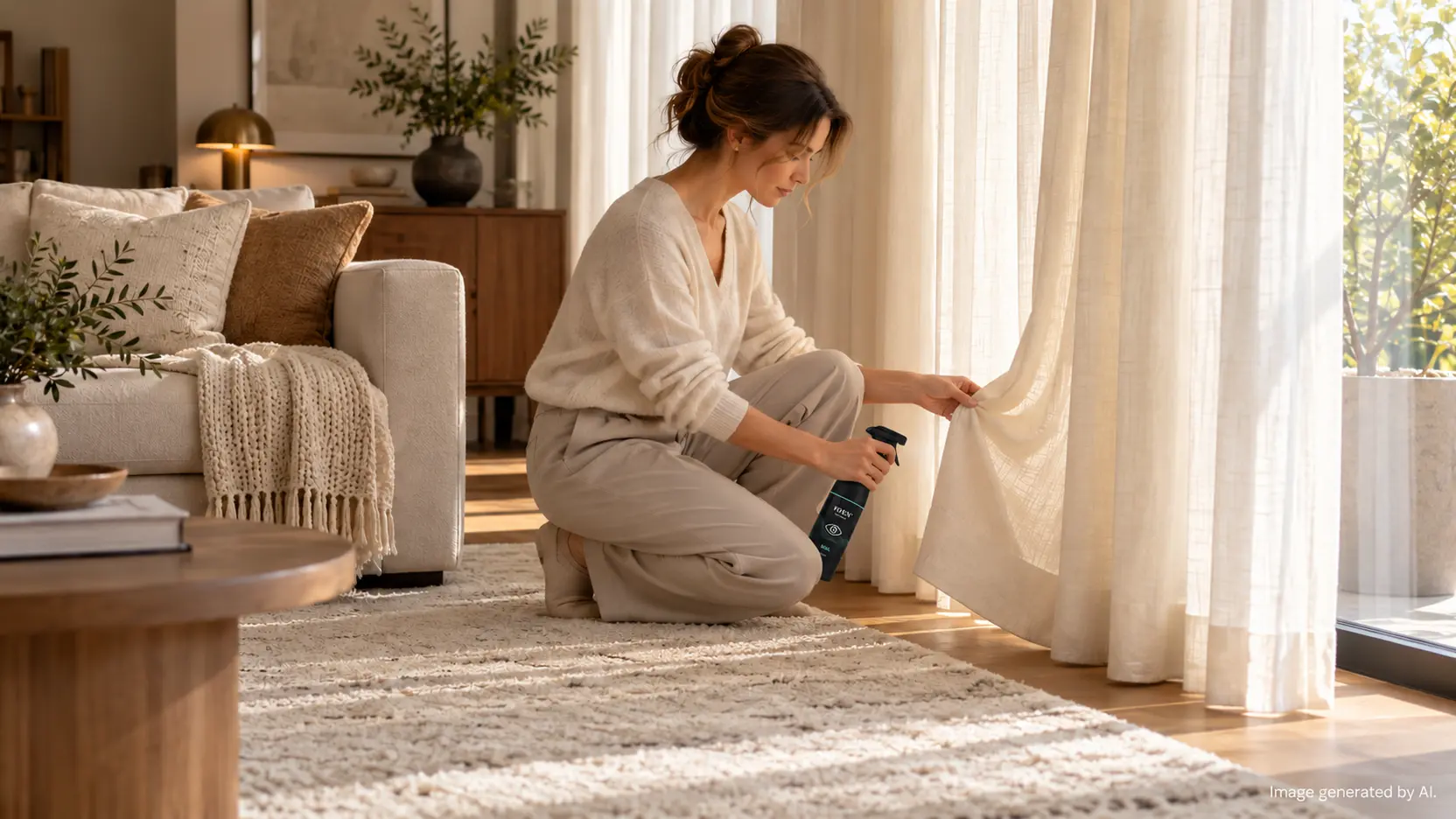
- Scent textiles separately (often the best “low-risk” method): curtains, washable rugs, doormats, sofa throws. FOEN spray perfumes are commonly used on textiles; you can keep mopping chemistry simple and still get a curated scent background.
Essential oils vs interior perfume: what changes in the bucket?
Essential oils and interior perfumes behave differently in water. Oils do not truly dissolve in water; they tend to float, cling to mop fibres, and can deposit on the surface. That is why people sometimes notice smeary patches or slipperiness after “just a few drops”.
Interior perfumes vary by formulation, but they are typically designed to disperse more evenly than neat oil. That said, “more evenly” does not mean “add freely” - any additive can change how a cleaner dries and whether it leaves marks.
| Option | Upside | Main risks | When it makes sense |
|---|---|---|---|
| Ready-formulated scented floor cleaner | Predictable dilution and drying | Still needs floor compatibility check | Weekly mopping; mixed floor types |
| Essential oils added to mop water | Customisable scent | Oil film, streaks, pet sensitivity; can affect finishes | Only if floor and cleaner tolerate it and you use very small amounts |
| Interior perfume used as an additive (manufacturer-approved use) | Refined scent profile; can feel more “designed” than single oils | Overuse can streak; not all floors tolerate additives | When directions allow, after a patch test, and you keep dosage conservative |
| Scenting textiles (separate from mopping) | No impact on floor chemistry | Over-spraying can be overwhelming in small rooms | Homes with delicate flooring; pet households; scent-sensitive family members |
How to add fragrance to floor cleaner without residue or streaks
The goal is a gentle background scent, not a perfumed coating. If you can smell it strongly while mopping, it is often too much for both drying performance and comfort.
Step-by-step method (conservative and surface-friendly)
- Choose the right base cleaner. Use the cleaner recommended for your floor type. For laminate, engineered wood, and LVT, that often means a pH-neutral product used at the correct dilution.
- Mix cleaner with water first. Add the floor cleaner to the bucket according to its label. Do not “free pour”.
- Add fragrance only if permitted by directions. If your fragrance product is approved for use as an additive (or your cleaner explicitly allows fragrance boosters), start extremely low. A practical starting point is 1-2 light sprays per 5 litres of mop water, then assess. If there is any streaking, reduce or stop. (Avoid giving yourself a target like “more is better”.)
- Stir gently, do not whip foam. Too many bubbles can increase residue and make it harder to rinse.
- Patch test before doing the whole room. Mop a small, hidden area. Let it dry fully. Check for haze, tackiness, dulling, or slipping.
- Use less water than you think. Wring the mop well, especially on wood/laminate. Excess moisture causes swelling and can trap residue.
- Do a plain-water “rescue pass” if needed. If you see streaks once dry, re-mop with clean water (or the correct cleaner dilution without fragrance) to lift any film.
Practical insight: Streaking is usually a dosage or drying issue, not a “bad fragrance”. Dark porcelain tile and glossy LVT show residue the most. If you want scent but keep seeing marks, move the scent to textiles and keep your floor chemistry minimal.
Where FOEN fits (without overcomplicating your routine)
FOEN is a Polish producer of premium fragrances, originally known for refined automotive scents and now expanding into home fragrance rituals. FOEN spray perfumes are designed primarily for interiors and textiles, and they may also be used as an additive to surface-washing products only in line with directions and after checking compatibility.
For many homes, the simplest approach is to keep the mop bucket “standard” and apply FOEN to suitable textiles (entry rug, washable hallway runner, curtains) so the scent lingers without changing how your floors dry.
Floor type matrix: what to watch for
Use this as a quick compatibility prompt, not a substitute for your specific floor care instructions.
Sealed wood and engineered wood
- Biggest risks: too much water, oily residue, dulling of the finish.
- Best practice: minimal moisture, correct cleaner dilution, avoid oily additives; always patch test.
- Scent approach: consider scenting textiles instead of adding fragrance to the bucket.
Laminate
- Biggest risks: swelling at joints from moisture, film from additives that makes the surface look cloudy.
- Best practice: well-wrung mop, no “soapy” overuse, no wax/oil build-up.
- Scent approach: if you add fragrance, keep it extremely light and stop at the first sign of streaks.
LVT/vinyl and sealed linoleum
- Biggest risks: streaks on glossy finishes, slipperiness if residue builds up.
- Best practice: use a cleaner suitable for vinyl, rinse if the label suggests it, avoid oily additives.
- Scent approach: light scenting can work, but measure conservatively and patch test.
Tile and porcelain
- Biggest risks: streaks (especially on polished tile), grout haze if residue accumulates.
- Best practice: do not over-dose cleaner; change water when it looks cloudy.
- Scent approach: generally the most forgiving for light fragrance additions, but still patch test.
Natural stone (marble, limestone, slate)
- Biggest risks: etching or dulling from the wrong cleaner (often the cleaner is the issue, not the fragrance).
- Best practice: stone-safe cleaner only; avoid acidic products; patch test anything new.
- Scent approach: lean toward textile scenting unless your stone-care guidance explicitly allows additives.
Practical insight: If your floor has ever looked “fine while wet” but cloudy once dry, treat that as a residue signal. Reduce everything: less product, less fragrance, less water, more ventilation.
Pet and child safety notes (especially cats)
If you live with pets or small children, take a more cautious approach. “Natural” does not automatically mean “pet-safe”, and cats in particular can be sensitive to certain aromatic compounds.
Essential oils to avoid around pets (especially cats)
As a general safety rule, do not use essential oils on surfaces pets can walk on, lick, or absorb through paw pads. Oils commonly flagged as higher-risk for pets include:
- Tea tree (melaleuca)
- Eucalyptus
- Citrus oils (e.g., lemon, orange, bergamot, grapefruit)
- Peppermint and other strong mints
- Pine oils
- Clove, cinnamon
- Wintergreen
- Ylang-ylang
Even when a pet does not directly lick the floor, residues can transfer to paws and fur. If you are not 100% confident, skip oils in mop water.
Safer ways to keep scent gentle in a pet home
- Ventilate well while cleaning and until the floor is fully dry.
- Keep pets out of the room until the surface is dry to the touch.
- Use low-residue cleaning methods and avoid over-dosing any product.
- Prefer scenting textiles that pets do not sleep on, and apply lightly.
If your pet has asthma, seizures, or known sensitivities, consider avoiding added fragrance altogether and speak to a vet for personalised advice.
When not to add fragrance (and what to do instead)
Skip adding fragrance to floor cleaner if:
- Your cleaner label says not to mix additives.
- Your floor manufacturer warns against oils, waxes, soaps, or “home-made” mixtures.
- You have recurring streaks or slipping (a sign of film build-up).
- You share your home with cats, scent-sensitive family members, or anyone with respiratory triggers.
Instead, choose one of these:
- Use a ready-formulated scented floor cleaner made for your floor type.
- Use an unscented cleaner and add fragrance to the home through textiles, timed sprays, or controlled fragrance use in well-ventilated spaces.
If you want a more designed scent profile (rather than a single-note essential oil), FOEN’s interior spray perfumes can be used on suitable home textiles as part of an after-clean ritual, keeping the mop water simple and surface-safe.
To explore FOEN’s interior spray perfumes (Small 185 ml and Large 450 ml) for scenting home textiles and interiors, visit FOEN’s official website.
FAQ
Can you add fragrance to floor cleaner?
Yes, but only when the floor cleaner instructions allow additives and the fragrance product is approved for that use. Always patch test and keep the amount minimal to avoid residue and streaks.
Will adding perfume or essential oils leave a sticky residue?
It can. Essential oils are especially prone to leaving an oily film because they do not dissolve in water. Any additive can also increase streaking if overused. If you notice haze, reduce or stop and re-mop with clean water or the correct cleaner dilution.
Is it safe to put essential oils in a spin mop?
Be cautious. Spin mops can distribute residue widely, and oils can cling to fibres and redeposit on floors. If you live with pets (especially cats) or have delicate flooring, it is usually safer to avoid essential oils in mop water.
What fragrances are safest for households with cats?
Avoid using essential oils on floors around cats, particularly tea tree, eucalyptus, citrus, peppermint, pine, clove, cinnamon, wintergreen, and ylang-ylang. A safer approach is to keep floors fragrance-free and scent textiles lightly in areas cats do not frequent, with good ventilation.
Are FOEN spray perfumes suitable to add to mop water?
FOEN spray perfumes are designed for interiors and textiles and may also be used as an additive to surface-washing products only in line with manufacturer recommendations and after checking compatibility with your floor and cleaner. If in doubt, use FOEN on suitable textiles instead of adding it to the bucket.