Home & Car Fragrance Mistakes: 8 Common Errors That Ruin the Scent Experience
September 3, 2026
You clean the house, crack a window, spritz your favourite fragrance - and within an hour, it feels like nothing happened. Or the opposite: the car smells so intense on Monday morning that you reach for the window button before you even start the engine.
Most “scent problems” are not about choosing the wrong fragrance. They come from small, repeatable usage errors: how we apply, where we place, what we try to cover up, and how our noses adapt. Fix those, and your home and car can smell consistently inviting without becoming overwhelming.
Table of contents
Mistake 1: Judging a fragrance immediately after applying it
If you decide within the first minute that a scent is “too strong” or “not for me”, you may be judging the least representative part of the experience. Many compositions change noticeably as the most volatile molecules evaporate first and the base notes settle.
Why it ruins the experience: The opening can feel sharp, “alcoholic”, or overly bright - especially in a small space (like a car) or if you sprayed too close to your face. If you react by adding more or switching scents, you can create a muddled, unstable result.
Fix:
- Give it time. In a room, reassess after 10-15 minutes. In a car, reassess after your first short drive with normal ventilation.
- Ventilate briefly, then close the space and allow the scent to settle.
- Evaluate the “dry-down” rather than the first blast. If a fragrance still feels harsh after it settles, reduce dose or change the scent family.
Personal insight: When people tell me “it disappeared” or “it was too much”, it is often because they judged the first 60 seconds. A simple pause - apply, ventilate briefly, then re-enter - makes your decision far more accurate.
Mistake 2: Adding more because you can no longer smell it
This is one of the most common home and car fragrance mistakes: you stop noticing the scent and assume it is gone. Often it is not gone - your brain has simply adapted.
What is happening: Olfactory adaptation (sometimes called olfactory fatigue or “nose blindness”) is your nervous system reducing sensitivity to constant stimuli. It is a feature, not a flaw: it helps you notice changes (smoke, gas, a new smell) rather than a constant background.
Why it ruins the experience: If you keep adding fragrance, you raise the concentration in the air. You still may not smell it much, but other people will - and the space can become uncomfortable or cloying.
Fix:
- Reset your nose: step outside for 10-15 minutes, or go into a different room with fresh air.
- Ask a trusted person whether they notice the scent when they enter. Their first impression is more reliable than yours after an hour indoors.
- Use consistency over intensity. A steady, moderate release tends to feel more premium than repeated heavy “top-ups”.
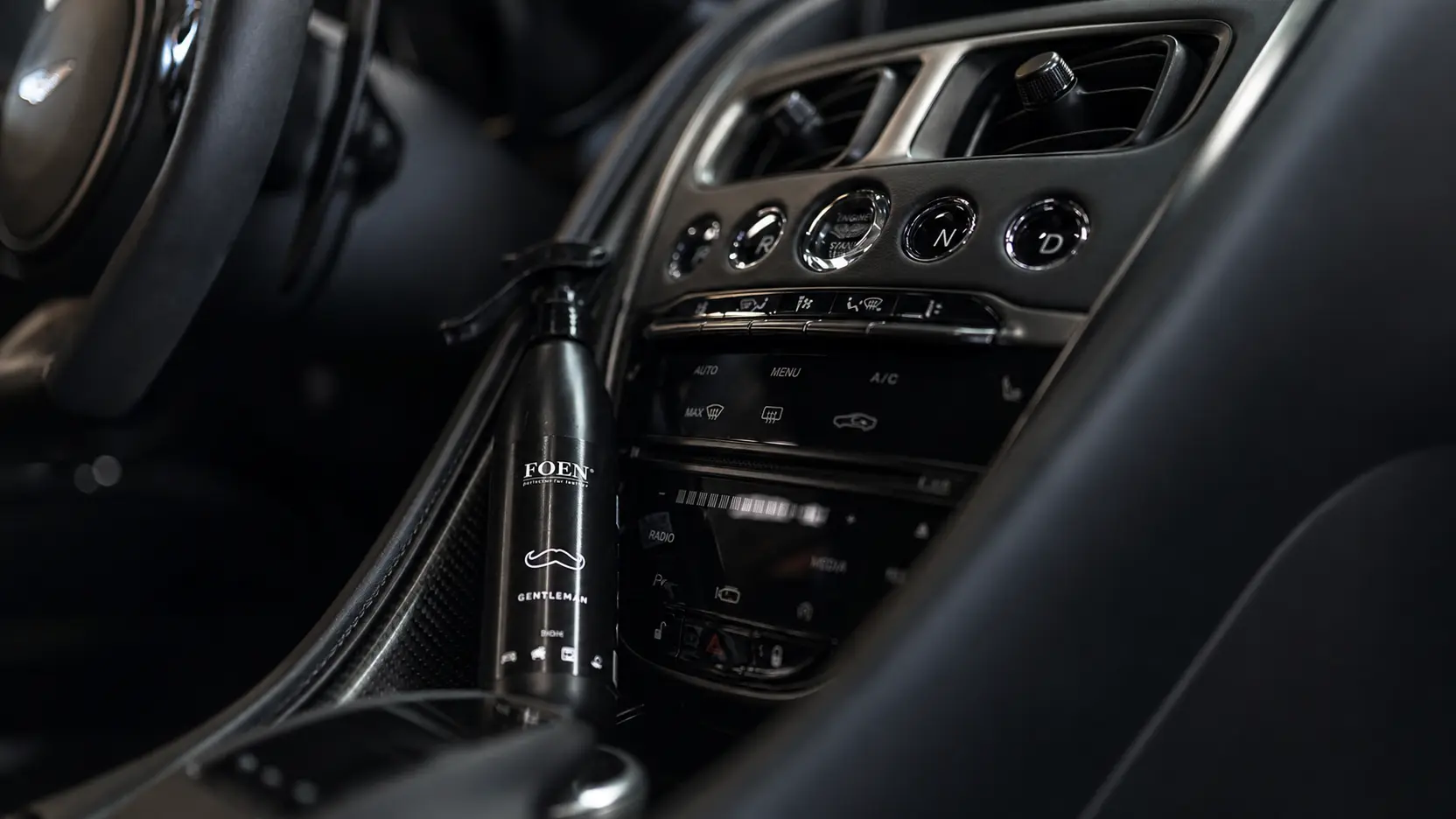
FOEN note (kept practical): Many drivers prefer vent-mounted formats because the airflow helps distribute scent evenly during the drive rather than creating a single intense “spray moment”. FOEN Wood Stick and FOEN Pulse are examples of this approach.
Mistake 3: Using too much fragrance at once
“Stronger” rarely means “better”. Over-scenting is the fastest way to turn a beautiful composition into something that feels tiring, sweetly heavy, or even slightly “chemical” (even when the fragrance itself is high quality).
Why it ruins the experience:
- High concentration can make top notes feel sharp and short-lived.
- Warmth (radiators, sun-heated dashboards) amplifies intensity.
- In cars, the small cabin volume means dose control matters far more than at home.
Fix:
- Start with the minimum effective amount and increase slowly over a few days.
- Keep scent strongest at “arrival moments” (when you enter), not constantly at peak intensity.
- If you live with scent-sensitive people, aim for “noticeable for the first minute” rather than “noticeable all the time”.
Personal insight: A premium scent experience is usually about restraint. If you can smell your fragrance constantly while working or driving, that is often a sign you have overshot the comfortable level.
Mistake 4: Ignoring surfaces and materials
Where fragrance molecules land changes how they behave. Smooth, non-porous surfaces release scent quickly. Porous materials can hold scent longer - but they also vary in how safely they tolerate fragrance.
Why it ruins the experience: Spraying indiscriminately can create uneven results (strong in one spot, absent elsewhere), or risk marking delicate materials.
Fix (general principle, not a placement map):
- Use porous materials for longevity, but patch-test first on an unseen area (especially delicate fabrics, leather, and light-coloured textiles).
- Avoid saturating any single point. Spread small amounts across a few surfaces rather than soaking one area.
- In cars, be mindful of heat-sensitive areas (e.g., dashboards) where evaporation spikes.
Pro tip: the “7 x 7” method (FOEN’s approach)
If you want a more stable, long-lasting result from spray fragrance, build it gradually. FOEN recommends applying seven sprays to each car mat for seven consecutive days, then maintaining lightly. The idea is simple: you are creating a controlled “scent base” in fibres rather than chasing intensity in the air.
Personal insight: Patch-testing sounds fussy, but it saves time and money. If you rent, have a new sofa, or drive a leased car, a 30-second test in an unseen area is a sensible habit.
Mistake 5: Storing fragrance incorrectly
Fragrance is sensitive to its environment. Heat, direct sunlight, and temperature swings can alter how a product smells and performs over time.
Why it ruins the experience: Excess heat can speed up evaporation and can degrade aromatic components, making a scent feel flatter or “off” compared to when it was new.
Fix:
- Store fragrances in a cool, dry place away from direct sunlight.
- Avoid leaving bottles in a car for long periods, especially on warm days (parked cars can heat up quickly in sun).
- Keep caps and closures tight to reduce unnecessary evaporation.
Mistake 6: Masking odours instead of fixing the source
Trying to cover a bad smell with a “nice” smell often creates a worse one: perfumed damp, floral smoke, sweet bin odours. The problem is not your fragrance - it is the layer underneath.
Why it ruins the experience: Odour molecules from food, smoke, mould, pets, or damp fabrics continue to evaporate. When mixed with fragrance, the overall impression can feel dirty or confusing.
Fix:
- Remove the source first: wash textiles, clean bins, vacuum thoroughly, and address damp.
- Ventilate and, where appropriate, use products designed to neutralise persistent odours.
- Only then add your chosen fragrance as the “finishing layer”.
FOEN note (kept objective): FOEN’s INTENSIVE line includes a “No smoking” option designed for tobacco odours - the key point is using an odour-focused solution before layering a signature scent.
Mistake 7: Using the same intensity everywhere
A bathroom, bedroom, living room, and car cabin are not comparable scent environments. They differ in size, ventilation, textiles, humidity, and how long people remain in the space.
Why it ruins the experience: A dose that feels subtle in an open-plan living room may feel overpowering in a small hallway or car. Humidity can also make some notes feel heavier.
Fix: “scent-scaping” by space
- Bedroom: lighter intensity, calmer profiles; aim for a gentle background rather than a statement.
- Living room: moderate intensity; this is where layering and longevity matter most.
- Bathroom/hallway: shorter bursts and fresher profiles often work better than heavy sweetness.
- Car: lower dose, more controlled release; heat and small volume amplify everything.
Mistake 8: Forgetting other people experience it too
Fragrance is shared air. What feels “comforting” to you can be distracting to a colleague visiting your home office, too intense for a passenger, or stressful for someone with scent sensitivity.
Pet safety: a precise, practical note
Be cautious with “natural” essential oil claims. Some essential oils and their volatile compounds can be risky for pets - cats in particular are more vulnerable because they metabolise certain compounds differently. Diffusing or spraying any fragrance in enclosed, poorly ventilated areas around pets is a common mistake.
Fix:
- Ventilate well and ensure pets can leave the scented area.
- Avoid heavy, continuous diffusion in small rooms where animals sleep.
- If you live with cats or dogs, choose products and usage patterns that prioritise moderation and comfort, and consult a vet if you have specific concerns.
Personal insight: In shared spaces, the goal is not “my favourite scent at full volume”. It is a welcoming baseline. If a guest notices it and says “your home smells lovely” before they can name the fragrance, you have likely got the intensity right.
Home vs car: why the same scent behaves differently
People often ask why a fragrance feels balanced at home but intense in the car, or why it “lasts longer” on car mats than in open rooms. The environment changes the evaporation rate and how scent distributes.
| Factor | At home | In the car |
|---|---|---|
| Space volume | Usually larger, scent disperses more | Small cabin concentrates fragrance quickly |
| Ventilation | Varies by room; windows often open longer | HVAC airflow can boost distribution fast |
| Temperature swings | More stable indoors | Big swings (sun, heaters) speed evaporation |
| Textiles/anchors | Soft furnishings vary by home | Mats and upholstery can hold scent well, but are heat-affected |
| Exposure time | Hours at a time; subtlety matters | Shorter trips; “arrival impact” matters |
If you want one practical takeaway: use less than you think in the car, and build more slowly than you think at home.
FAQ
Why do I stop smelling my fragrance after a while?
This is usually olfactory adaptation (olfactory fatigue). Your brain filters constant smells so you can detect changes. Step into fresh air for 10-15 minutes, then re-enter and reassess.
Does using more fragrance make it last longer?
Not reliably. Using more can make a space feel overpowering and can waste product. Longevity is improved more by controlled application, using suitable materials (with patch-testing), and reducing heat and sunlight exposure.
Why does a fragrance feel stronger in the car than at home?
Cars are smaller, heat up faster, and HVAC airflow can distribute fragrance quickly. The same dose that feels subtle in a living room can feel intense in a closed cabin.
How can I tell if I am using too much fragrance?
Common signs: you can smell it constantly after 10 minutes, you feel the need to open windows, passengers comment unprompted, or the scent lingers heavily on clothing. Reduce dose and aim for “pleasant on entry” rather than “constant presence”.
Why does the same fragrance smell different in different spaces?
Humidity, temperature, airflow, and materials affect evaporation and which notes you perceive most. A warm, soft-furnished room can emphasise base notes, while a cool, ventilated space may emphasise fresh top notes.
If you want a calmer, more consistent scent ritual, focus on controlled application, good airflow, and thoughtful storage - then choose a fragrance profile that suits the space. When you are ready to explore premium options designed for both cars and interiors, you can browse FOEN at FOEN - premium fragrances for car and home.