Are Home Fragrances Safe for Babies and Pets? What to Check First
September 2, 2026
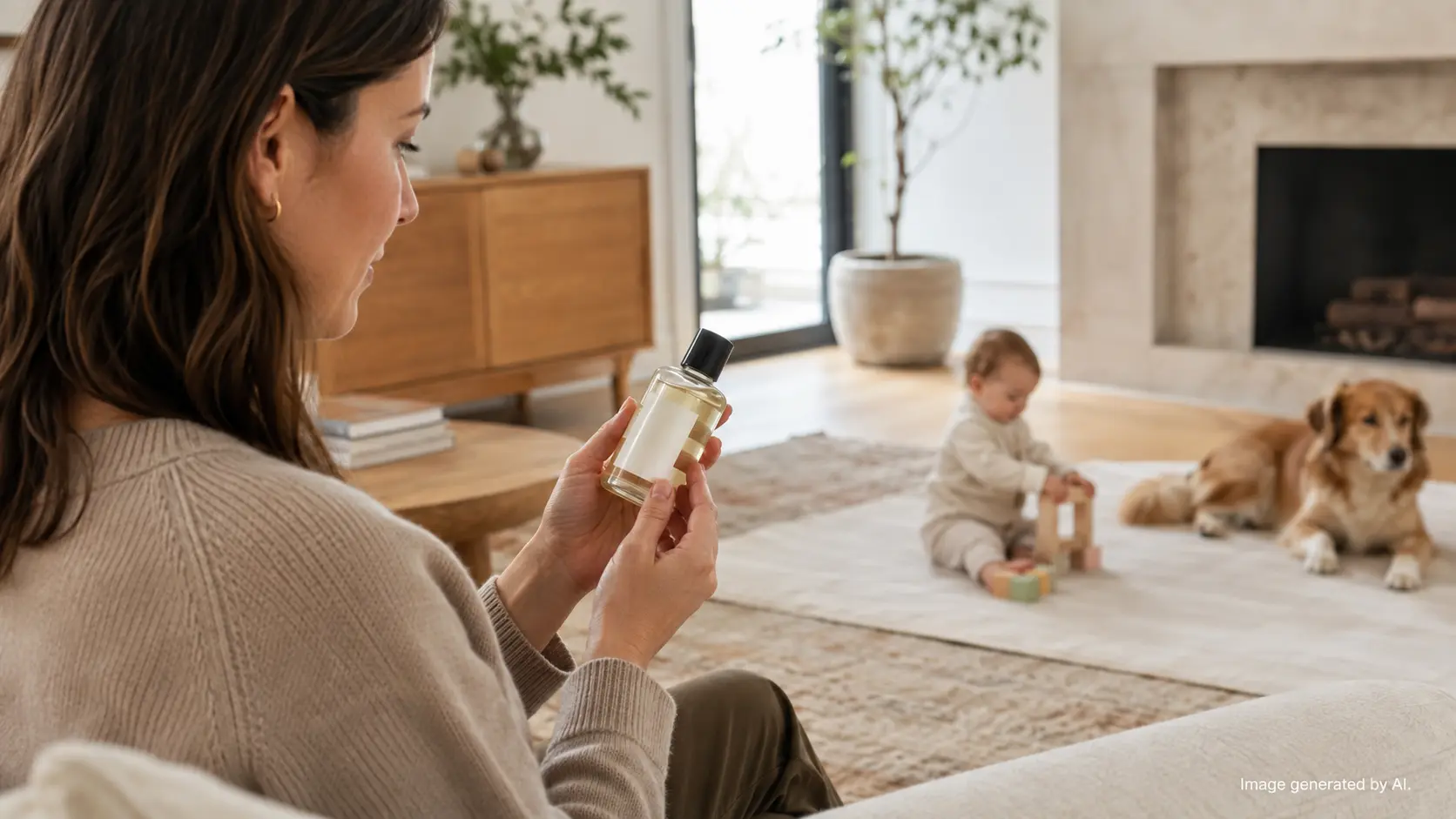
A beautifully scented home can feel like part of your wellbeing routine. The challenge starts when your space is shared with a baby, a toddler, a cat, or a dog. You still want your rooms to smell inviting, but you also want to avoid triggering headaches, irritation, or overwhelm for anyone with a more sensitive system.
This guide focuses on practical, evidence-based decision points: the delivery method (aerosol vs. passive vs. textile spray), the kind of ingredients worth being cautious about, and how to build a calm, subtle scent routine that respects children and pets.
Start with the real risk factors (not marketing claims)
When people ask, “are home fragrances safe?”, the honest answer is: it depends on how the fragrance is delivered, how much is used, where it’s used, and who shares the space.
For homes with children and pets, these are the most useful safety filters:
- Delivery method: aerosol bursts and continuous misting generally create more airborne exposure than applying fragrance to textiles and letting it dry.
- Ventilation: fragrance builds up faster in small rooms, well-insulated flats, and cars. Fresh air changes everything.
- Proximity and behaviour: babies crawl close to floors and textiles; pets groom their fur and paws. Where the product lands matters.
- Sensitivity history: asthma, migraines, eczema, or previous reactions to scented products calls for extra caution and lower intensity.
Personal insight: The most common “safe fragrance” mistake I see is trying to fix a smell quickly by over-spraying. A lighter routine you can repeat (and stop easily) is usually both safer and more pleasant than one heavy application.
The hidden risks in traditional air fresheners
Many standard air fresheners are designed to push fragrance into the air fast and repeatedly. That can be convenient, but it’s also where most comfort and sensitivity issues begin, especially in enclosed spaces.
| Option | How it works | What can go wrong in homes with kids/pets | Lower-risk way to use fragrance |
|---|---|---|---|
| Aerosols | Fragrance + propellants dispersed into the air | High airborne exposure; easier to overdo; can irritate sensitive airways | Choose non-aerosol formats; ventilate; keep intensity low |
| Continuous mist diffusers (water + fragrance/essential oils) | Creates fine droplets that remain airborne | Ongoing exposure; can settle on surfaces; pets and infants may be more sensitive | Avoid continuous use in bedrooms/nurseries; use short sessions only if you choose to use them |
| Candles/incense | Combustion releases scented smoke | Smoke/soot; can aggravate irritation; fire risk with children/pets | Prefer flame-free options in family spaces |
| Passive fragrance (no flame, no mist) | Scent evaporates slowly from a carrier | Lower airborne “burst”, but can still be too strong in small rooms | Place out of reach; use in ventilated areas |
| Textile spray (applied to fabrics and left to dry) | Fragrance binds to textiles; releases gradually | Risk if sprayed on items that babies/pets mouth or lick | Apply to curtains/rugs in low-contact areas; let fully dry |
Ingredients and claims: what’s useful to check
Not every label is transparent, and “natural” does not automatically mean “safe” (especially for cats). Instead of chasing buzzwords, focus on what you can control:
- Strong, persistent “chemical” smell: often a sign of over-application or a format that floods the air quickly.
- Unknown blends with no usage guidance: lack of clear instructions makes accidental overexposure more likely.
- Heavy, continuous scenting in small rooms: even a good formula can become uncomfortable if it’s constant.
If you or a family member has known sensitivities, favour products with a simpler composition and clear, conservative instructions for use. FOEN positions its sprays as premium, simple-formula perfumes designed for controlled application to textiles rather than filling the air with constant mist.
Scent safety for babies and children
Babies and young children are more likely to be affected by strong airborne fragrance because they breathe faster relative to their size, spend time close to floors and textiles, and have developing respiratory systems. That doesn’t mean “no fragrance ever”, but it does mean you should be more deliberate.
Practical guidelines that lower risk
- Keep fragrance out of nurseries by default: if you add scent at all, do it outside sleeping areas and let it settle before bedtime routines.
- Avoid continuous misting: constant airborne droplets can be harder to control than occasional, measured scenting.
- Choose placement over intensity: scent a hallway curtain rather than the cot area, so the home still feels welcoming without direct exposure.
- Never spray near children: apply when the room is empty, then ventilate and allow textiles to dry.
- Watch for signals: watery eyes, coughing, fussiness, headaches, or sleep disruption are all reasons to reduce or pause scenting.
Personal insight: If you want the “clean home” feeling without scent in a child’s bedroom, keep fragrance for transitional spaces (entryway, living room) and rely on ventilation plus laundry freshness for sleeping areas. It’s a simple boundary that prevents most problems.
A pet-friendly scent routine: dogs, cats, and essential oils
Dogs and cats experience scent differently. Their sense of smell is much stronger than ours, so what feels “subtle” to a person can still be overwhelming to an animal.
Dogs: avoid overpowering routines
With dogs, the most common issue is intensity. If your dog avoids a room, sneezes, or seems restless after you fragrance the space, reduce the dose and increase ventilation. Keep products well out of reach and avoid spraying dog beds, blankets, or toys.
Cats: be especially cautious with essential oils
Cats can be particularly vulnerable to certain compounds found in essential oils because they metabolise some substances differently than other species. That’s why “natural essential oil diffuser” is not automatically a safer choice in a cat household.
A cautious approach for cat owners:
- Avoid diffusing essential oils continuously in shared spaces.
- Never apply fragrance to a cat’s fur, bedding, or scratching posts.
- Ensure escape routes: cats should always be able to leave a fragranced room.
- Choose controlled application (small amounts, on low-contact textiles, fully dried) rather than airborne saturation.
Personal insight: With pets, “safe” often comes down to behaviour. If your cat starts hiding more than usual or your dog won’t settle, treat that as a real data point. Reduce intensity immediately and simplify your routine instead of searching for a stronger scent.
How to safely fragrance your home: the FOEN approach
FOEN started in automotive fragrance and brings that same focus on controlled, elegant scent into interiors. The practical difference is the method: rather than relying on heavy aerosols or constant mist, FOEN’s spray perfumes are designed to be applied to textiles and allowed to dry, so the aroma releases gradually.
Mastering FOEN’s 7 x 7 technique for textiles
FOEN recommends a “7 x 7” technique to build a lasting scent without creating an overpowering cloud. It’s a routine, not a one-off heavy spray.
- Pick the right textile: curtains, hallway runners, living-room rugs, fabric upholstery, or (in cars) fabric mats and seat belts.
- Start small: apply a light, even spray to the textile (never to items likely to be mouthed/licked).
- Repeat gradually: make seven applications on the chosen textile for seven consecutive days.
- Let it dry fully: keep children and pets away from the area until dry.
- Maintain lightly: once the base is built, you can top up conservatively as needed rather than restarting with a heavy dose.
This gradual approach is especially useful in family homes because it prioritises comfort: a scent that feels present but not invasive.
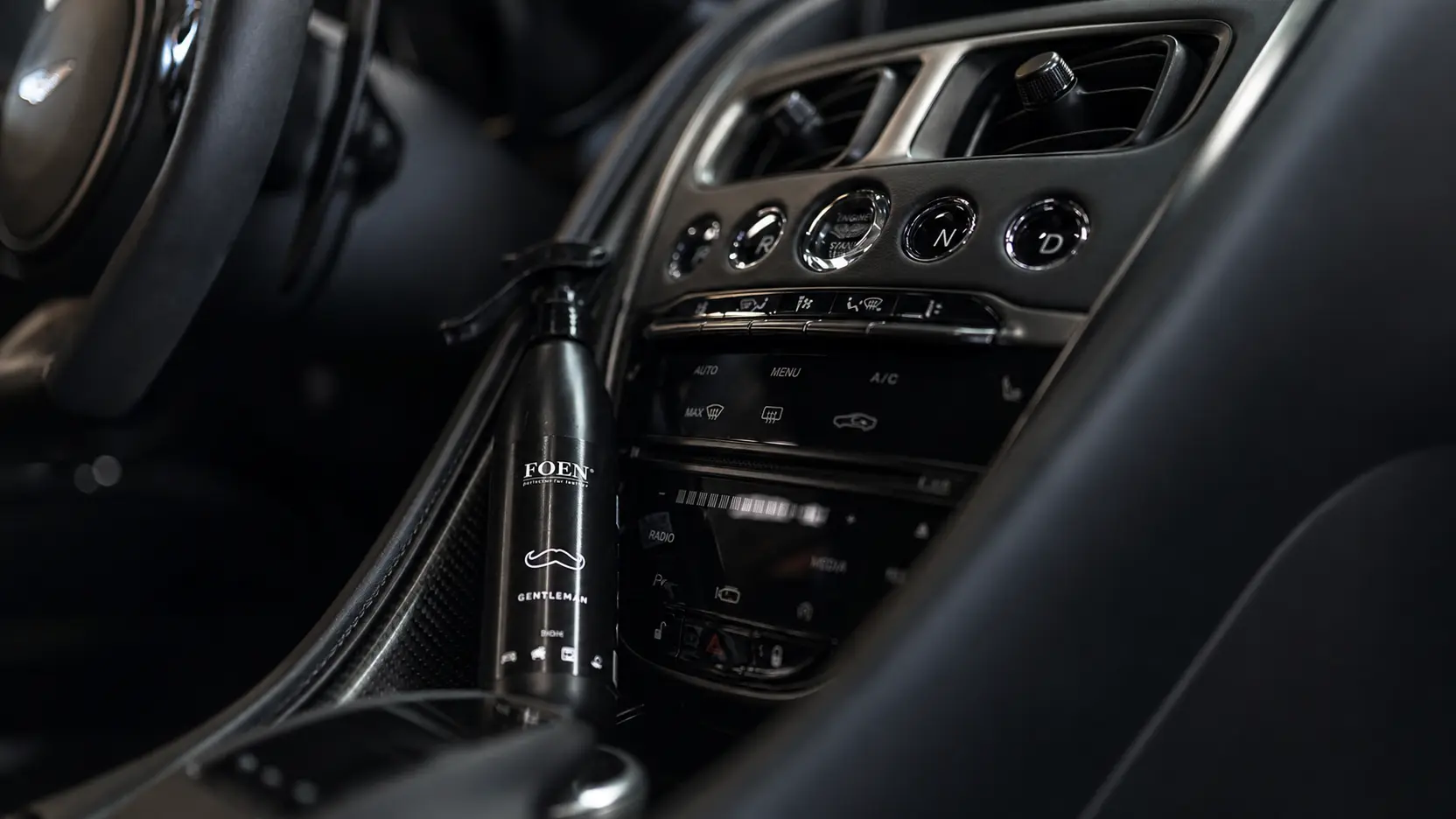
Flame-free and passive in the car: FOEN Wood Stick and FOEN Pulse
While this article focuses on the home, many families also ask about safer fragrance inside the car, where space is tight and intensity builds quickly.
- FOEN Wood Stick is a vent-mounted car fragrance with a wooden housing and a polymer inside infused with fragrance. It releases scent gradually, especially when airflow is on, and is designed as an aesthetic alternative to hanging fresheners.
- FOEN Pulse is a more budget-friendly vent-mounted option with a minimalist plastic housing, also releasing scent via the car’s airflow.
In cars used for family life, the same principles apply: go subtle, avoid constant “blast” intensity, and keep products secure and out of reach.
Odour neutralising vs. masking: when INTENSIVE makes sense
Not every smell problem is solved by adding a pretty fragrance. If the underlying issue is persistent (smoke, damp textiles, pet odours), you’ll get a better result by addressing the source first: wash removable fabrics, ventilate, clean soft furnishings, and dry the space properly.
FOEN’s INTENSIVE line is positioned for stronger, longer-lasting situations. One example in the range, No smoking, is intended for challenging odours such as cigarette smoke. In a family home, “intensive” should still be used with restraint: smaller amounts, good ventilation, and never in sleeping areas or directly on pet or baby items.
A low-risk, high-comfort scent routine (room by room)
If you want your home to smell consistently good without taking risks, think in zones and timing rather than sheer intensity.
Living room (best place to start)
- Scent curtains or a rug, not cushions that children cuddle or pets lie on.
- Apply when the room is empty; ventilate; let dry.
- If guests are coming, fragrance earlier in the day so the smell settles into a softer background.
Hallway/entryway (high impact, low contact)
- This is ideal for textile scenting because it creates an immediate “welcome” without constant exposure.
- A light application on a runner or curtain often does more than a strong product in the centre of the home.
Bedrooms and nurseries (keep it minimal)
- Prioritise fresh air, clean textiles, and unscented cleaning products.
- If you fragrance at all, keep it outside the room or far from the sleeping area and avoid routine scenting during sleep.
Pet areas (usually best unscented)
- Avoid fragrancing pet beds, crates, blankets, litter-mat areas, and food zones.
- Focus on cleaning and ventilation, then scent adjacent spaces lightly if desired.
Quick safety checklist before you buy or use
- Can I control the dose precisely?
- Will the product increase airborne exposure (aerosol/mist) or stay mostly on a surface (textile/passive)?
- Is it going near sleeping areas, or where children crawl and pets groom?
- Do I have a plan for ventilation and drying time?
- Do I know what I’ll do if someone reacts (stop, air out, wash textiles)?
If you want to explore FOEN’s fragrance formats and scent families (including options designed for controlled textile use), the safest next step is to choose one scent, start lightly, and build gradually. You can browse the range on FOEN’s official website.
FAQ
Are home fragrances safe for babies?
They can be, but babies are more sensitive to strong airborne fragrance. A cautious approach is to avoid continuous misting and heavy aerosols, keep fragrance out of nurseries by default, ventilate well, and use light, controlled application on low-contact textiles (fully dried) in shared areas.
How can I make my house smell good without harming my pets?
Focus on ventilation and cleaning first, then use fragrance in a controlled way: avoid spraying pet bedding and avoid continuous essential-oil diffusion. Choose subtle routines in areas pets can leave easily, and keep products out of reach.
What is a safer alternative to aerosol air fresheners?
Flame-free, non-aerosol options that allow you to control intensity tend to be easier to manage. Textile-based scenting (spray on curtains or rugs and allow to dry) and passive formats can reduce the “burst” effect that often causes irritation.
Are essential oil diffusers safe to use around cats?
Caution is recommended. Cats can be more vulnerable to certain compounds found in essential oils, and continuous diffusion increases exposure. If you live with cats, avoid routine continuous diffusion, keep rooms ventilated, and never apply oils or fragrance to the cat, its bedding, or areas it licks.
Can I use automotive fragrances safely inside my home?
Only if the product is intended for interior use and you can control exposure. Car spaces are small and fragrance builds quickly, so the same principles apply at home: start low, avoid constant airborne release, ventilate, and keep products away from children and pets.