Why Does My Car Smell Musty? 7 Places to Check (And How to Fix It)
September 15, 2026
A musty smell in a car almost always means one thing: moisture is hanging around longer than it should. Sometimes it is obvious (wet floor mats after a storm). Other times it is sneaky (a clogged sunroof drain soaking the carpet under the seat, or mildew living on the A/C evaporator).
The good news: you do not need to “cover it up” with fragrance. In fact, masking a damp smell usually makes the cabin feel worse. Find the moisture source, dry it fully, clean what’s contaminated, and only then add a scent you actually enjoy.
Personal insight: If the smell hits you hardest right after you start the car, I treat it like an HVAC problem first. If it’s strongest when you open the door after the car has been closed overnight, I start with carpets, trunk, and any hidden damp storage.
Tools you will need
You can diagnose most musty odors with a few basic items. You do not need a full detailing setup.
- Microfiber towels
- A flashlight (and ideally a small inspection mirror)
- Wet/dry vacuum or extractor (even a small one helps)
- Baking soda (for odor absorption) and/or an enzyme-based upholstery cleaner (for organic smells)
- A small brush (interior detailing brush or old toothbrush)
- Replacement cabin air filter (if yours is old or damp)
- Optional: a moisture absorber or small dehumidifier for the garage
Quick rule-out check: when do you smell it most?
Before you start tearing things apart, pinpoint the pattern. It narrows the search fast:
- Smell appears when the A/C turns on - likely HVAC (evaporator, drain, cabin filter, intake).
- Smell is strongest after rain or a car wash - likely a leak (door seals, sunroof drains, trunk seals, body vents).
- Smell gets worse with passengers, gym bags, kids, pets, or food - likely upholstery, carpet padding, or under-seat areas.
- Smell sits in the car even with the air off - likely damp carpet, trunk/boot, or something hidden and wet.
Personal insight: If you are short on time, don’t start with fragrance or “odor bombs”. Start by feeling the carpets with your hand, especially along the edges and under the front seats. If you find damp padding, you’ve found your real problem.
The 7 places to check (and how to fix each one)
Work in this order: easiest and most common first, then the more hidden sources.
1) Floor mats and carpet (including the padding underneath)
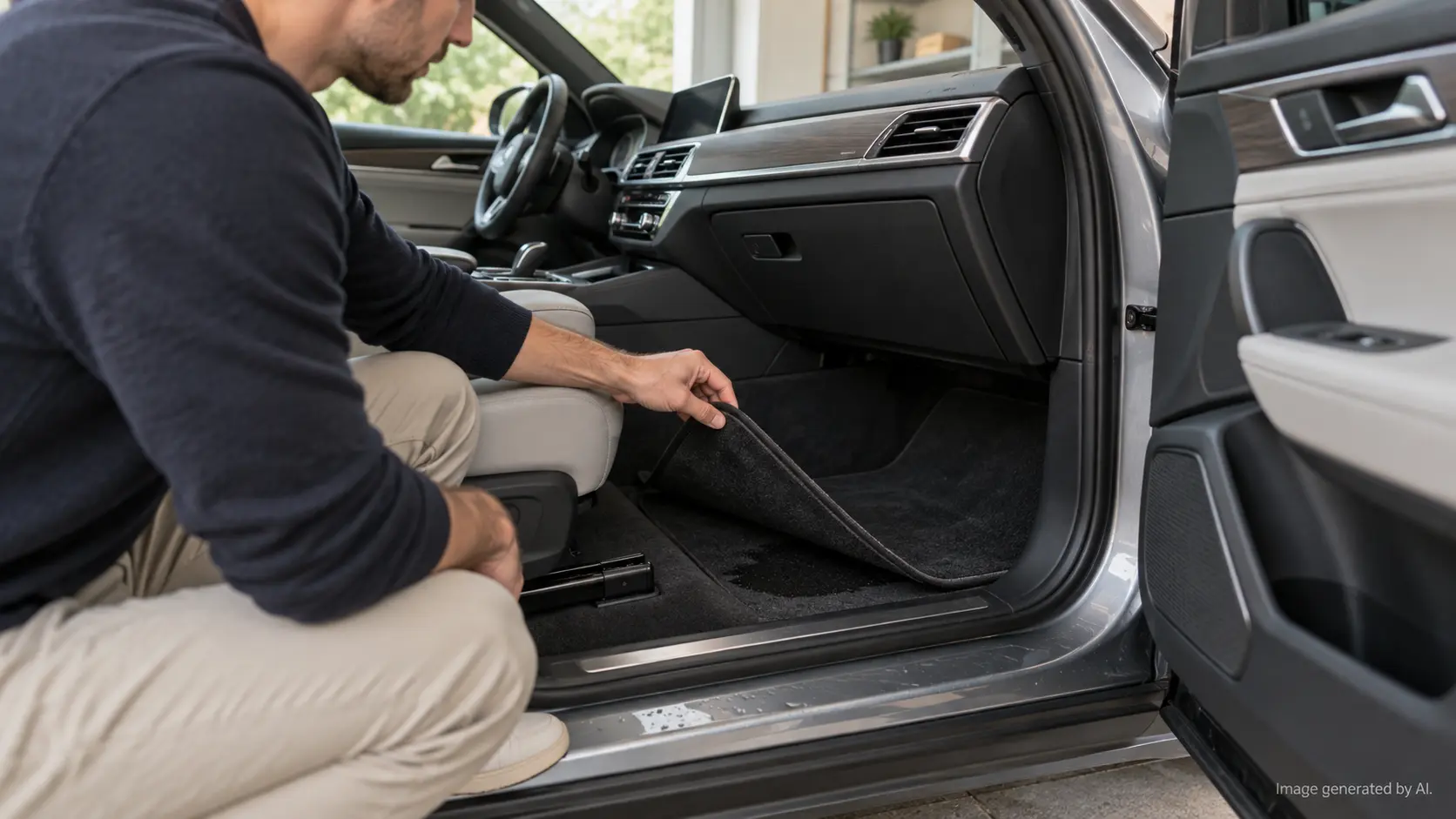
Wet mats are the number one cause of a musty, damp smell in a car, especially after winter slush, beach days, or heavy rain. The tricky part is that the carpet can feel “mostly dry” while the padding underneath stays wet for days.
How to check
- Remove floor mats (front and rear) and smell them up close. Musty mats are usually obvious.
- Press a clean paper towel or microfiber into the carpet near the firewall and seat rails. If it comes up damp or discolored, moisture is trapped below.
- Check the rear footwells too - spilled drinks often run backward under the seat.
How to fix
- Wash rubber mats with mild soap, rinse, and dry fully in the sun or with airflow.
- For carpet: vacuum thoroughly, then use an extractor or wet/dry vac to pull moisture out. Repeat until the water you extract is minimal.
- Sprinkle baking soda on dry carpet, let it sit overnight, then vacuum. (Do not do this on wet carpet - it turns into paste.)
- Speed drying: park in the sun, crack windows slightly, and run a fan if possible.
2) Under the seats and “stuff you forgot” zones
Under-seat areas collect everything: a spilled coffee that ran forward, a wet umbrella, a forgotten protein shaker, even a soggy paper towel. A small amount of moisture plus trapped heat is mildew’s favorite setup.
How to check
- Slide seats all the way forward and back. Use a flashlight to look for damp spots, stains, or debris.
- Smell the carpet directly under the seat, not just the cabin air.
- Check seat pockets, under-seat storage bins, and the area around child seat anchors.
How to fix
- Remove debris and vacuum the area thoroughly (including vents under the front seats if your car has them).
- Spot-clean spills with an enzyme-based cleaner for organic messes (food, milk, sweat). Let it dwell per label instructions, then blot and extract.
- If the carpet padding is wet, extract and dry aggressively. A persistent musty smell often means the padding stayed damp too long.
3) Cloth seats and upholstery (and the foam inside)
Fabric can hold onto moisture and odors far longer than most people expect. The seat surface may feel dry while the foam beneath is still damp from a spill or humid weather.
How to check
- Smell the seat base and lower backrest area closely.
- Look for tide lines or water rings that hint at old spills.
- If the musty odor is strongest on one seat, focus there first.
How to fix
- Use an upholstery-safe enzyme cleaner for organic odors. Lightly mist (do not soak), agitate with a soft brush, then blot and extract.
- For “damp basement” smell with no clear stain: a light steam pass can help, but avoid over-wetting. Always dry fast after steaming.
- Run the HVAC with the heat on for a short period to help drive moisture out, then ventilate. (You want drying, not baking in humidity.)
Personal insight: Over-wetting seats is a common DIY mistake. If you saturate the foam, you can create the exact musty problem you’re trying to solve. Use cleaner sparingly and rely on extraction and airflow for the heavy lifting.
4) The trunk/boot (spare tire well and side pockets)
The trunk is an odor trap because it is closed, dark, and often ignored. Water can enter through tail light seals, trunk weatherstripping, or body vents, then pool in the spare tire well.
How to check
- Lift the trunk floor panel and inspect the spare tire well. Feel for dampness.
- Check side storage pockets and the carpeted liner for wet spots or white/greenish residue.
- Sniff test: the trunk air often smells mustier than the cabin if this is the source.
How to fix
- Remove wet items, vacuum standing water, and dry the area completely.
- If trunk carpet is soaked, pull it up to dry underneath. Use fans and time.
- Inspect trunk weatherstripping for tears or misalignment. If you suspect a leak you can’t find, a water hose test (gentle flow, not a pressure blast) helps locate entry points.
5) Door and window seals (water intrusion into the cabin)
Worn weatherstripping, misaligned doors, or blocked door drains can let water into the cabin. The water may not show up on top of the carpet - it can wick underneath and spread.
How to check
- Look for water marks on door sills and plastic trim near the floor.
- After rain or a wash, run your fingers along the lower door seal area and carpet edge.
- Open the door and check the bottom drain holes. If they are clogged, water can sit inside the door.
How to fix
- Clean seals and door jambs so you can see issues clearly.
- Gently clear door drain holes (do not use sharp metal tools that can damage paint or seals).
- If seals are torn or flattened, replacement is often the real fix. Drying alone won’t stop the smell from returning.
6) Sunroof drains (one of the most common hidden causes)
If you have a sunroof, assume the drains need attention at some point. When they clog, water can overflow into the headliner, A-pillars, or carpet. The result: a musty smell that keeps coming back.
How to check
- Open the sunroof and locate the small drain holes, usually in the front corners (sometimes also rear).
- Slowly pour a small amount of water into the channel. It should drain quickly under the car.
- If water pools or drains slowly, the line is likely partially blocked.
How to fix
- Use flexible trimmer line (weed whacker line) to gently feed down the drain and clear soft debris. Avoid rigid wire that can puncture the tube.
- Flush again with a small amount of water to confirm it drains freely.
- If water is already in the cabin, focus on drying carpet padding thoroughly, not just the surface.
7) The A/C system: evaporator, cabin air filter, and fresh-air intake
If your car smells musty when the A/C kicks on, mildew on the evaporator is a prime suspect. That evaporator core is buried behind the dash, so you typically address it through the vents/intake and by replacing the cabin air filter.
How to check
- Start the car and run the fan with A/C on. If the odor shows up within seconds, think HVAC.
- Switch to heat (briefly) and see if the smell changes. A damp, sour smell that tracks with airflow points to the system.
- Locate and inspect the cabin air filter. If it looks dirty, damp, or smells musty, it is not helping.
- Check the fresh-air intake area at the base of the windshield (cowl). Leaves and debris there can trap moisture that gets pulled into the system.
How to fix
- Replace the cabin air filter if it’s old, damp, or contaminated. (Most cars make this a glovebox or under-hood job. Your owner’s manual will show the location.)
- Clean the cowl intake area: remove leaves and debris so moisture cannot sit there.
- Use an A/C evaporator cleaner designed for automotive HVAC. Follow the product instructions exactly, ventilate the car, and avoid soaking electronics.
- Dry-out habit: for the last couple minutes of a drive, turn A/C off but leave the fan running. This helps dry the evaporator and can reduce recurring mildew odor.
| Approach | What it does | Best for | Limitations |
|---|---|---|---|
| Fragrance (spray/diffuser) | Adds a pleasant scent | After the source is removed | Will not fix mold, wet padding, or a leak |
| Absorbers (baking soda, charcoal) | Reduces lingering odors in the air/materials | Light odors after drying | Weak if moisture is still present |
| Enzyme cleaner | Breaks down organic residue (food, sweat, spills) | Seats, carpet spots, pet-related smells | Needs correct dwell time and proper drying |
| HVAC cleaner + new cabin filter | Targets mildew in vents/evaporator path | Musty smell when A/C is on | Severe buildup may need professional service |
When to call a pro (and when ozone makes sense)
DIY can get you far, but a few situations justify professional help:
- Carpet padding is saturated (especially after a leak). A shop can remove seats and lift carpet to dry properly, which is often the only way to prevent recurring mildew.
- The smell returns within a day or two after cleaning. That usually means the moisture source is still active.
- You see visible mold on headliner, seat belts, or inside vents. This is a health and safety issue, not just a comfort issue.
Ozone treatments are sometimes used for severe odor cases. They can help neutralize stubborn smells, but they are not a substitute for fixing the underlying moisture or cleaning contaminated materials. If you consider ozone, follow all safety instructions and treat it as the last step after cleaning and drying.
The finishing touch: add a premium scent after cleaning
Once you have the cabin dry and the musty source handled, that’s when fragrance makes sense. This is also the point where a cheap, artificial-smelling hanging freshener can undo the “clean interior” vibe you just worked for.
FOEN focuses on premium car and interior perfumes with a simple composition and a more subtle, elegant feel. If you like a discreet setup, FOEN also offers vent-mounted options like Foen Wood Stick (natural wood) and Foen Pulse (minimalist, budget-friendlier), designed to avoid the mirror-hanging look.
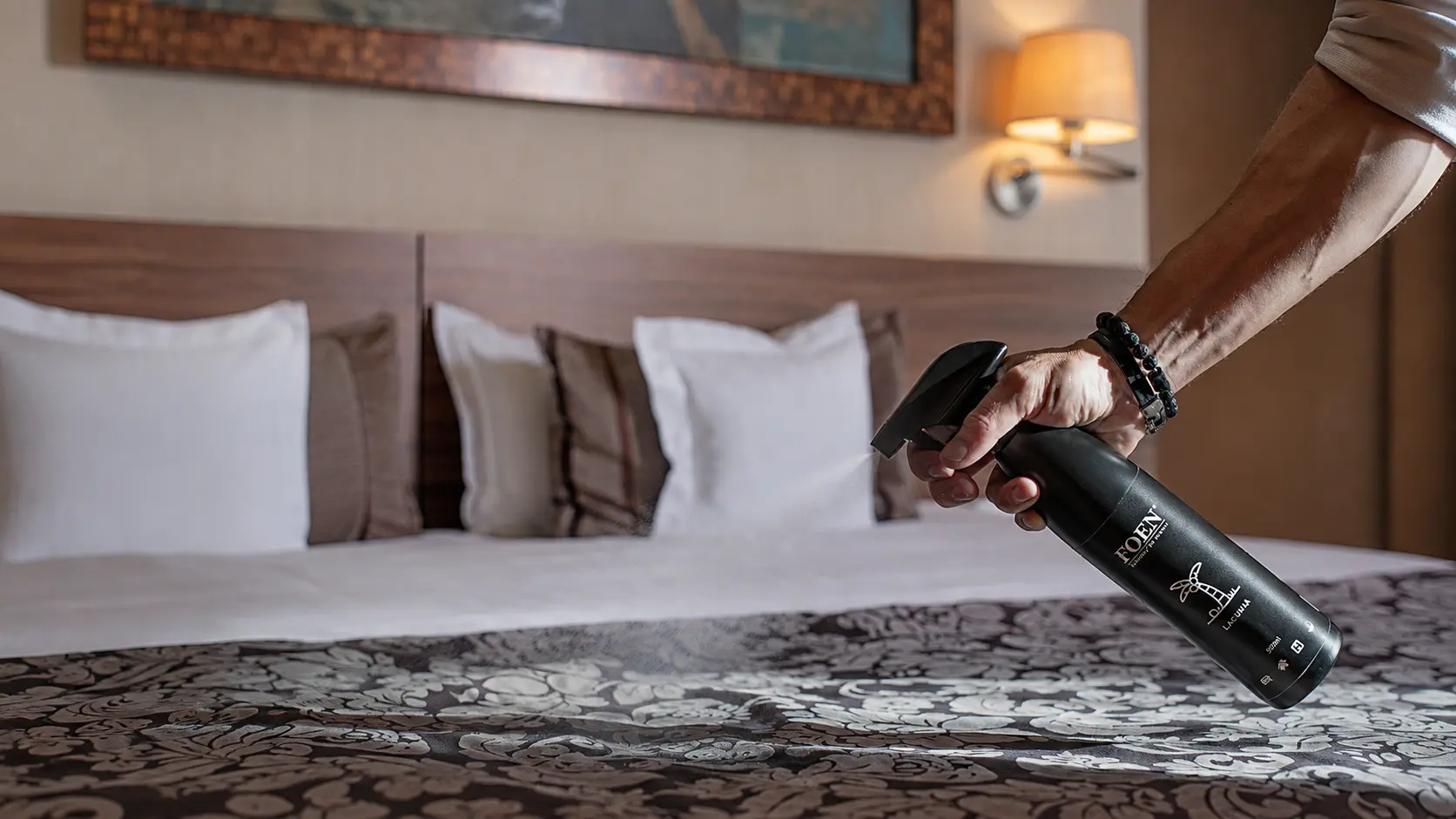
If you choose FOEN spray perfume, their recommended “7 x 7” method is straightforward: apply seven sprays on each floor mat for seven consecutive days. Many drivers use this as a controlled way to build a consistent scent in a freshly cleaned cabin without overdoing it in a single day.
Explore FOEN car fragrances and interior perfumes and pick a scent profile that matches the mood of your now-clean interior (fresh, sweet, unique, or more intensive).
FAQ
Can mold in your car A/C make you sick?
It can irritate allergies or breathing for some people, especially if mold or mildew is present in the HVAC system and spores are being blown into the cabin. If you suspect mold, address it quickly and consider professional inspection if symptoms persist.
How do I get rid of a musty smell in my car naturally?
Start by removing moisture (extract and dry carpets), then clean affected areas. Baking soda can help absorb light lingering odors once materials are dry. Natural methods won’t work well if there’s an active leak or damp padding.
Will a mildew smell eventually go away on its own?
Usually no. If moisture remains in carpet padding, seats, the trunk well, or the A/C evaporator, the smell tends to return. The lasting fix is removing the moisture source and fully drying and cleaning the affected area.
How much does it cost to fix a leaky sunroof drain?
It depends on whether it’s a simple clog (often a quick cleaning) or if trim removal, tube repair, or water-damaged carpet drying is needed. A basic unclog is typically far less expensive than fixing recurring water intrusion and mildew in the cabin.