How to Make Interior Fragrance Last Longer: The Science of Scent Throw
August 27, 2026
You spray a room, it smells lovely, then 20 minutes later it feels like it disappeared. For many homes, the issue is not that you used “too little” fragrance. It is usually a mix of formula, where you apply it, and what the room is doing (heat, airflow, humidity, soft furnishings).
If you like home fragrance as part of a wellness routine, longevity matters, but so does comfort. A scent that lasts should not have to be overpowering. The goal is a steady, clean presence you notice when you walk in, not something that dominates the room.
Understanding scent throw (and why you stop noticing it)
Scent throw is how effectively a fragrance travels from its source into the air and across a space. Two homes can use the same product and get different results because the “delivery system” is the room itself: soft furnishings, ventilation, and temperature changes.
There is a second effect that often gets mistaken for poor performance: olfactory fatigue (also called sensory adaptation). When you are around a smell for a while, your brain starts filtering it out. You might think the fragrance has vanished, while a guest walking in from outside notices it immediately.
Personal insight: If you want to judge longevity, do not stand in the same room and keep checking. Step outside for a few minutes (or even just into a different part of the house) and then re-enter. It is a simple way to reduce “nose-blindness” and get a more realistic read.
What affects fragrance longevity and intensity
For long lasting interior fragrances, focus on three variables you can actually control: formula, surface, and environment.
1) Ingredients and formulation (why some scents disappear fast)
Longevity is shaped by how a fragrance is built. Many compositions contain lighter, more volatile notes (often the first you smell) and heavier components that evaporate more slowly (often the “base”). A scent can feel “strong” at first but fade quickly if most of what you perceive sits in the top layer.
For wellness-minded buyers, ingredient clarity matters. Essential oils and aroma compounds can be used in different ways across the industry, and “natural” on its own does not guarantee either performance or gentleness. What typically helps with a more stable experience is a well-balanced composition and a base designed to release fragrance gradually rather than all at once.
FOEN positions its interior and car perfumes as premium compositions with a simple approach to formulation and an emphasis on comfort in daily use. That “comfort” piece is practical: a smoother release can make a home smell inviting without the sharp spike that some people find overwhelming.
2) Where you apply it (air vs fabric makes a huge difference)
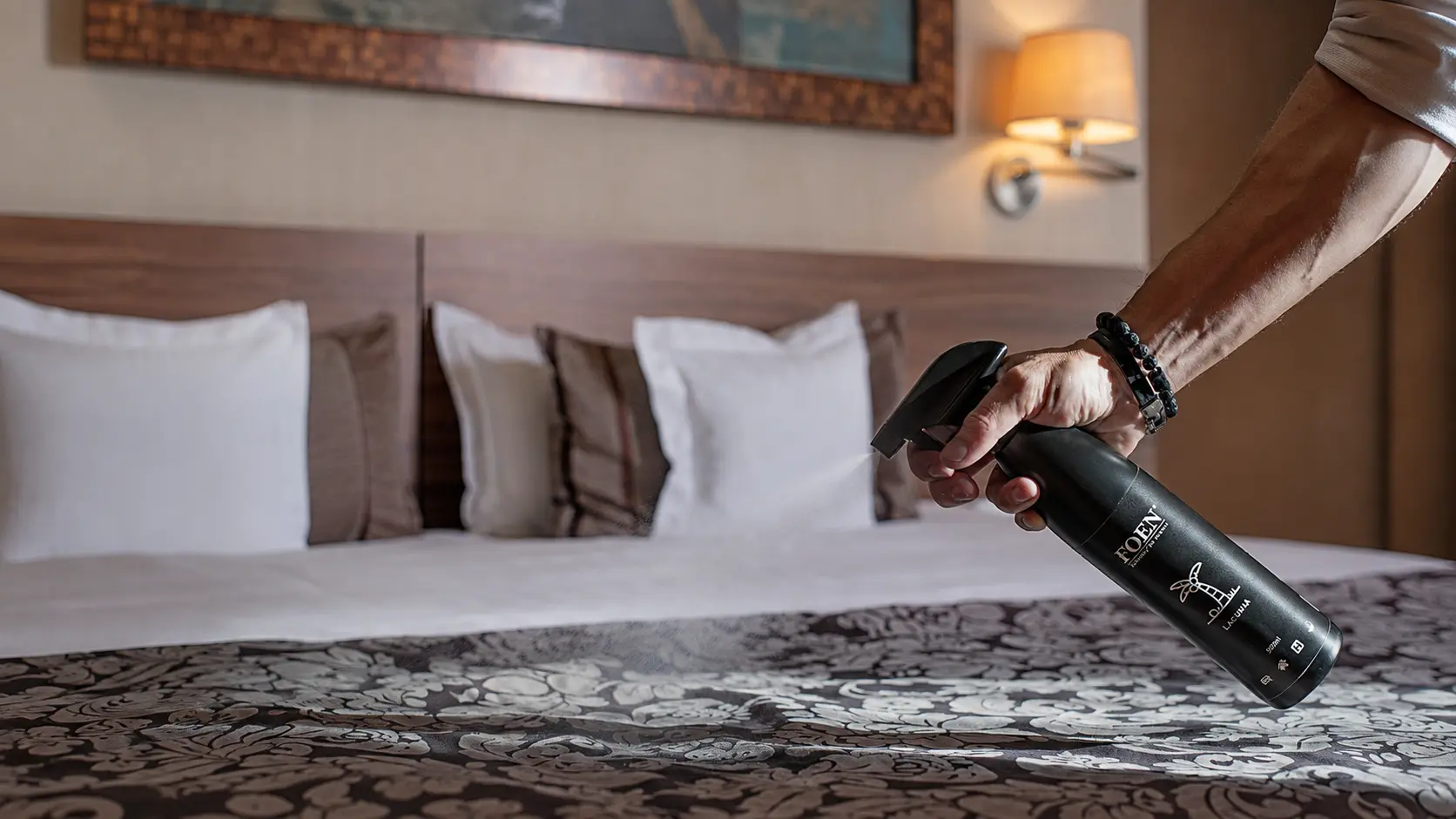
Surface of application is often the deciding factor. Spraying into open air gives a fast impact, but there is little for the fragrance to “hold onto”, so it disperses and ventilates away quickly. Textiles and porous materials can hold fragrance molecules and release them more slowly.
Common textile targets at home include:
- curtains and drapes (often excellent for slow release)
- rugs and carpets
- fabric sofa throws and cushion covers
- entryway mats (helpful for first impressions)
Personal insight: Start with one textile in one room before doing the whole house. It is easier to control intensity, especially if someone in the household is scent-sensitive. You can always add more later, but it is harder to undo an over-application.
3) Room conditions: airflow, heat and humidity
Even a great formula behaves differently depending on the space:
- Airflow: Open windows, extractor fans and HVAC can clear fragrance quickly. This is great for indoor air quality, but it shortens perceived longevity.
- Temperature: Warm rooms increase evaporation, which can boost intensity briefly but reduce how long it lasts. Think sunny living rooms or rooms with underfloor heating.
- Humidity: Humid spaces can make some scents feel heavier, while very dry spaces can make them feel “thin”. Bathrooms often behave differently from bedrooms.
A practical approach is to match application to the room: lighter application in small, warm rooms; textile-based application in larger rooms; and reapplication after heavy ventilation (for example, after cooking).
Textiles vs air: which application lasts longer?
The quickest way to improve longevity is to treat fragrance as something that “lives” on a surface rather than floating briefly in the air. The table below shows the trade-offs.
| Approach | What it feels like | Typical drawback | Best use |
|---|---|---|---|
| Spraying into air | Immediate impact, noticeable quickly | Fades faster due to ventilation and dispersion | Last-minute refresh before guests arrive |
| Applying to textiles (curtains, rugs, throws) | Smoother, longer-lasting presence | Needs care: patch test; avoid delicate fabrics | Daily “base layer” for long lasting interior fragrances |
| Passive diffusion (e.g., vent-mounted in a car) | Steady release while air is moving | Intensity depends on airflow | Smaller spaces where controlled release matters |
Personal insight: If you regularly cook with strong aromas (fish, spices), build your fragrance routine around the “after ventilation” moment. Otherwise you will keep re-spraying into open windows and wonder why nothing lasts.
The FOEN 7x7 method (step-by-step)
FOEN developed a simple routine to build a steady scent presence on textiles, rather than chasing a short-lived burst in the air. It is known as the 7x7 method.
- Choose the right textile. In a home setting, curtains, a rug, or a washable throw are usually easier to manage than delicate upholstery.
- Patch test first. Spray a small, hidden area and wait to ensure the fabric reacts well.
- Apply 7 sprays per day to the chosen textile area.
- Repeat for 7 consecutive days to build the fragrance “base”.
- Maintain lightly. After the initial week, top up only as needed (especially after heavy ventilation or cleaning).
FOEN states this method can keep the scent noticeable for around 30 days. In practice, results vary with fabric type, room size, heating and airflow, so treat this as a guideline rather than a guarantee.
If you want to explore this approach, FOEN offers its interior and car perfumes in FOEN Small (185 ml) and FOEN Large (450 ml), designed to be used on textiles such as rugs, curtains and other fabric elements.
Using fragrance thoughtfully around pets, children and sensitivities
For a wellness-conscious household, “safe” is not a marketing word - it is a set of habits. Any fragrance product can cause discomfort for someone, and animals can be more sensitive to smells than adults.
Practical guidelines that are widely sensible regardless of brand:
- Ventilation first: Avoid heavy fragrance in unventilated spaces. A gentle scent with good airflow is often more comfortable than a strong scent in still air.
- Introduce slowly: Start with fewer sprays and build up over several days. Watch for signs of discomfort in people or pets (sneezing, avoidance, watery eyes).
- Keep choice and escape routes: Do not scent every room at once. Make sure pets can move to an unscented area.
- Avoid direct contact: Do not spray onto pet bedding, toys, scratching posts, or areas animals lick or chew. Keep products stored out of reach.
- Be cautious with sensitivities: If someone has asthma, migraines, or fragrance sensitivity, choose lower intensity routines and consult a clinician if you are unsure.
About ingredient concerns: consumers often ask about “non-toxic” or “pet-friendly” claims. Without specific published documentation for a given product (for example, a full allergen disclosure, VOC details, or independent certification), the most responsible advice is to focus on controlled use, patch testing on fabrics, and gradual introduction.
Taking the ritual on the road: home to car scenting
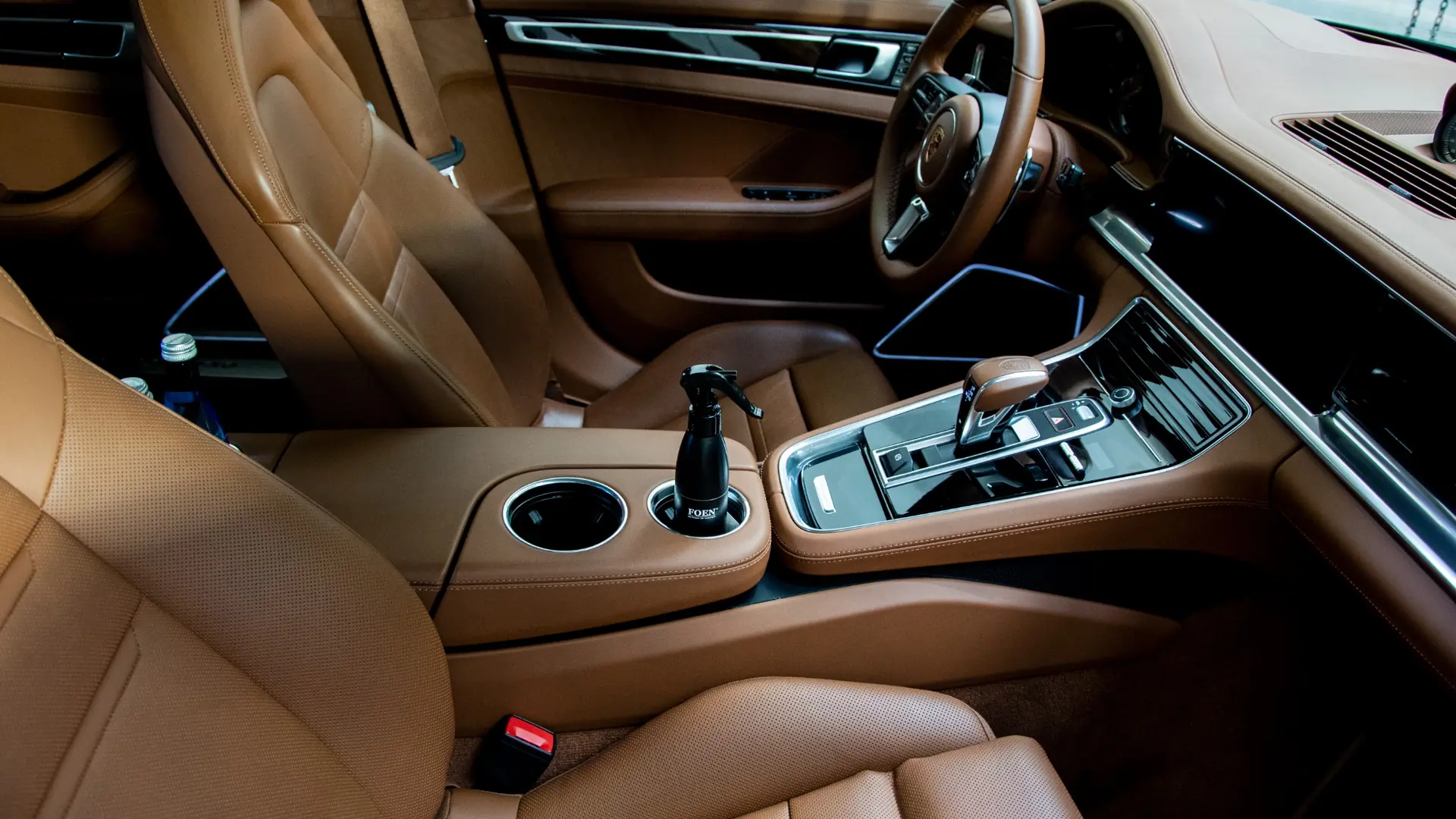
FOEN started with automotive fragrance and is expanding the same idea of a calm, well-designed scent ritual into interiors. If your commute is part of your day-to-day wellbeing routine, a consistent scent profile can make the transition from home to car feel seamless.
There are two common approaches in a car:
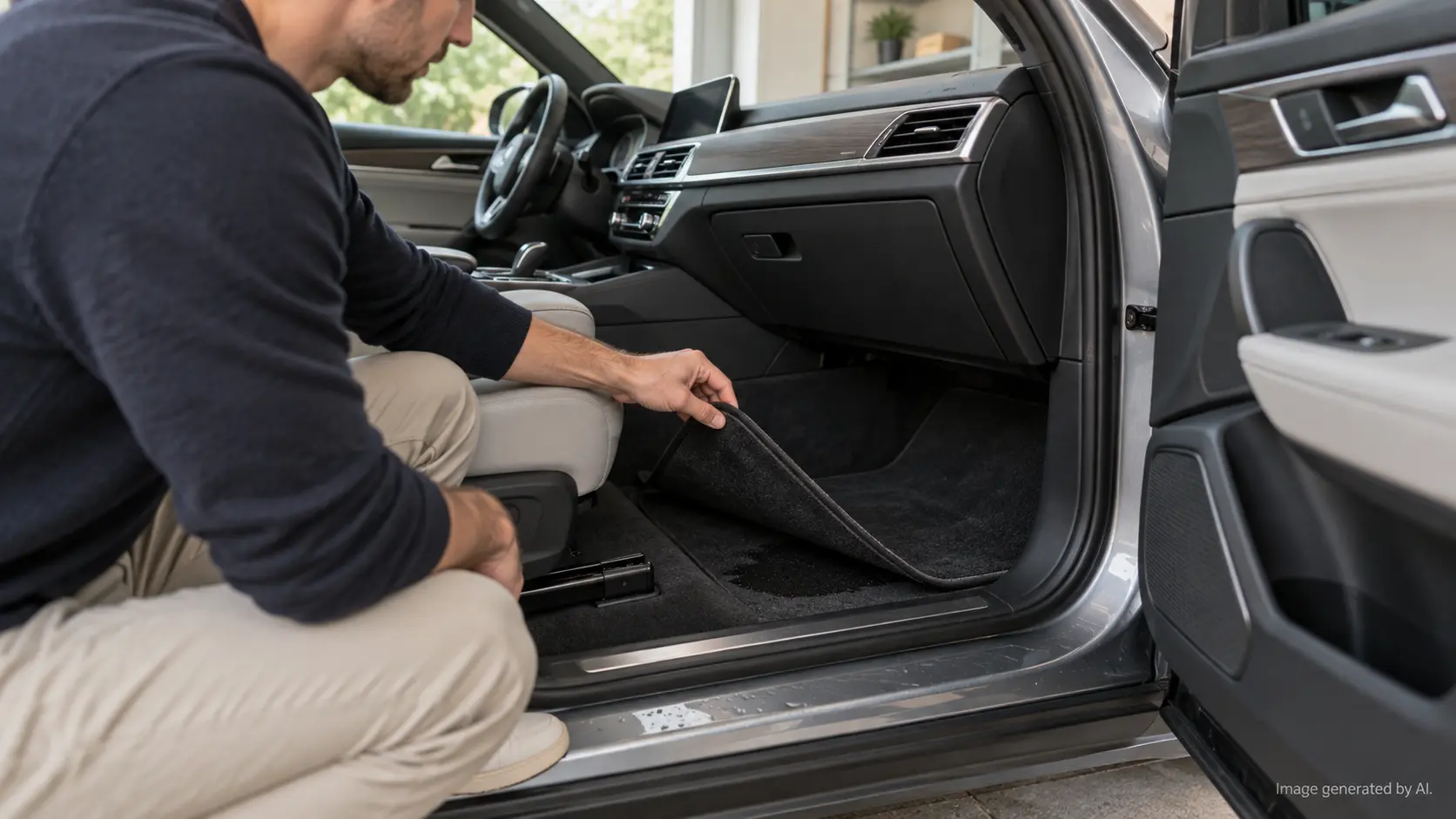
- Textile application: FOEN’s spray perfumes can be applied to suitable car textiles (for example, mats or fabric upholstery), using the same logic as at home: textiles hold fragrance longer than air.
- Vent-mounted diffusion: Products like Foen Wood Stick (natural wood housing) or Foen Pulse (plastic housing) release fragrance gradually, especially when the airflow is on. This suits drivers who want steady, low-effort scenting without hanging anything from the mirror.
The “better” choice depends on what you value: a reusable wooden aesthetic (with Foen Wood Stick Refill options) versus a more budget-friendly minimal plastic format. In both cases, the intensity will rise with stronger fan settings and recirculation.
If you want to browse FOEN’s range and choose a scent style (FRESH, SWEET, UNIQUE or INTENSIVE) that fits your space and tolerance for intensity, visit FOEN’s official website.
FAQ
Why does my room spray fade so quickly?
Most often because it was sprayed into open air. Air application gives a quick hit but little staying power. For longer results, apply lightly to suitable textiles (curtains, rugs, throws) and account for ventilation, heating and humidity.
What is the difference between air diffusion and textile application?
Air diffusion is immediate but short-lived because fragrance disperses and is ventilated out. Textile application creates a slower release as the fabric holds fragrance molecules and releases them over time.
Can I use home fragrance around dogs and cats?
Use fragrance cautiously: start with a low amount, keep good ventilation, and ensure pets can leave the scented room. Avoid spraying pet bedding or areas animals lick. If your pet shows discomfort, stop use and consult a vet if needed.
Why can I smell a fragrance at first but not later, even if others can?
This can be olfactory fatigue (nose-blindness). Your brain adapts to a constant smell. Step outside the room for a few minutes and re-enter to assess the scent more accurately.