How to Keep Your Desk Smelling Fresh (Without Annoying Your Coworkers)
September 24, 2026

You spend time making your car interior look sharp and smell clean - not like a gas-station pine tree. Then you walk into the office and get hit with yesterday’s lunch, stale HVAC air, and someone’s “one more spray” cologne cloud.
The goal in a shared office isn’t to make fragrance noticeable. It’s to make the space feel quietly fresh, in a way that respects different preferences, sensory sensitivities, and workplace norms.
This guide breaks down how to use fragrance like a pro: minimal, controlled, and targeted - including a practical setup for a subtle desk air freshener for office use.
The unspoken rules of office fragrance
Office fragrance etiquette is basically car-fragrance etiquette, just with higher stakes. In your car, if you overdo it, you suffer. In an office, everyone suffers.
- The arm’s length rule: If someone can clearly smell it from more than an arm’s length away, it’s too strong for a shared workspace.
- Fragrance should not lead you into the room: If people smell you before you say hi, dial it back.
- Avoid shared HVAC battles: Don’t spray or place fragrance near vents, returns, or fans that serve the whole area.
- Skip the “all day” cloud: Constant noticeable scent causes olfactory fatigue for you and frustration for others.
- Assume sensitivities exist: Migraines, asthma, allergies, or scent aversions are common. Your safest move is subtlety.
- Follow local norms and policies: Many workplaces have fragrance-free or low-fragrance expectations even if they’re not written in bold letters.
Personal insight: If you’re not sure whether it’s too much, it probably is. The easiest way to stay “safe for work” is to aim for a scent you only notice when you lean in toward your chair or bag - not something that announces itself in the hallway.
Why plug-ins and aerosols fail in shared workspaces
Plug-ins and aerosol sprays are the office equivalent of cheap, aggressive air fresheners hanging from a rearview mirror. They don’t smell premium, they flatten the air, and they rarely give you control.
What usually goes wrong:
- They spike intensity fast: A quick burst (spray) or constant output (plug-in) creates peaks that trigger complaints.
- They travel too far: Scent spreads beyond your desk into areas you don’t control.
- They mix with existing odors: “Citrus + microwaved fish” is not a vibe.
- They cause “always on” irritation: Even a good scent gets annoying when it’s unavoidable.
Control intensity with placement, airflow, and room size
In offices, fragrance is less about what you choose and more about how you manage it. Think airflow like you think about car HVAC: where it blows, how strong it blows, and who it hits.
Placement: keep it in your “personal bubble”
- Place fragrance low and close (near your chair, bag, or under-desk area) instead of high and open where it spreads.
- Avoid windowsills and shared pathways where air currents will carry scent across the room.
- If you share a desk cluster, aim fragrance inward, not outward.
Airflow: low speed wins
- Use gentle airflow to diffuse. High fan speeds can turn subtle fragrance into a room-wide broadcast.
- Direct airflow toward you, not into aisles or toward coworkers.
Room size matters (a lot)
- Open-plan office: Choose lighter profiles and lower output. You’re sharing air with many people.
- Private office: You have more flexibility, but scent can still leak into hallways. Moderate output is still the smarter play.
- Reception or waiting room: Use consistent, low-level scenting. Visitors experience it once, but staff live in it all day.
Personal insight: A good test is the “reset moment”. Step away for 10 minutes (coffee run, meeting), then come back. If the scent hits you immediately when you return, it’s likely too strong for everyone else who never left.
The car-enthusiast desk fan hack (vent clip setup)
If you love how a vent-mounted car fragrance behaves (steady, controlled release when airflow is on), you can copy that same logic at your desk. This is where car care meets office life in a way that actually makes sense.
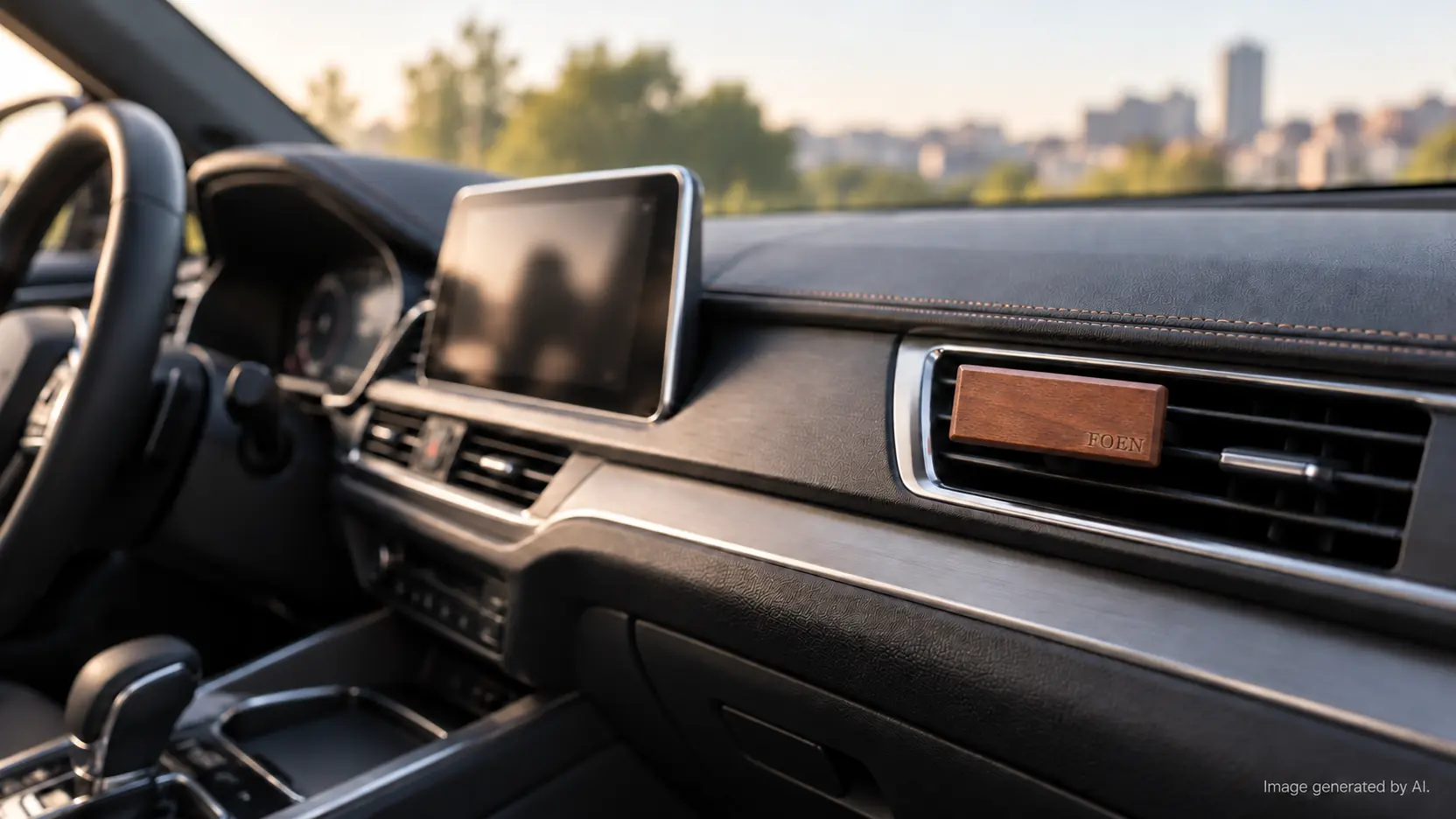
FOEN makes vent-clip car fragrances like Foen Wood Stick (natural wood housing) and Foen Pulse (minimalist, budget-friendly design). They’re designed to work with airflow - which is exactly what a small desk fan provides.
How to set it up (step by step)
- Pick a small fan: A USB desk fan with a front grill works best. Keep it compact so the airflow is gentle.
- Mount the vent clip safely: Clip the Wood Stick or Pulse onto the outer grill of the fan (not inside the blades). You want it secure, upright, and not touching moving parts.
- Aim the airflow: Point the fan slightly downward or toward your torso area, not across the room.
- Use low speed only: Low speed equals controlled diffusion. High speed can over-project scent and dry out your nose fast.
- Run it in short sessions: 10-20 minutes is often enough, then turn it off. You’re building background freshness, not a constant fragrance fog.
- Adjust by distance: If it feels strong, move the fan farther from you or angle it away. If it’s too subtle, bring it closer - still on low.
Safety note: Don’t modify electrical devices, don’t wedge anything into the fan housing, and don’t place fragrance where it can fall into moving parts.
Personal insight: If you want the most office-friendly result, treat the fan like your car’s AC: you don’t blast it all day. A few short “refresh cycles” keeps the scent noticeable to you, while making it nearly invisible to everyone else.
Targeted fabric scenting (without making the whole office smell like you)
For the most discreet approach, skip the air and work with textiles. Fabric holds fragrance longer and releases it slowly, which helps avoid sudden intensity spikes.
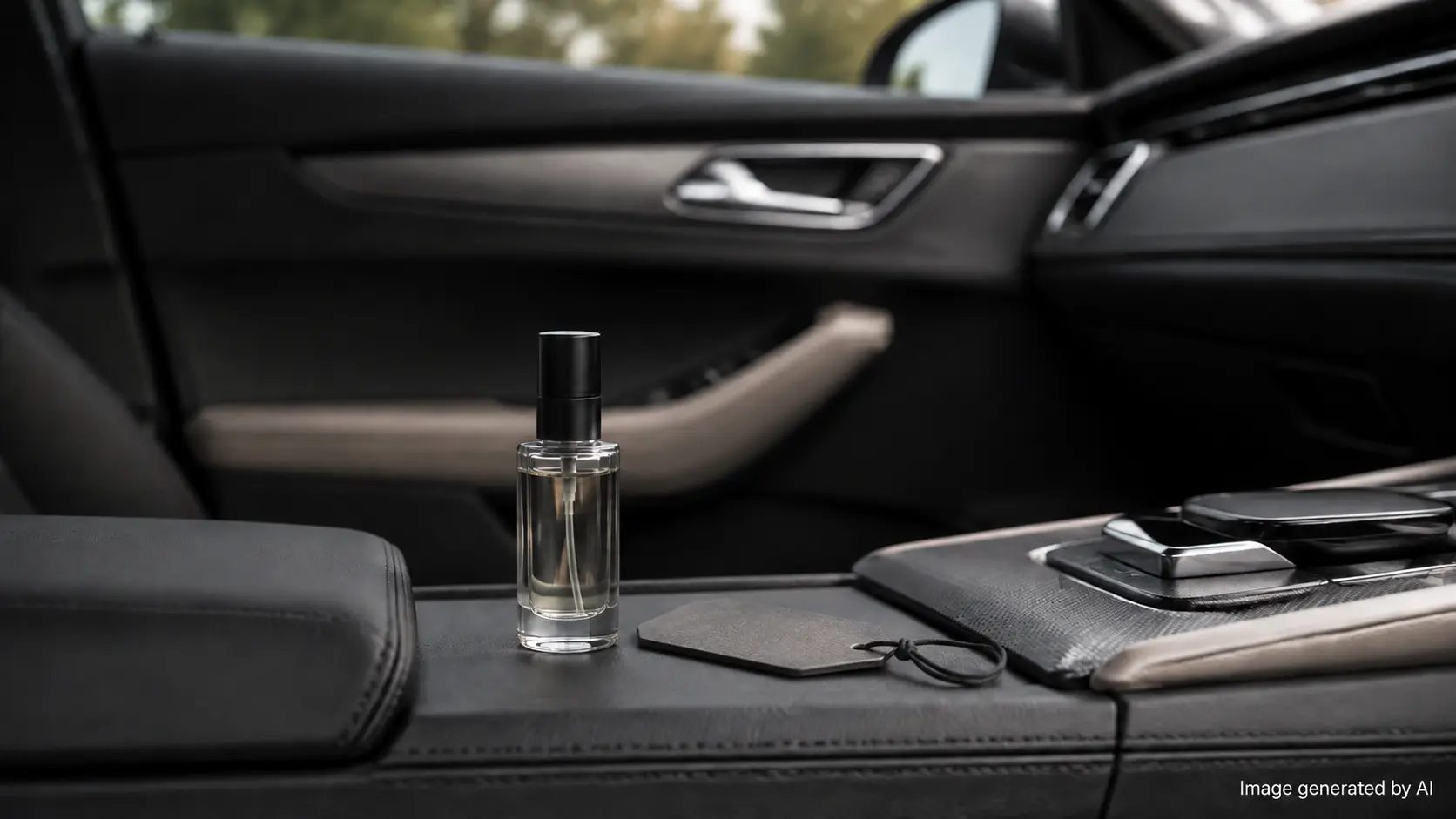
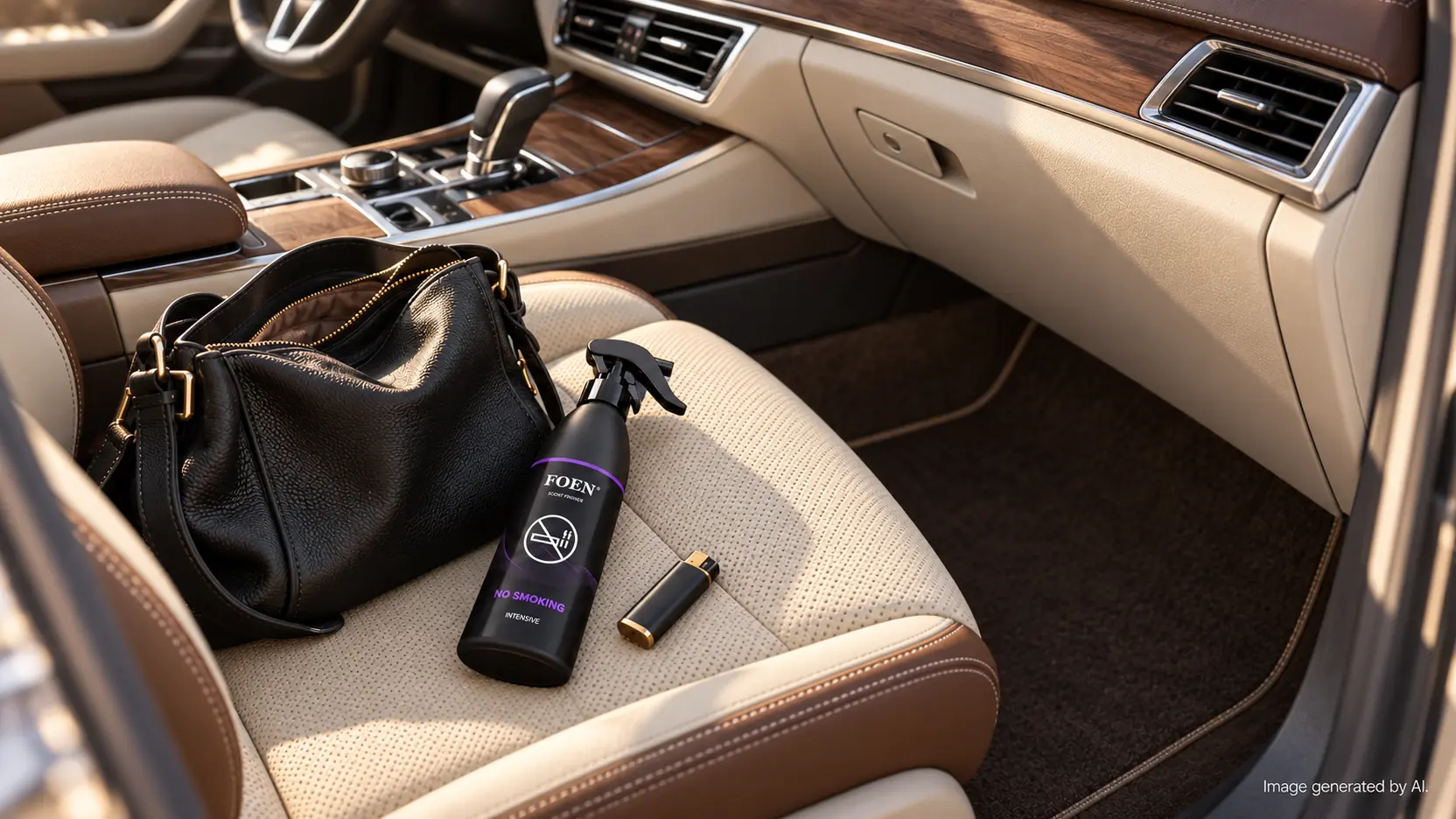
FOEN’s spray perfumes (FOEN Small 185 ml and FOEN Large 450 ml) are designed to be applied to textiles in cars and interiors. In an office context, the same principle applies: keep it targeted.
Where to apply (subtle zones)
- The fabric underside/back of your office chair (if it’s yours)
- A scarf, jacket, or tote bag kept at your desk
- A small fabric item in a drawer (so it’s not broadcasting)
What to avoid
- Spraying into open air (it travels and spikes quickly)
- Shared furniture or communal areas
- Heavy application on porous surfaces that could bother others nearby
Start with the smallest amount possible, then reassess later. The goal is a clean “you-zone”, not a scented floor plan.
Choosing a safe-for-work scent profile
In a shared office, the safest scents are the ones that read as “clean air” instead of “perfume counter.” If you want the vibe of a freshly detailed interior, look for lighter, fresher profiles.
- Best for open offices: fresh, airy, tea, light citrus, gentle green notes. From FOEN’s lineup, the FRESH line is generally the most workplace-friendly (for example Aqua, Forest, Green Tea, Soul).
- Use cautiously at work: sweet, heavy gourmand scents. They can feel cloying in warm offices.
- Usually not ideal for shared spaces: very intense, smoky, oud, strong leather, cigar/whisky styles. FOEN’s INTENSIVE line is often better for personal spaces or controlled environments, not open-plan desks.
Also remember: what smells “subtle” to you might be strong to someone else, especially if they’re sensitive or seated downwind.
Reset the space: neutralize before you scent
If there’s a persistent odor at your desk, fragrance won’t solve it - it will just layer on top. The cleanest-smelling offices usually do less scenting because they manage sources first.
- Remove the source: old food, used gym clothes, damp umbrellas, trash, or dirty mugs.
- Wipe hard surfaces: keyboard area, desk, armrests. Odors cling to oils and dust.
- Refresh fabric: if possible, clean your chair or use a washable cover.
- Vent briefly: a few minutes of fresh air beats hours of masking.
This is the same rule as detailing: fix the cause, then add the finishing touch.
Comparison table: common office scent options
| Option | Control level | Office-friendliness | Best use case | Main downside |
|---|---|---|---|---|
| Plug-in air freshener | Low | Low | Private room with full control (rare) | Constant output, travels far, triggers complaints |
| Aerosol spray into the air | Medium (but spiky) | Low to medium | Quick reset in an empty room | Intensity peaks, spreads unpredictably |
| Fabric-only scenting (light spray on personal textiles) | High | High | Keeping your immediate space fresh | Easy to overapply if you don’t start small |
| Desk fan + vent clip (car-style diffusion) | High | High (when used on low) | A subtle desk air freshener for office use | Needs careful placement to avoid over-projecting |
FAQ
Is it okay to use an air freshener in an open office?
Yes, if it’s subtle and stays within your personal area. Avoid plug-ins and heavy sprays, and follow the arm’s length rule.
What is the arm’s length fragrance rule?
If someone can smell your fragrance clearly from more than an arm’s length away, it’s too strong for a shared workspace.
How do I make my cubicle smell good without a plug-in?
Start by removing odor sources, then use targeted fabric scenting on your personal items, or use a low-speed desk fan setup for gentle diffusion.
Can I use a car vent freshener in my office?
You can, as long as you control airflow and intensity. A vent-clip style fragrance can work well on a small desk fan on low speed, keeping the scent contained.
What scents are safest for work?
Light, fresh profiles (clean, citrus, tea, soft green notes) are usually best. Save heavy, smoky, or very sweet scents for personal spaces.
If you want a premium, controlled approach that feels more like a well-kept car interior than a chemical office plug-in, explore FOEN’s fragrance options and pick a lighter profile for shared spaces. Shop FOEN fragrances on the official website.