How to Remove Cigarette Smell from Your Car: What to Clean Before Adding Fragrance
October 2, 2026
If you have bought a used car and the tobacco odour still clings to the seats, it can make every drive feel slightly “stale”, no matter how nice the car looks. For many wellness-minded drivers, the car is an extension of personal space - somewhere you breathe deeply, reset between errands, and carry passengers you care about.
The trick is sequencing. Clean and remove deposits first, then move to odour neutralisation if needed, and only then use fragrance as the finishing touch. A fragrance can make a clean interior feel beautiful, but it cannot undo smoke residue that is still embedded in fabric, plastics and the ventilation system.
Why cigarette smell lingers in cars
Tobacco smoke contains sticky, odorous residues that settle onto surfaces and into porous materials. In a car, those residues commonly build up in:
- Textiles (seats, mats, carpet, boot lining)
- The headliner (the roof fabric is a major odour sponge)
- Plastics and glass (a thin film forms over time)
- The ventilation system (smoke particles and dust accumulate, then recirculate)
That is why a “quick spray” often creates a confusing mix: smoke plus fragrance. A clean base matters if you want a refined, comfortable scent level.
Cleaning vs neutralising vs fragrance (what each step does)
| Approach | What it actually does | Where it fits in a tobacco-odour plan |
|---|---|---|
| Cleaning | Physically removes ash, tar-like film, and contaminated dust from surfaces and fabrics. | Always first. This is the step that reduces the root cause. |
| Odour neutralisation | Targets remaining odour molecules after cleaning (methods vary by product and setting). | Optional, for lingering odour after a deep clean. |
| Fragrance | Adds a pleasant scent profile to a now-clean space. | Final step. Best results when smoke deposits are already removed. |
Practical insight: If you can still smell tobacco strongly on warm days, after the heater has been on, or when you first open the car in the morning, there is usually still residue in fabrics, vents, or the headliner. Adding more fragrance at this stage rarely feels “premium” - it just feels stronger.
What you will need
For a thorough but realistic home-style clean (no specialist machine required), gather:
- Microfibre cloths (at least 4-6)
- A vacuum with crevice tool (a soft brush attachment helps)
- White vinegar and distilled water (for glass and many hard surfaces)
- Bicarbonate of soda (baking soda)
- A gentle interior cleaner suitable for automotive plastics (follow label guidance)
- An enzyme-based cleaner suitable for upholstery (patch test first)
- A soft interior brush
- Nitrile gloves (useful when dealing with sticky residue)
- Replacement cabin air filter (check your vehicle manual)
If your car has leather seats, use a leather-appropriate cleaner/conditioner rather than vinegar or enzyme products on the leather surface.
Step-by-step: what to clean before adding fragrance
1) Remove ash and anything that is “holding” the smell
Start with a reset. Take out everything you can, including items you might overlook:
- Ashtray contents and any hidden ash (cup holders, door pockets, seat rails)
- Old receipts and paper (they absorb odours surprisingly well)
- Gym kit, coats, blankets, child seat covers
- Boot contents and under-boot-floor storage items
Practical insight: If you are short on time, do this first and then leave the car aired out for 20-30 minutes with doors open (in a safe place). It makes the next steps easier because you are not fighting a concentrated “closed cabin” smell.
2) Inspect the main hotspots before you clean
A two-minute inspection helps you clean what matters, not just what is visible:
- Headliner: look for yellowing near the driver’s seat area
- Seatbelt webbing: pull it fully out and smell it (it often holds smoke)
- Rear seat area: smoke often collects in the back, especially if windows were cracked
- Vents: sniff near vents with fan off (stale smell suggests duct build-up)
3) Replace the cabin air filter (non-negotiable)
If you are trying to figure out how to remove cigarette smell from car interiors, the cabin air filter is one of the highest-impact fixes. A smoke-saturated filter can keep reintroducing odour every time you run the fan.
- Replace the filter according to your vehicle manual.
- After replacement, run the fan for a few minutes with windows open to flush stale air.
4) Vacuum like you mean it (including edges and under seats)
Vacuuming is not glamorous, but it removes the dust and ash that carry smoke residue.
- Use the crevice tool along seat rails, around pedals, and between seat base and backrest.
- Vacuum mats on both sides.
- Do the boot carpet and side pockets.
Practical insight: One common mistake is vacuuming only the “flat” parts. The edges (around plastic trims, seat mounts, and the gap where the centre console meets the seat) are where ash and smoky dust settle and stay.
5) Wipe the smoke film off hard surfaces (glass, plastics, steering wheel)
On glass and many wipeable surfaces, a simple vinegar solution can cut through smoke film.
- Mix a 1:1 solution of white vinegar and distilled water in a spray bottle.
- Spray onto a microfibre cloth (not directly onto electronics).
- Wipe glass, mirror surrounds, door trims, and hard plastics.
- Use a second clean cloth to buff dry and avoid streaks.
For infotainment screens and sensitive trims, follow manufacturer guidance and use a product designed for that surface.
6) Treat fabrics and carpets (where the odour usually lives)
For textile seats, carpets and mats, aim for removal first, then absorption.
Option A: Baking soda for absorption (good after cleaning)
- Lightly sprinkle baking soda over carpets and fabric seats.
- Leave for 8-12 hours (overnight is ideal).
- Vacuum thoroughly the next day.
Option B: Upholstery cleaner for embedded residue (patch test first)
- Use an upholstery-safe product according to label directions.
- Work in small sections and avoid overwetting the foam beneath the fabric.
- Allow to dry completely with windows cracked or doors open, weather permitting.
Steam cleaning or extraction can help in heavy cases, but do it carefully - trapped moisture can create a different problem (a damp or musty odour).
7) Clean the headliner carefully (gentle, minimal moisture)
The headliner is delicate. Over-saturating it can weaken the adhesive.
- Use a small amount of an enzyme-based cleaner on a microfibre cloth (not soaked).
- Blot and lightly wipe; do not scrub aggressively.
- Work in sections and allow to dry with good ventilation.
If the headliner is heavily contaminated or sagging, professional detailing is often the safer choice.
8) Address ventilation odour (without creating new issues)
After the cabin filter swap and surface cleaning, you can reduce remaining ventilation odour by:
- Vacuuming vent grilles with a soft brush attachment.
- Running the fan with windows open for several minutes.
- Avoiding heavy, wet sprays into vents unless you are using a product designed for HVAC systems and following its instructions.
If the smell is strongest only when the fan is on, that is a clue the system needs deeper attention.
When to seek professional help
Sometimes a careful DIY clean still leaves a clear tobacco odour. Consider professional valeting/detailing if:
- The car was smoked in heavily for years.
- You smell tobacco most strongly when the cabin heats up in sunlight.
- The odour returns quickly after cleaning.
- You cannot fully dry the interior due to weather or time constraints.
Detailers may offer specialist processes (including ozone treatments). These can be effective, but they are not a substitute for physical cleaning. If you are considering ozone, ask the provider about their procedure, ventilation steps afterwards, and whether they also do fabric extraction and headliner care.
Safe scenting for families, pets and scent-sensitive passengers
For a wellness-conscious household, the goal is not “as strong as possible”. It is clean first, then light, controlled scenting.
- Ventilation matters: after cleaning and after adding fragrance, air the cabin out. This is especially relevant if children or pets ride in the car.
- Patch test cleaners: enzyme cleaners and interior products vary. Always test on a hidden area first.
- Avoid mixing products: do not combine multiple strong cleaners in a closed cabin. Work in stages and let surfaces dry.
- Choose your scent level intentionally: if anyone is scent-sensitive, start with fewer sprays and build gradually over several days.
If you suspect mould or damp as well as tobacco, tackle that separately - tobacco and moisture problems can overlap, but they are not the same issue. Likewise, if the “smell” is food-related, the source and treatment differ.
For other odour causes, see FOEN’s guides to musty smells and food smells: musty smell in a car and food smell in a car.
The final touch: adding a premium fragrance (without masking the problem)
Once you have removed ash, cleaned surfaces, treated fabrics, and addressed the ventilation system, you can add fragrance in a way that feels calm and intentional.
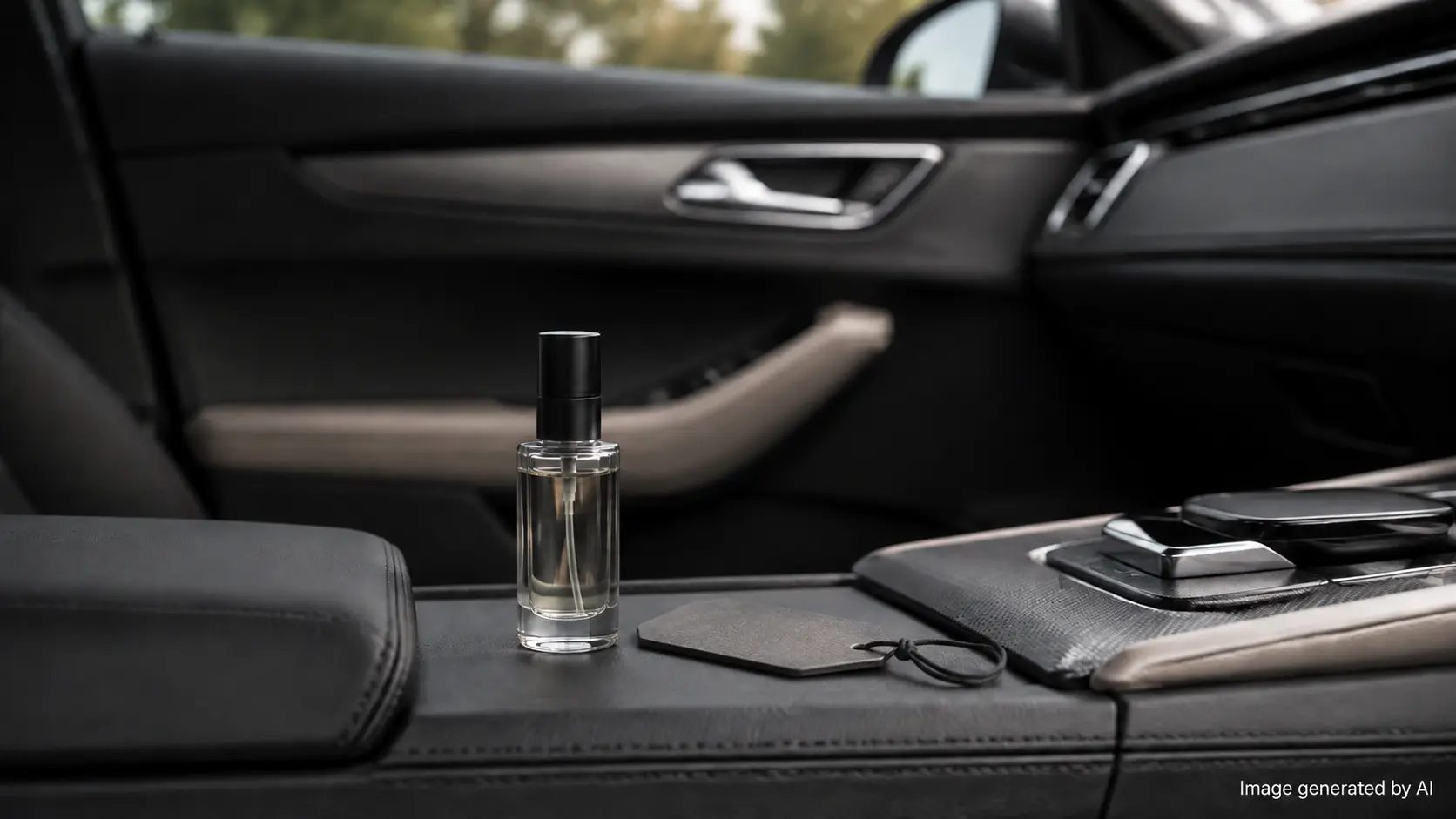
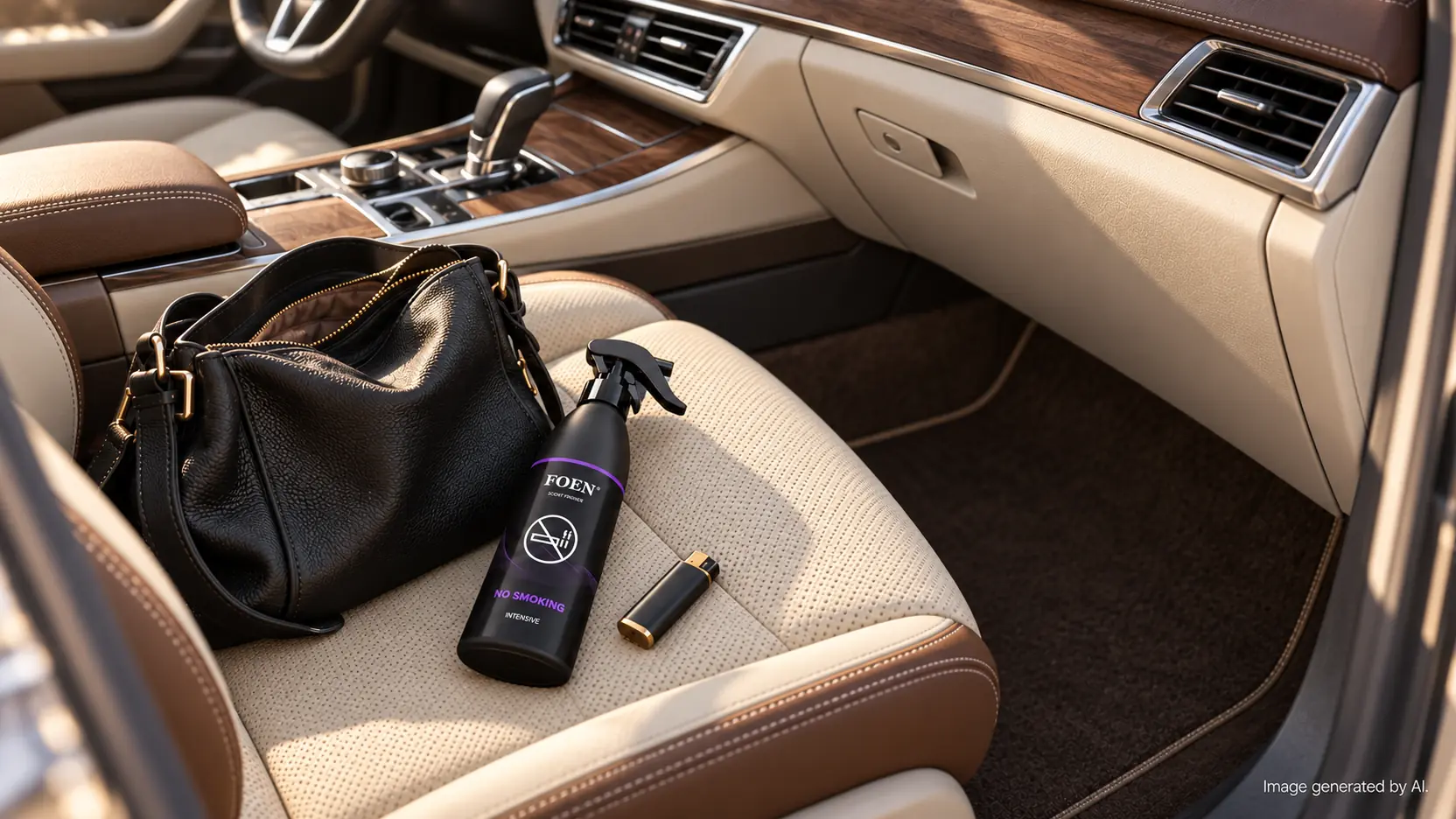
FOEN is a Polish brand known for premium, long-lasting car and interior perfumes with a simple composition and a discreet, modern way of using scent. If tobacco odour is your main challenge, FOEN No Smoking is described by the brand as a fragrance designed to neutralise unpleasant cigarette smoke smell. The important point is sequencing: it works best as the finishing step, after you have cleaned away smoke deposits.
A practical way to apply FOEN car perfume: the 7 x 7 technique
FOEN recommends a “7 x 7” approach for perfuming the car interior via textiles:
- Spray seven times onto each car mat (textile surfaces help the scent distribute gently).
- Repeat for seven consecutive days.
This gradual build avoids the “blast” effect many people dislike, and it supports a more refined result - especially if you share the car with passengers who prefer subtle fragrance.
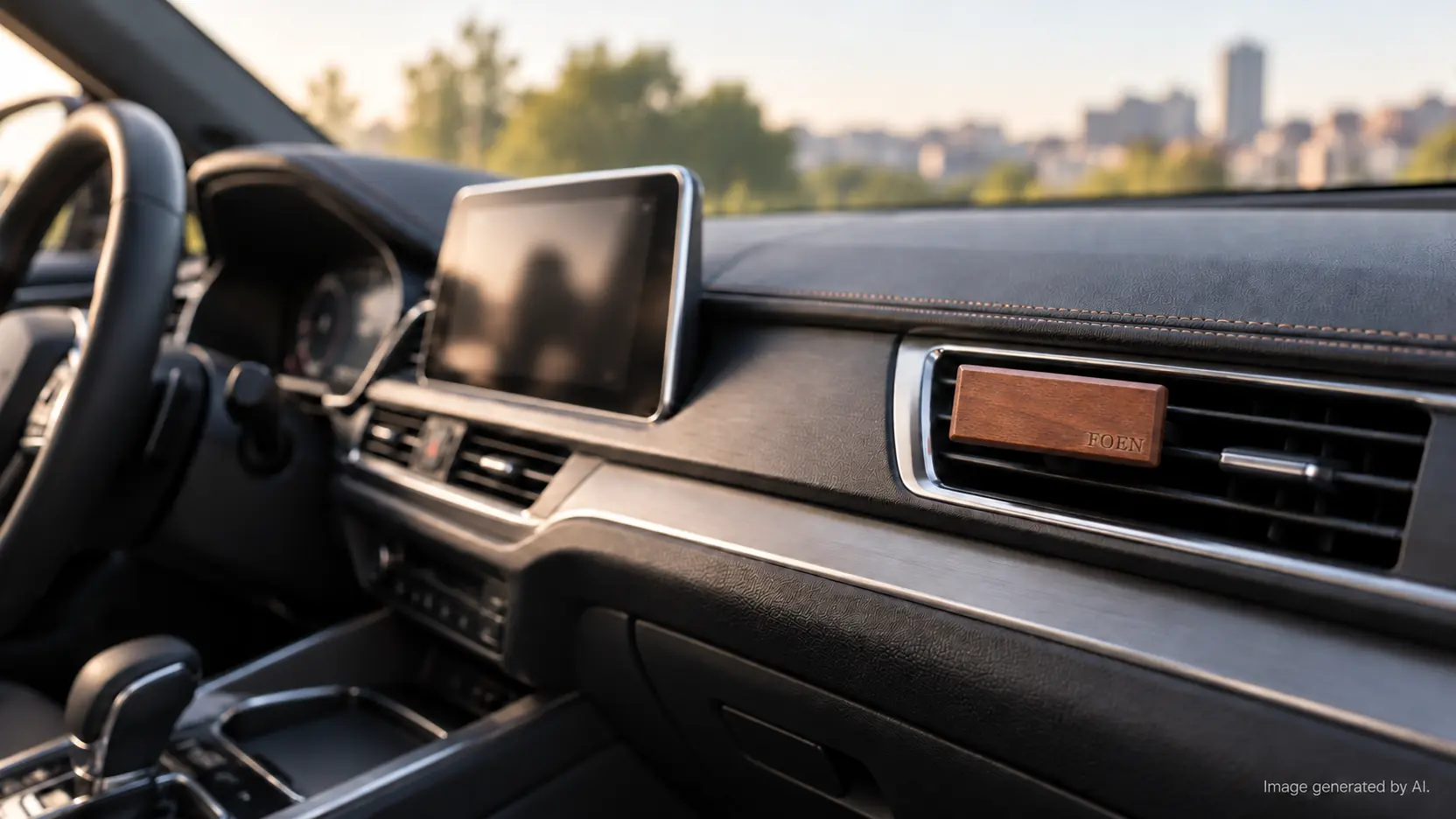
If you prefer scent that releases through the airflow rather than from mats, FOEN also offers vent-mounted options like Foen Wood Stick (natural wood) and Foen Pulse (minimalist plastic). These can be a good choice once the interior is clean and you want steady, low-maintenance scenting.
CTA: Explore FOEN’s car and interior fragrance range on the official website: FOEN premium car and home fragrances.
FAQ
Will a standard car air freshener remove smoke smell?
Not on its own. Most air fresheners mainly add scent. Tobacco odour usually persists until you remove smoke residue from textiles, hard surfaces and the ventilation system (especially the cabin air filter).
How long should baking soda sit in a car to absorb cigarette odour?
For carpets and fabric seats, allow roughly 8-12 hours (overnight), then vacuum thoroughly. It is most effective after you have already cleaned surfaces and removed ash and dust.
Are enzyme cleaners safe for all car upholstery?
It depends on the product and the material. Use only cleaners labelled as suitable for upholstery, follow instructions, and patch test on an inconspicuous area first. Avoid saturating the headliner.
Why does the cigarette smell come back when I turn the heater on?
Warm airflow can lift odour from residue in the ventilation system, dust trapped in ducts, or a smoke-saturated cabin filter. Replacing the filter and cleaning vent areas usually helps, but severe cases may need professional detailing.
Can I just spray fragrance onto seats to cover the smell?
It is better to clean first. Spraying fragrance onto contaminated fabric can create a mix of scents and still leave smoke deposits behind. Apply fragrance after fabrics are cleaned and fully dry, starting lightly and building gradually.