Can You Spray Car Fragrance on Seat Belts? (Safety Risks and Better Alternatives)
October 8, 2026
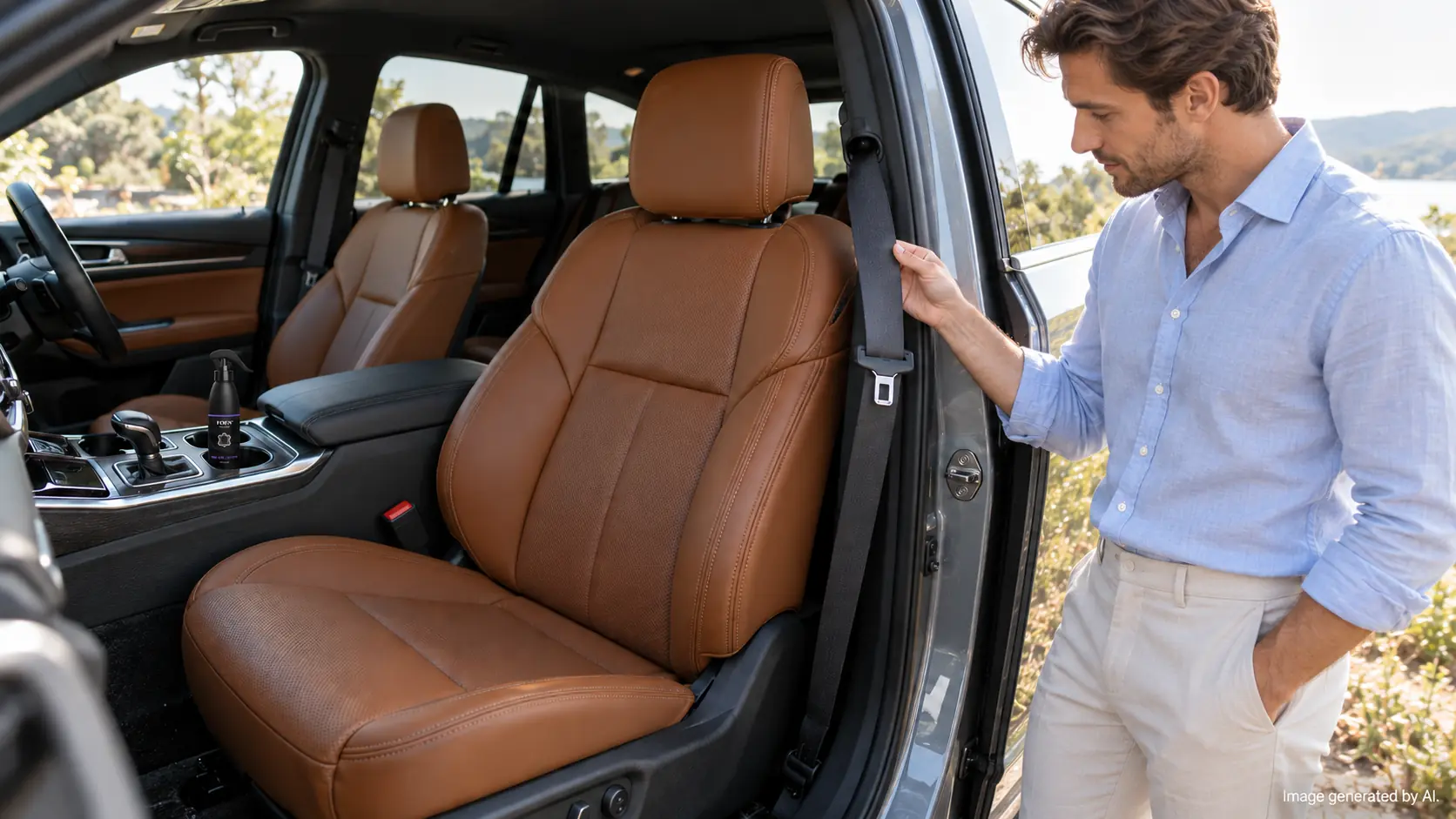
The seat belt is right there, it’s fabric, and it seems like it would hold scent well. But a seat belt is also a life-saving component that you don’t want to treat like regular upholstery.
Key takeaway: As a rule, do not spray car fragrance directly onto seat belts. Only consider it if (1) the fragrance label explicitly allows seat-belt use, (2) your vehicle manual does not warn against treating belts with chemicals, and (3) the belt is clean and in perfect condition. Even then, avoid saturation and never treat a belt in a way that conflicts with the car maker’s instructions.
This article stays focused on the seat belt surface specifically: material integrity, comfort, residue and marks, and what to do instead when a belt is not the right target.
Quick answer (and the 3 checks to make first)
Most of the time, the right answer is no - not because the belt will instantly fall apart, but because you’re introducing unnecessary risk to a safety system and a high-contact surface.
If you’re still tempted, only decide after these three checks:
- Fragrance label: Does it explicitly say it can be used on seat belts? If it does not, assume it’s not intended for belts.
- Vehicle owner’s manual: Many automakers warn against applying cleaners, solvents, dyes, or other chemicals to belt webbing. If your manual says not to treat belts, stop there.
- Belt condition: Is the belt clean, dry, and free of fraying, stiffness, discoloration, or previous stains? If not, do not add product. Fix the underlying issue first.
Practical insight: The most common mistake is spraying a belt because it’s the closest fabric while you’re sitting in the driver’s seat. That’s usually when people over-apply, creating wet spots that later transfer to clothing and skin.
Why detailers avoid spraying seat belts
1) It’s a safety component, not just fabric
Seat belt webbing is typically high-tenacity polyester designed to manage extreme loads during a crash. When you spray unknown chemicals onto it (especially products containing alcohols or solvents), you risk changing the fibers over time. You may not see damage immediately, which is part of the problem.
Bottom line: never compromise safety for scent, and never apply anything that contradicts your car maker’s guidance.
2) Marks, stiffness, and uneven dark spots are common
Even when a fragrance is marketed as “fabric-safe,” belts can show:
- Water rings or tide marks if the belt gets damp in one area.
- Darker patches where product concentration is higher.
- Stiffness if residue builds up on the fibers.
These issues stand out on light gray or beige belts, and they’re hard to correct without more cleaning (which again means more chemical exposure).
3) It touches your skin and your clothes
Seat belts rub against shoulders, necks, and arms. In warm weather, that’s often bare skin. Any leftover fragrance residue can cause irritation for sensitive drivers or passengers.
It can also transfer to clothing, especially:
- white or light shirts (visible staining),
- delicate fabrics (silk-like blends),
- workwear or uniforms (unwanted scent transfer).
Practical insight: If you’re heading to the office or a date night, a belt stain on a light top is the kind of “mystery mark” you won’t notice until you arrive. Avoid creating that risk in the first place.
Decision matrix: label + manual + belt condition
Here’s the safest way to make the call without guessing.
Step 1: Follow the vehicle manual first
If your owner’s manual warns against applying chemicals, solvents, dyes, or treatments to the belt webbing, do not spray fragrance on the belt, even if a product label suggests it could be used on textiles.
Step 2: Confirm the fragrance label explicitly mentions seat belts
Some interior perfume sprays list seat belts among allowed textile surfaces. FOEN Perfume Sprays are intended for automotive and home textiles and, per FOEN’s directions, can be applied to elements such as floor mats, fabric upholstery, and seat belts.
Important limits still apply:
- Use sparingly. A seat belt should never be saturated.
- Do not treat a compromised belt. If it’s frayed, stiff, or discolored, keep products off it and consider inspection or replacement guidance from the manufacturer.
- Never override the manual. If the automaker says no, it’s no.
Step 3: Check belt condition and recent history
A belt that has been cleaned aggressively before, exposed to smoke residue, or soaked with unknown cleaners is more likely to spot or stiffen when you add fragrance on top.
Practical insight: If a belt already retracts slowly or feels “grabby,” treat that as a red flag. Adding any liquid can worsen the feel or encourage more buildup around the retractor area.
If the label allows belts: how to minimize risk
If (and only if) all three checks pass (label allows it, manual allows it, belt is in excellent condition), keep the approach conservative.
Safer application rules for seat belts
- Never spray the belt while it’s retracted. Pull it out fully so you can control where product goes and avoid wetting the retractor mechanism area.
- Avoid the latch and hardware. Keep liquid off metal and plastic parts.
- Use minimal product. One very light mist at most is the ceiling. If you can see wetness, it’s too much.
- Let it dry completely before use. A damp belt increases transfer to skin/clothes and can create marks.
- Stop if you see spotting or feel residue. Don’t “chase” stains by adding more product.
If your goal is a consistent cabin scent, you’ll usually get better results (and fewer headaches) by spraying elsewhere.
Better places to spray car fragrance (safer, longer-lasting)
If you want your car to smell premium without gambling on high-contact safety gear, aim for surfaces that (1) hold scent well, (2) are less likely to touch skin/clothes, and (3) won’t affect critical function.
1) Floor mats and carpet (best overall target)
Floor mats are the easiest “fragrance reservoir” in most cars: lots of surface area, minimal skin contact, and strong airflow movement around the footwells.
FOEN’s recommended approach is the 7 x 7 technique on mats to build a lasting base rather than creating an overpowering cloud on day one.
FOEN 7 x 7 technique (step-by-step)
- Vacuum first. Remove sand and dust so you’re scenting fabric, not debris.
- Take mats out if possible. It’s cleaner and helps avoid overspray on plastic trim.
- Apply 7 sprays per mat. Aim for a light, even distribution across each mat.
- Repeat for 7 consecutive days. This gradually “sets” the scent foundation.
- Then maintain as needed. Adjust based on your preferences and how often you drive.
FOEN notes that this method can keep scent noticeable for around 30 days, with longer performance possible depending on how the bottle is used over time. Real-world results vary with heat, ventilation use, and how often passengers get in and out.
2) Fabric upholstery (with caution)
Fabric seats can work, but test first in a hidden area. Upholstery is more visible than mats, and some weaves show spotting more easily. Keep product away from airbags and seams where your vehicle manual advises caution.
3) Spray-free vent options (clean look, steady delivery)
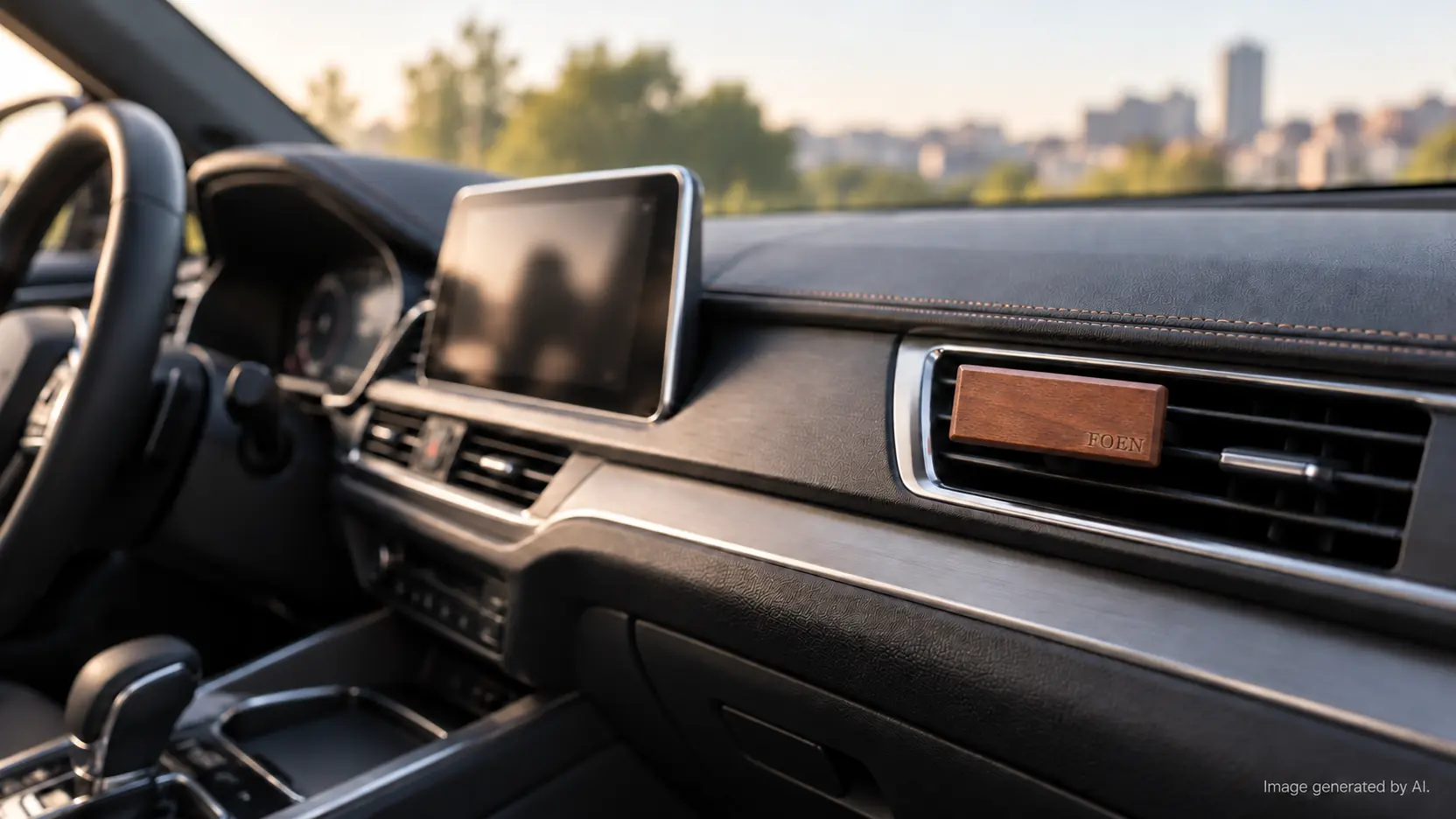
If you dislike any chance of fabric marks, vent-mounted fragrance is a clean solution. FOEN offers two options that fit a modern interior without hanging anything from the mirror:
- Foen Wood Stick - a natural wood vent fragrance with a premium look and gradual release (especially when the air is running).
- Foen Pulse - a more budget-friendly vent option with a minimal, modern shape.
Both are a good fit if you want consistent scent without spraying belts, headliners, or high-touch areas.
Comparison: seat belts vs floor mats vs vent scents
| Option | Pros | Cons / risks | Best for |
|---|---|---|---|
| Seat belts | Easy to reach; fabric can hold scent briefly | Safety component; high skin and clothing contact; visible marks; potential residue or stiffness; may conflict with owner’s manual | Only if the label explicitly allows it, the manual allows it, and the belt is in perfect condition (still use minimal product) |
| Floor mats and carpet | Large surface area; low skin contact; strong scent foundation; easy to control overspray | Can smell strongest near footwells if overapplied; requires consistent approach for best results | Most drivers who want long-lasting cabin scent with low risk (ideal for the 7 x 7 technique) |
| Vent-mounted scents (Foen Wood Stick / Foen Pulse) | No fabric staining risk; clean look; steady scent while HVAC runs | Performance depends on airflow and fan use; scent intensity varies by car and settings | Drivers who prefer a neat dashboard and predictable scent without spraying textiles |
Choosing a FOEN scent profile for your daily drive
Once you’ve picked a safe application point, the scent profile is the fun part. FOEN’s lineup includes styles from light to bold, so you can match the vibe of your car and your tolerance for intensity.
- FRESH (like Aqua, Forest, Green Tea) - a clean, airy feel that won’t fight with coffee runs or gym bags.
- UNIQUE (like Carbon or Mr. Boss) - more character, still wearable for daily commuting.
- INTENSIVE (like New Car Leather or Habib) - richer presence, great if you want the cabin to feel like a statement.
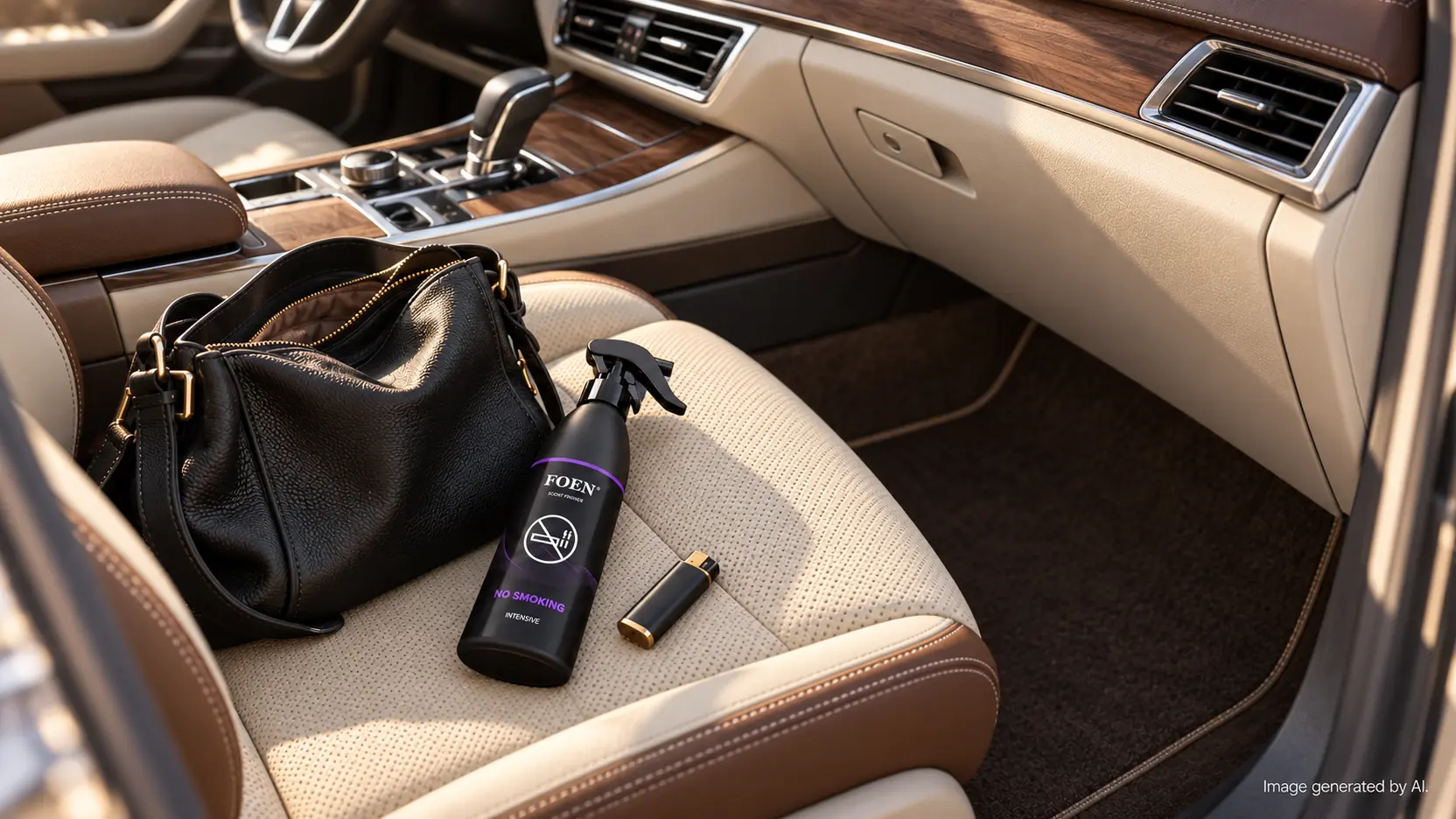
- No Smoking - designed to neutralize cigarette smoke smell; a smart pick if smoke is the main problem you’re trying to fix.
Practical insight: If you drive rideshare, carpool, or regularly have passengers, a lighter profile on mats plus a vent scent is often more comfortable than spraying multiple high-contact surfaces. It keeps the cabin pleasant without surprising someone who’s sensitive to fragrance.
If you want to explore FOEN’s car and interior fragrance options (sprays and vent scents) and choose a profile that fits your car, you can browse the selection on the official site: FOEN car fragrances and interior perfumes.
FAQ
Will car air freshener stain my seat belts?
It can. Seat belts often show water rings, darker patches, or residue lines when a liquid product is applied unevenly or too heavily. The risk is higher on light-colored belts and when the belt is used before it’s fully dry.
Does alcohol in perfume weaken seat belt material?
Many detailers and safety-focused guides caution against applying chemicals (including alcohols/solvents) to seat belt webbing because the belt’s strength matters in a crash and chemical exposure can be unpredictable over time. Always follow your vehicle owner’s manual, and avoid treating the belt unless the manual and the product label clearly allow it.
Where is the safest place to spray car interior fragrance?
Usually on floor mats and carpets, because they are textiles with large surface area and minimal skin/clothing contact. If you prefer not to spray at all, vent-mounted options can deliver scent without touching fabric surfaces.
If FOEN directions list seat belts as an application area, does that mean it’s always OK?
No. Product directions are only one part of the decision. Your vehicle manual has priority, and the belt must be in excellent condition. Even when allowed, avoid saturation and keep product away from the retractor and hardware.